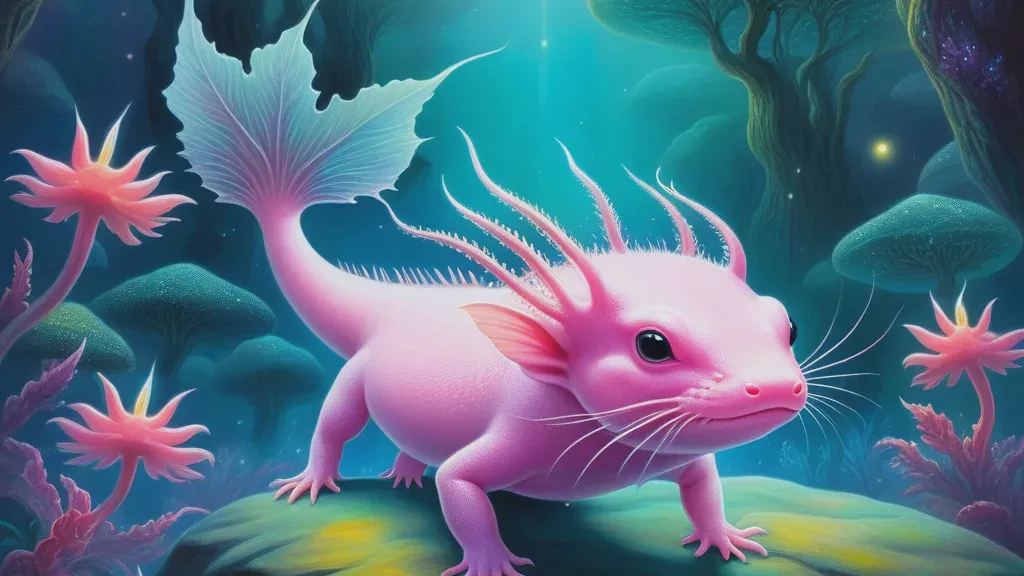
Axolotl
Jungian Archetypes
Meaning
Dreaming of an axolotl may signify transformation and adaptability, reflecting the psyche's ability to navigate emotional depths and change. This symbol can point to latent potential and the desire to embrace one's true self, often linked to childhood innocence or suppressed emotions.
Psychological Interpretation
From a Jungian perspective, the axolotl embodies the Trickster archetype, highlighting the importance of playfulness in facing trauma. Cognitive psychology suggests it may represent the integration of repressed memories, while practical psychology views it as a sign to reconnect with one's inner child and explore creativity.
Cultural & Historical Origins
In Aztec mythology, the axolotl is linked to the god Xolotl, who represents the night and death. Additionally, it appears in Western popular culture, such as in the animated series 'Adventure Time', symbolizing transformation and resilience.
Contextual Variations
You find an axolotl in a bathtub that’s too small; when you touch it, it wriggles free and the water ripples with images of different rooms.
The axolotl’s adaptability mirrors your capacity to navigate emotional depth even when conditions feel limiting. Psychologically, it can indicate a period of regeneration—your mind testing multiple “settings” for how to cope with feelings.
You watch an axolotl grow new limbs in slow motion as you count your breaths, and each time it regrows, you feel calmer.
Regeneration symbolism points to recovery after emotional injury or repeated stress. The dream may reflect an inner process of repairing what feels damaged, emphasizing patience and gradual rebuilding rather than sudden resolution.
In a dark aquarium, the axolotl changes color to match the shadows around it; you realize it’s been hiding and you stop chasing it.
Color-shifting suggests you’ve been adjusting your emotional expression to fit your environment. Psychologically, the dream can highlight the need to stop “performing” safety and instead allow authentic feelings to surface without constant adaptation.
Frequently Asked Questions
What does an axolotl dream usually mean for emotional change?
Why do I dream of an axolotl when I feel stuck?
Is the axolotl a sign I should take risks?
Journaling Prompts
- Where am I adapting to my environment instead of expressing what I actually feel?
- What in me feels like it’s trying to regrow—confidence, trust, boundaries, or a sense of play?
- What “container” am I living in (relationships, routines, roles), and does it support my transformation or suffocate it?
Related Symbols
Dreamed about Axolotl?
Get a personalized AI interpretation that connects this symbol to your specific life circumstances.
Interpret My Dream