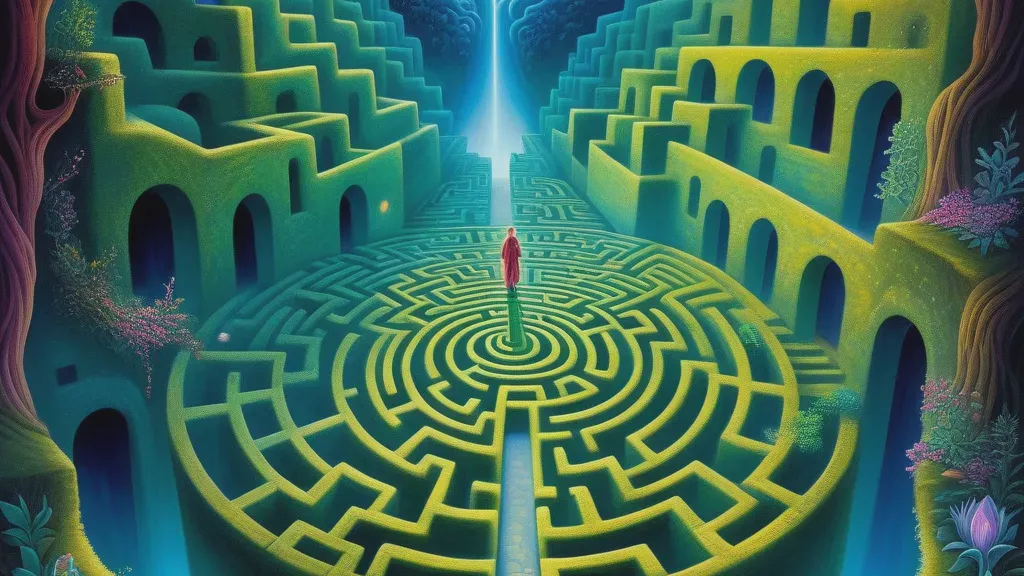
Maze
Jungian Archetypes
Meaning
A maze in dreams represents confusion, being lost, or struggling to find direction in life. It symbolizes the complexity of the psyche and the challenge of navigating through confusion toward clarity. Mazes can indicate feeling trapped by circumstances, confusion about life choices, or the need to find one's way through psychological complexity.
Psychological Interpretation
From a Jungian perspective, the maze represents the Shadow archetype and the Trickster, embodying confusion, deception, and the need for discernment. The dream suggests encountering the labyrinthine nature of the unconscious mind and the challenge of finding one's true path. It may indicate a need to develop wisdom, trust your intuition, and navigate through psychological complexity with awareness.
Traditional Symbol Meaning
The symbol of the maze in dreams has held a significant place in various cultures throughout history, often representing complex paths, challenges, and the journey of self-discovery. In Western traditions, mazes are frequently associated with the myth of the Minotaur, where the labyrinth serves as a metaphor for navigating one's fears and confronting the unknown. This interpretation suggests that dreaming of a maze may reflect feelings of confusion or being trapped in a situation from which one seeks an escape. The maze can symbolize the intricate pathways of the mind, urging dreamers to explore their subconscious and confront unresolved issues. In Eastern cultures, particularly within Buddhist traditions, the maze can be seen as a representation of the mind's entanglements and the journey toward enlightenment. The winding paths of a maze may symbolize the various distractions and illusions that one must navigate to achieve clarity and understanding. Similarly, in indigenous cultures, the concept of a maze can be linked to the spiritual journey of finding one's true self among the distractions of the material world. Here, the dream of a maze may encourage individuals to seek guidance and wisdom, urging them to trust their instincts as they navigate life's complexities. Historically, the maze has also been viewed as a rite of passage in many cultures. In ancient Greece, labyrinths were often constructed as sacred spaces where individuals would undergo transformative experiences. Dreaming of a maze in this context may indicate a personal transformation or a significant life change, suggesting that the dreamer is on the brink of a new understanding or phase in life. Traditional wisdom often emphasizes the importance of patience and perseverance when faced with life's challenges, advising dreamers to embrace the journey through the maze rather than seeking a quick exit. Culturally, variations in the meaning of mazes exist, with some interpretations focusing on the idea of choice and free will. In certain Native American traditions, the maze is seen as a symbol of the life path and the decisions that shape one's destiny. This perspective encourages dreamers to reflect on their choices and the direction of their lives. Overall, the dream symbol of the maze invites introspection, urging individuals to confront their fears, embrace their journey, and seek clarity amidst the complexities of existence.
Contemporary Psychological
Dreaming of a maze often symbolizes the complex pathways of the mind, particularly in the context of contemporary psychology, which emphasizes neuroscience and emotional processing. A maze can represent the intricate and sometimes overwhelming nature of our thoughts, emotions, and experiences. From a neurological standpoint, navigating a maze in a dream may mirror the brain's efforts to process information and consolidate memories. As we encounter various challenges and decisions in waking life, our subconscious mind may manifest these struggles through the imagery of a maze, reflecting the mental effort required to find clarity and resolution. The deeper psychological significance of a maze in dreams often relates to feelings of confusion, entrapment, or the search for direction. This symbolism can highlight common themes of uncertainty and the need for problem-solving in the dreamer's life. When faced with a maze, the dreamer might be grappling with complex emotions or unresolved issues, suggesting that they are at a crossroads or facing a significant decision. The maze may serve as a representation of the dreamer's inner world, indicating that they are navigating through emotional turmoil or cognitive dissonance, striving to make sense of their experiences and find a way forward. Dreaming about a maze can provide valuable insights into the dreamer's current life situation. It may indicate that they are feeling lost or overwhelmed by choices, reflecting a state of anxiety or stress. Alternatively, it could suggest that the dreamer is on a journey of self-discovery, working through layers of their psyche to uncover deeper truths about themselves. This exploration can be both challenging and enlightening, as it encourages the individual to confront their fears and uncertainties. The experience of navigating a maze can also symbolize resilience, as it highlights the importance of persistence and adaptability in overcoming obstacles. For practical psychological insights, individuals who dream of mazes might benefit from engaging in reflective practices, such as journaling or mindfulness, to clarify their thoughts and emotions. Understanding the symbolism of the maze can encourage dreamers to confront their feelings of confusion or entrapment and actively seek solutions in their waking life. By recognizing that navigating a maze is a process that requires patience and self-compassion, individuals can empower themselves to face challenges head-on, ultimately leading to personal growth and emotional healing.
Gestalt / Parts of Self
In Gestalt Psychology, dreams are viewed as a reflection of the self, where each element within the dream represents different aspects of the dreamer's psyche. When a maze appears in a dream, it often symbolizes the complexities and challenges the dreamer is currently facing in their life. The maze can represent feelings of confusion, entrapment, or the search for direction, mirroring the internal struggles one may be experiencing. This symbol invites the dreamer to explore parts of themselves that may feel lost or disoriented, highlighting the need for integration and ownership of these fragmented aspects. The deeper psychological significance of a maze in dreams can be associated with themes of exploration and self-discovery. Navigating through a maze requires problem-solving skills and the ability to confront obstacles, which can reflect the dreamer's current life situation. It may indicate that the individual is at a crossroads or facing decisions that require careful consideration. The process of finding a way out of the maze can symbolize the journey towards understanding oneself better, as each turn and dead end represents different facets of the self that need to be acknowledged and integrated. Dreaming of a maze can also suggest a need for introspection and reflection. It may indicate that the dreamer is feeling overwhelmed by external pressures or internal conflicts, leading to a sense of being lost. This symbol encourages the dreamer to take ownership of their feelings and experiences, recognizing that the maze is a projection of their inner world. By engaging with the maze, the dreamer can begin to uncover hidden emotions or unresolved issues, paving the way for personal growth and healing. Practical psychological insights from this interpretation suggest that when encountering a maze in dreams, individuals should embrace the opportunity for self-exploration. Keeping a dream journal can be beneficial, allowing the dreamer to map out their feelings and thoughts related to the maze. Reflecting on the emotions experienced during the dream can provide clarity on current life challenges and facilitate the integration of different parts of the self. Ultimately, the maze serves as a powerful metaphor for the journey of self-discovery, encouraging individuals to confront their fears and uncertainties with courage and curiosity.
Jungian / Archetypal
In the framework of Jungian and Analytical Psychology, the symbol of a maze in dreams often represents the complexities and challenges of the inner psyche. A maze can be seen as a manifestation of the unconscious mind, embodying the intricate pathways and obstacles that one must navigate during the process of individuation—the journey toward self-realization and wholeness. This symbol may indicate that the dreamer is currently facing a situation in their waking life that feels convoluted or confusing, reflecting an internal struggle to find clarity and direction. The maze serves as a metaphor for the labyrinthine nature of the self, where each turn and dead end may represent different aspects of the personality, including the shadow—the repressed or unacknowledged parts of oneself. Delving deeper into the psychological significance of the maze, it often evokes themes of exploration and the search for meaning. The act of moving through a maze can symbolize the dreamer's quest for understanding and integration of various aspects of their psyche. In Jungian terms, this journey may involve confronting the shadow, as the maze can lead to encounters with parts of oneself that are often hidden or denied. The complexity of the maze may reflect the multifaceted nature of one’s identity, suggesting that the dreamer is in a phase of self-discovery where they are learning to embrace both their light and dark sides. Dreaming of a maze can also indicate feelings of being trapped or overwhelmed by life’s circumstances. It may suggest that the dreamer feels lost in their current situation, struggling to find a way out or a sense of purpose. This feeling of entrapment can lead to anxiety, symbolizing the fear of not being able to navigate through one’s challenges. However, the maze also offers a powerful opportunity for growth; by engaging with this symbol, the dreamer is encouraged to reflect on their current life path, assess their choices, and confront any fears that may be hindering their progress. For practical psychological insights, individuals who encounter mazes in their dreams can benefit from introspection and self-reflection. Journaling about the emotions experienced in the dream and the specific challenges represented by the maze can provide valuable insights into their waking life. Additionally, engaging in creative expression or therapy can help the dreamer explore the deeper layers of their psyche, facilitating the individuation process. Ultimately, the maze serves as a reminder that while the journey may be complex and fraught with obstacles, it is also an essential part of the path toward self-discovery and personal growth.
Psychodynamic / Freudian
In psychodynamic psychology, the symbol of a maze in dreams often represents the complexities and challenges of the dreamer's inner world. The manifest content of the dream—what the dreamer consciously remembers—may involve navigating through a labyrinthine structure, feeling lost, or encountering obstacles. However, the latent content, or the deeper psychological meaning, suggests that the maze symbolizes the dreamer's struggle with their own thoughts, emotions, and unresolved conflicts. This can reflect feelings of confusion or entrapment in their waking life, indicating a need for self-exploration and understanding. The maze can also represent wish fulfillment, a core concept in psychodynamic theory. The act of navigating a maze may symbolize the dreamer's desire to find clarity or resolution in a particular area of their life. This could relate to personal relationships, career choices, or internal conflicts. The journey through the maze reflects the dreamer's quest for self-discovery and the longing to overcome barriers that impede their progress. Thus, the maze serves as a metaphor for the intricate pathways of the psyche, where the dreamer seeks to reconcile their desires with their reality. Additionally, dreaming of a maze can highlight the use of defense mechanisms. The feelings of being lost or stuck may indicate the dreamer's avoidance of confronting certain issues or emotions that are difficult to face. For instance, if the dreamer finds themselves repeatedly hitting dead ends, it may suggest they are employing denial or repression as a way to cope with anxiety. Recognizing these patterns in dreams can provide valuable insights into the dreamer's behavior in waking life and encourage them to confront the underlying issues that may be causing distress. Ultimately, understanding the symbolism of a maze in dreams invites the dreamer to engage in introspection and self-reflection. It encourages them to consider the areas of their life where they may feel lost or overwhelmed and to explore the emotions and thoughts that arise from such experiences. By acknowledging these feelings and working through the complexities of their psyche, the dreamer can begin to navigate their own personal maze, leading to greater self-awareness and emotional growth.
Cultural & Historical Origins
Mazes appear in mythology as sacred spaces and tests of wisdom, from the Greek Labyrinth of Crete to medieval cathedral labyrinths used for spiritual contemplation. The Minotaur myth represents the danger of being lost in the maze of one's own nature. Many cultures used mazes as symbols of spiritual initiation and the journey toward enlightenment.
Contextual Variations
Being lost in a maze
Confusion about life direction or feeling trapped by circumstances
Finding the exit or solving the maze
Gaining clarity, finding direction, and overcoming confusion
Frequently Asked Questions
Does a maze dream mean I'm making wrong choices?
What if I keep going in circles in the maze?
Journaling Prompts
- What area of my life feels confusing or like I'm going in circles?
- What clarity or direction am I seeking, and what's preventing me from finding it?
Related Symbols
Dreamed about Maze?
Get a personalized AI interpretation that connects this symbol to your specific life circumstances.
Interpret My Dream