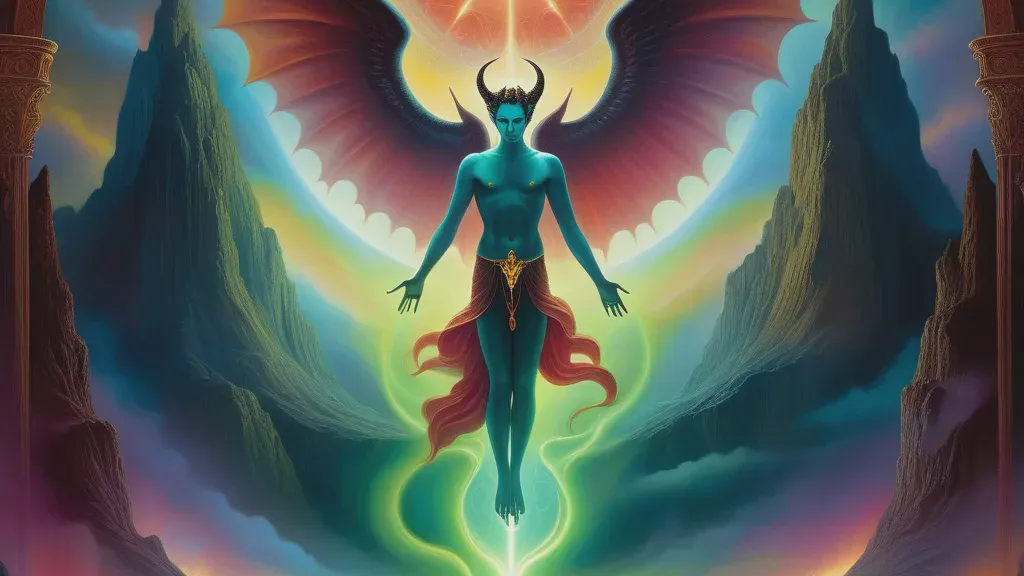
Lucifer
Jungian Archetypes
Meaning
Dreams of Lucifer often symbolize inner conflict and the struggle with morality. Psychologically, they may reflect the duality of human nature, portraying the tension between light and darkness within the self.
Psychological Interpretation
From a Jungian perspective, Lucifer embodies the shadow, representing repressed desires and societal taboos. Cognitive theories might interpret these dreams as grappling with ethical dilemmas, while practical psychology views them as invitations to self-reflection.
Cultural & Historical Origins
In Christian theology, Lucifer represents the fallen angel, embodying pride and rebellion. Similarly, in John Milton's 'Paradise Lost', he symbolizes the complexities of free will and the consequences of defiance against divine authority.
Contextual Variations
You see a figure labeled with a name you recognize, but the figure behaves like a child—curious, impulsive, testing boundaries. It offers you a shortcut, and when you take it, you realize you’ve skipped a lesson you were supposed to learn.
Dreaming of Lucifer can symbolize moral tension and temptation—especially the pull to bypass responsibility. Psychologically, the childlike behavior suggests the impulse isn’t purely “evil,” but driven by unmet needs like autonomy, attention, or relief from constraint.
A bright light forms above you and a voice says you can “choose what you want,” then it laughs when you hesitate. You wake up feeling guilty for wanting something you aren’t sure you’re allowed to want.
This can reflect internal conflict between desire and conscience. Psychologically, the laughing voice may represent critical self-talk that intensifies when you approach authenticity.
You’re in a school or workplace where rules are strict, and a childlike figure tempts you to break them quietly. You refuse, but the refusal comes with resentment, and the dream shifts into a debate with your own thoughts.
Refusal plus resentment suggests that “doing the right thing” may still feel like self-denial. Psychologically, the dream can be inviting you to examine whether your boundaries are values you own—or rules you comply with to avoid inner punishment.
Frequently Asked Questions
Why did my dream use the name Lucifer specifically?
Does the dream mean I’m doing something wrong?
What if the figure felt playful rather than terrifying?
Journaling Prompts
- What temptation was offered in the dream (a shortcut, a rule-breaking, a forbidden pleasure), and what need might it have been meeting?
- How did you feel during the choice—fear, guilt, excitement, resentment—and what does that emotion reveal about your values?
- If your “conscience” spoke in the dream, what would it demand from you, and what would it be missing?
Related Symbols
Dreamed about Lucifer?
Get a personalized AI interpretation that connects this symbol to your specific life circumstances.
Interpret My Dream