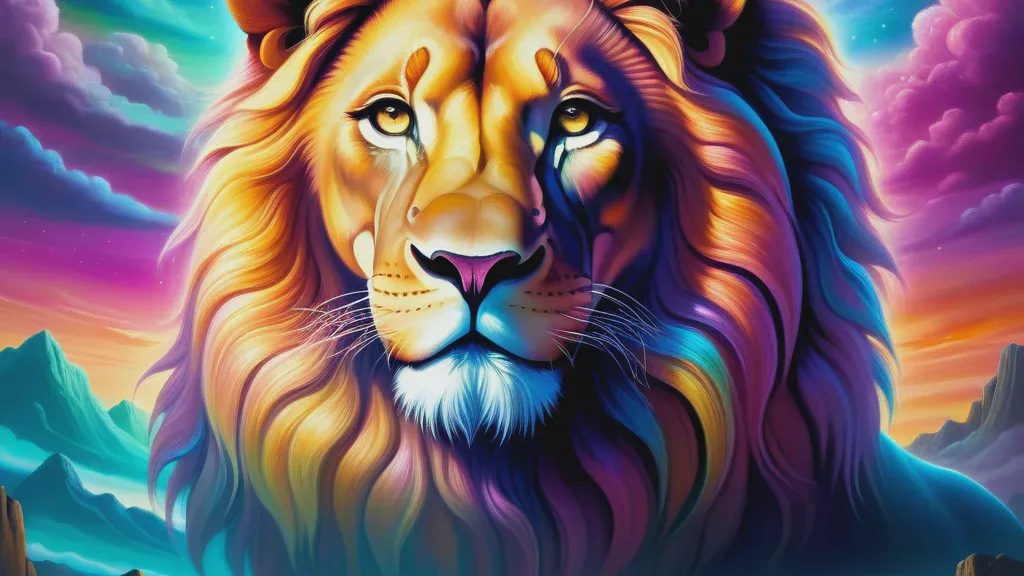
Lion
Jungian Archetypes
Meaning
The lion represents courage, strength, nobility, and the heroic spirit. It symbolizes leadership, personal power, and the ability to command respect through authentic presence and inner conviction.
Psychological Interpretation
In Jungian psychology, the lion embodies the Hero archetype—the courageous warrior within who faces challenges with bravery. It also represents the Self, the integrated whole of the psyche radiating power and authenticity.
Contemporary Psychological
When a lion appears in dreams, the brain is often processing emotional material related to power dynamics, dominance hierarchies, and threat assessment in waking life. From a contemporary neuroscience perspective, the lion functions as a threat simulation—the dreaming brain rehearses scenarios involving competition, social hierarchy challenges, or situations where the dreamer feels either threatened by someone else's power or grappling with their own capacity to assert authority. This threat simulation serves an adaptive function: by running these scenarios during sleep, the brain can practice emotional regulation strategies and test different responses to dominance challenges without real-world consequences. The lion symbol in dreams frequently reflects memory consolidation of recent experiences involving power imbalances, competitive situations, or moments when the dreamer encountered someone perceived as dominant or threatening. The brain may be integrating lessons from workplace conflicts, social confrontations, or situations where the dreamer felt their autonomy or status was at stake. The emotional intensity of the lion—whether it appears aggressive, protective, or indifferent—signals how the brain is categorizing and processing these experiences in terms of threat level and emotional significance. Cognitively, lions in dreams reveal patterns in how the dreamer's brain is organizing thoughts about control, vulnerability, and agency. If the dreamer is fleeing from the lion, the cognitive pattern suggests avoidance or emotional dysregulation in response to perceived threats. If the dreamer is confronting or controlling the lion, the brain is rehearsing assertiveness and boundary-setting. The lion's behavior and the dreamer's response together map the current emotional regulation strategy the brain is testing—whether through fight, flight, or negotiation. This cognitive work during sleep helps consolidate new approaches to handling power dynamics and threat perception in waking relationships and situations. The presence of a lion in dreams ultimately indicates the brain is engaged in active emotional regulation work around themes of power, safety, and social hierarchy. The specific narrative context—whether the lion is hunting, protecting, or simply present—determines which aspect of threat simulation and emotional processing is most salient. This dream content reflects the brain's ongoing effort to integrate experiences of dominance and vulnerability into a coherent emotional and cognitive framework.
Gestalt / Parts of Self
The lion in dreams represents the dreamer's own power, authority, and capacity to command presence. In Gestalt work, the lion is not a separate force or external threat—it is a part of the dreamer's own psyche that holds dominance, courage, and the ability to assert boundaries. When a lion appears in a dream, the dreamer is encountering their own strength, their own roar, their own capacity to take up space and be seen. The question becomes: what part of myself is this lion? Am I owning my own power, or am I projecting it outward onto others, seeing them as the powerful ones while I remain small? Often the dreamer projects their own authority onto the lion, experiencing it as something external and threatening rather than recognizing it as their own disowned strength. The lion may appear dangerous or dominant because the dreamer has not yet claimed their right to be powerful, to have needs, to say no. The dialogue here is between the part of self that wants to be safe and compliant, and the part that knows it has teeth, a voice, and the right to protect itself. The lion is not the enemy—it is the invitation to reclaim what belongs to the dreamer: their own fierce presence, their own legitimate authority over their own life. Ownership of the lion means recognizing that the power, pride, and dominance it represents are not foreign to the dreamer but are living within them. It means asking: where am I not allowing myself to be strong? Where am I giving my power away to others, or fearing my own capacity to lead, to protect, to take what is mine? The lion calls the dreamer to integrate this part—not to become aggressive or dominating, but to own the full spectrum of their own strength. When the dreamer can say "that lion is me," the dream shifts from threat to wholeness, from fragmentation to the reclamation of a vital, necessary part of self.
Jungian / Archetypal
The lion in dreams embodies the archetype of sovereign power and solar consciousness—the Self in its most radiant, commanding form. As king of beasts, the lion represents the dreamer's capacity for authority, courage, and authentic self-assertion. In Jungian terms, the lion carries the energy of the Hero archetype, the warrior who stands firm in their own truth and claims their rightful place in the world. This majestic creature emerges from the collective unconscious as a symbol of ego strength not in the pathological sense, but as the healthy, integrated center of the personality—the "I am" that knows its own power and moves through the world with conviction. The lion also functions as a mirror for the Shadow's relationship with power and dominance. When the lion appears in dreams, it often signals a confrontation with one's own capacity for assertion, aggression, and control. The dreamer may be avoiding their own strength, projecting their power onto external authorities, or conversely, overidentifying with domination and losing touch with compassion. The Shadow here asks: What power am I denying in myself? What authority am I refusing to claim? The lion's roar is the voice that demands to be heard, and its presence invites the dreamer to examine whether they are silencing themselves or roaring without wisdom. From the perspective of individuation, the lion represents a critical threshold in the journey toward wholeness. To encounter the lion is to meet the Self's demand for authentic expression and integration of one's full strength. This is not mere ego inflation but the mature recognition of one's capabilities and the responsibility that comes with them. The lion teaches that individuation requires not the transcendence of power but its conscious integration—the ability to be both fierce and fair, commanding yet connected to the collective good. The dreamer who befriends or is befriended by the lion has begun to reconcile their personal will with the deeper Self. The compensatory message the unconscious offers through the lion is clear: reclaim your authority. If the dreamer has been diminished, passive, or self-effacing, the lion calls them to stand tall. If they have been tyrannical or reckless with power, the lion's nobility reminds them that true strength is tempered with dignity and purpose. The lion's solar consciousness illuminates what has been hidden in shadow—the dreamer's own capacity to lead, to protect, to shine. This archetype does not permit mediocrity or self-abandonment; it demands that the dreamer step into their full stature and claim the throne that is rightfully theirs in their own life.
Psychodynamic / Freudian
The lion in dreams represents a condensation of power, authority, and aggression—the manifest content of a majestic, fearsome creature that embodies dominance. At the latent level, the lion often symbolizes the dreamer's relationship to paternal authority and the ego ideal: the internalized image of strength, mastery, and masculine power that the dreamer either aspires to embody or fears being overwhelmed by. The lion's appearance in a dream frequently expresses a wish to claim or reclaim power—to assert oneself, to dominate, or to be recognized as formidable—while simultaneously defending against the anxiety that such power provokes. This wish-defense dynamic reveals an underlying conflict: the desire for authority coupled with the fear of its consequences, whether loss of control, aggression toward others, or retaliation from those threatened by one's power. The defense mechanisms at work when the lion appears often include projection and displacement. The dreamer may project their own repressed aggression or ambition onto the lion, experiencing it as an external threat rather than acknowledging these impulses as their own. Alternatively, the lion may displace paternal authority—the actual father or father figure—allowing the dreamer to process feelings about authority without directly confronting the original relationship. Condensation is also present: the lion compresses multiple meanings (power, danger, nobility, sexuality) into a single image, allowing the psyche to express complex conflicts in symbolic form. The dreamer's reaction to the lion in the dream—whether they flee, fight, submit, or befriend it—reveals which defense is dominant and what the underlying wish truly is. Childhood origins of the lion symbol typically trace to early experiences with paternal authority and the formation of the superego. A father who was experienced as powerful, distant, or aggressive may be internalized as a lion-like figure—simultaneously admired and feared. The dreamer may have learned that power is either something to aspire to or something dangerous to avoid, creating an ambivalent relationship with their own capacity for assertion and dominance. Early experiences of being overpowered, humiliated, or forced to submit to authority can also activate the lion symbol as a representation of the aggressor. Conversely, if the dreamer's own aggression was severely punished or shamed in childhood, the lion may represent the repressed aggressive impulses that the superego has forbidden—material pressing toward consciousness precisely because it has been denied expression. The lion thus becomes a vehicle for reworking the original conflict with authority, power, and the right to assert oneself in the world.
Cultural & Historical Origins
In ancient Egypt, the lion was sacred to the sun god Ra and represented divine power and protection. In Christian symbolism, the lion represents Christ and resurrection. Hindu tradition associates lions with Durga, the divine mother and warrior goddess.
Contextual Variations
Lion protecting you
Inner strength and courage emerging to defend your authentic self
Lion roaring or attacking
Assertion of personal power and the need to establish boundaries
Frequently Asked Questions
What does a lion dream symbolize?
Can a lion dream be negative?
Journaling Prompts
- What courageous action am I being called to take?
- How can I embody the lion's authentic power and presence?
Related Symbols
Dreamed about Lion?
Get a personalized AI interpretation that connects this symbol to your specific life circumstances.
Interpret My Dream