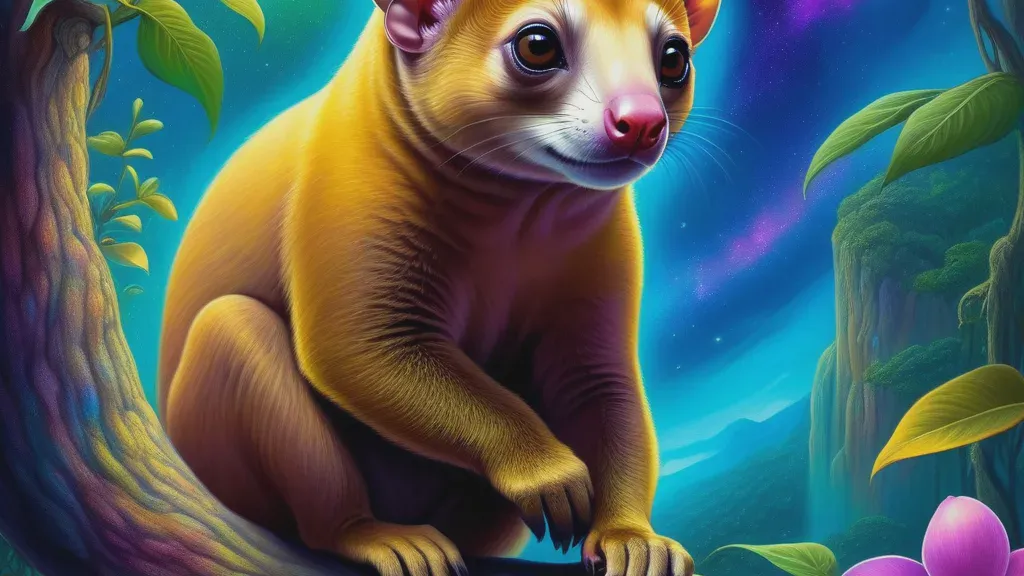
Kinkajou
Jungian Archetypes
Meaning
Dreaming of a kinkajou can symbolize playful curiosity and social connections. This creature's nocturnal nature reflects the exploration of the subconscious and the need to embrace one's instincts and desires.
Psychological Interpretation
Jungian analysis may interpret the kinkajou as a representation of the Wise Old Man, guiding the dreamer through introspection. Cognitive psychology emphasizes the importance of social interactions, while practical psychology highlights the need for fun and spontaneity in life.
Cultural & Historical Origins
In Amazonian folklore, kinkajous are viewed as playful spirits, embodying joy and curiosity. In popular culture, they appear in children's literature, symbolizing adventure and discovery, often encouraging exploration of the unknown.
Contextual Variations
A kinkajou climbs onto your lap and gently steals a snack, then brings it back like a playful gift. You laugh, and the mood shifts from tension to warmth.
This dream often signals reconnection with inner play and self-nurturing. Psychologically, the kinkajou’s affectionate mischief can represent recovering permission to enjoy life without earning it.
You follow a kinkajou through a dim house where each room contains a different childhood memory. The kinkajou pauses at a doorway, and you feel safe enough to enter.
The kinkajou can symbolize the inner child becoming accessible again, with the “wise” part of you guiding the process. Psychologically, it suggests healing through lightness—allowing old feelings to be revisited with more care and less pressure.
A kinkajou leads you to a caretaker-like figure who teaches you a simple routine—breathing, tidying, or making tea. Afterward, you feel steadier and less guarded.
This points to nurturance and practical wisdom: soothing habits that support your nervous system. Psychologically, it may indicate you’re ready to practice care that feels sustainable, not performative.
Frequently Asked Questions
Why would a kinkajou show up when I’m feeling stressed?
What does it mean if the kinkajou is mischievous but not harmful?
How do I connect this dream to healing?
Journaling Prompts
- What part of me feels like it needs permission to be playful again?
- Where do I confuse care with performance, and what would gentle care look like instead?
- Which childhood memory or feeling does the kinkajou seem to “unlock,” and what emotion is waiting behind it?
Related Symbols
Dreamed about Kinkajou?
Get a personalized AI interpretation that connects this symbol to your specific life circumstances.
Interpret My Dream