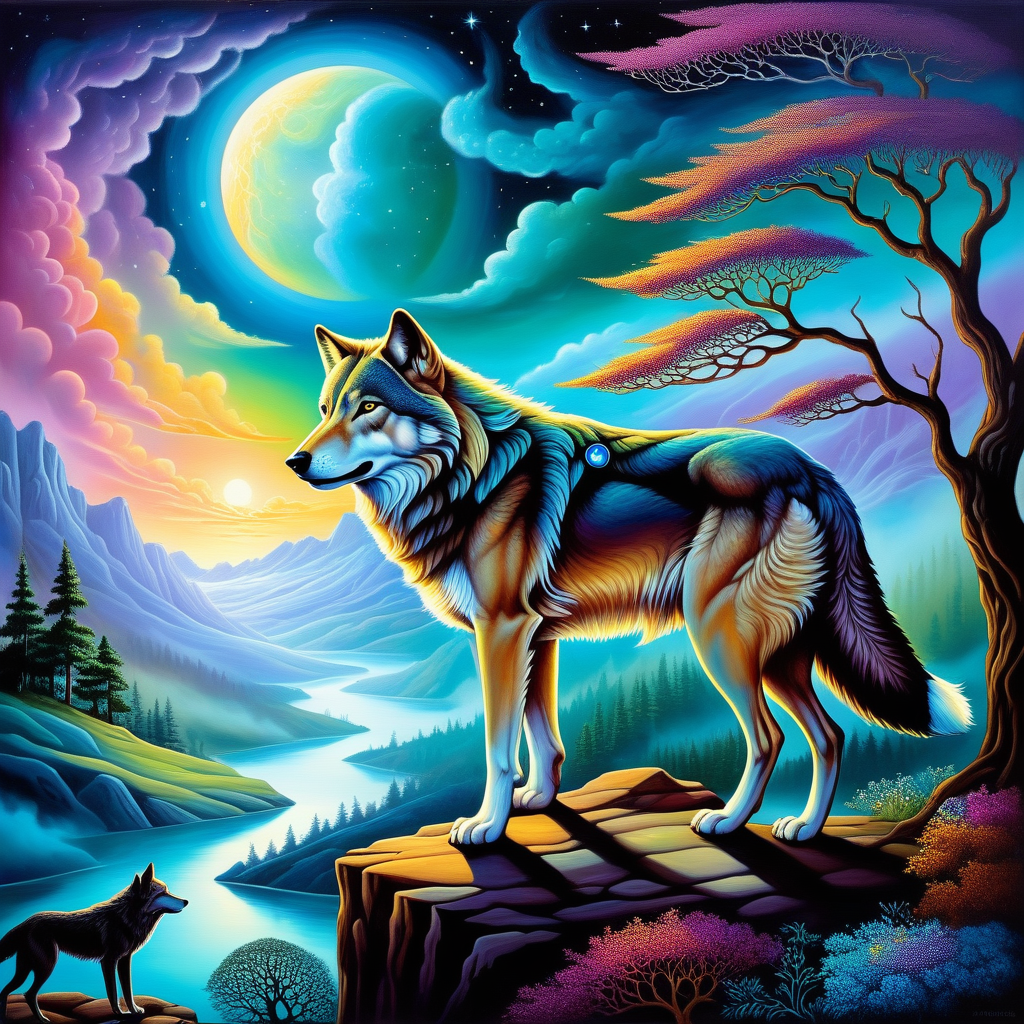
Wolf
Jungian Archetypes
Meaning
Wolves in dreams embody raw instinct, social bonds, and the wild aspects of your nature that civilization has tamed. A lone wolf may represent independence or isolation, while a pack suggests community dynamics and loyalty.
Psychological Interpretation
The wolf often represents the Shadow — untamed drives and desires that society demands you suppress. It can also embody the Wise Old Man when appearing as a guide, offering instinctual wisdom that your rational mind overlooks.
Gestalt / Parts of Self
The wolf in dreams represents the dreamer's own instinctual nature—the part of self that knows how to sense danger, move with purpose, and act without overthinking. In Gestalt work, the wolf is not something external to fear or admire, but rather a disowned aspect of the dreamer's own psyche. Many people project their instinctual power onto the wolf, treating it as "other," when in fact the wolf's keen awareness, directness, and animal intelligence belong to them. The dreamer is being invited to recognize and reclaim this part of themselves—the capacity to trust gut feeling, to move decisively, and to honor the body's wisdom. Pack loyalty in the wolf speaks to the dreamer's own need for belonging and the part of self that seeks connection within a group. Yet there is often a tension here: the dreamer may project their longing for tribe onto the wolf while simultaneously disowning their own fierce need to belong. The wolf's pack is not separate from the dreamer—it is the dreamer's own desire for authentic kinship, for being known and accepted as they truly are. When the wolf appears in dreams, it asks: What part of your need for belonging are you hiding? What loyalty to yourself are you sacrificing to fit in elsewhere? The predator aspect of the wolf—its capacity to hunt, to take what it needs, to assert power—often triggers projection and avoidance in the dreamer. Many people have been taught that predatory instinct is dangerous or shameful, so they push this part away and attribute it to the wolf as something "out there." But the wolf's predatory nature is the dreamer's own healthy aggression, their capacity to pursue what matters, to set boundaries, and to claim their own power. The dream invites the dreamer to own this part without guilt—not to become cruel, but to integrate the strength and directness that predatory awareness brings. Freedom in the wolf represents the dreamer's own wild, untamed self—the part that resists domestication, that refuses to be caged by others' expectations. When the wolf runs free in a dream, it is the dreamer's own freedom calling. Yet often the dreamer projects this freedom onto the wolf and watches from a distance, as if freedom belongs to the animal but not to themselves. The Gestalt invitation is clear: the wolf's freedom is your freedom. What part of your own wildness are you keeping at arm's length? What would it mean to own your own need to move, to choose, to live on your own terms? The wolf in the dream is not a separate creature—it is the dreamer's own self, whole and alive, waiting to be claimed.
Jungian / Archetypal
The wolf in dreams embodies the Shadow archetype—the repository of instinctual power, primal aggression, and untamed desire that civilized consciousness often represses or denies. In Jungian psychology, the wolf represents the predatory, instinctual nature that lurks beneath the persona, the socially acceptable mask we present to the world. This is not evil, but rather the raw, authentic force of the psyche that refuses domestication. The wolf's hunger, its fierce loyalty to the pack, and its capacity for both nurturing and killing reflect the full spectrum of human instinct that modern life asks us to suppress. When the wolf appears in dreams, it signals that the unconscious is demanding recognition of these disowned energies—the aggression, sexuality, and wild autonomy that the conscious mind has exiled. Yet the wolf also embodies the Wise Old Man archetype, the teacher and guardian who initiates the dreamer into deeper knowledge. In many mythological traditions, the wolf serves as a guide and protector, a figure of wisdom earned through survival and experience. This dual nature—predator and sage—reveals the individuation process at work: the journey toward wholeness requires integrating the Shadow's instinctual power rather than defeating it. The wolf teaches that freedom and authentic power come not from denying our animal nature, but from conscious relationship with it. The Wise Old Man aspect of the wolf offers the dreamer a path forward: acknowledge the predator within, honor its intelligence and strength, and allow it to guide rather than control. The collective meaning of the wolf in the unconscious speaks to humanity's ancient relationship with this creature—both feared and revered across cultures. The wolf represents the boundary between civilization and wilderness, between the tamed self and the wild self that remembers its origins. In the individuation journey, the wolf appears when the psyche recognizes that wholeness cannot be achieved through further repression or control, but only through integration. The dreamer is being called to reclaim the wolf's gifts: instinctual knowing, pack loyalty (authentic connection), territorial awareness, and the freedom to move between worlds. This is the compensatory message of the unconscious—that the path to greater consciousness and authenticity runs through the Shadow, not around it.
Psychodynamic / Freudian
The wolf in dreams occupies a paradoxical space in the psychodynamic unconscious—simultaneously representing the predatory aggression that the dreamer fears in themselves and the raw survival instinct that civilization demands be repressed. At the manifest level, the wolf appears as a literal threat: a dangerous animal embodying predatory power and the capacity to harm. Yet at the latent level, the wolf often expresses a wish that has been forbidden or disowned—the desire to be powerful, to dominate, to claim one's own aggression rather than submit passively to social constraint. The dream's manifest content (being hunted, threatened, or witnessing the wolf's violence) serves as a defense against acknowledging the latent wish: to possess and exercise the wolf's strength without guilt or consequence. The defense mechanisms at work in wolf dreams typically involve displacement and projection. The dreamer's own aggressive impulses—rage at authority, resentment of powerlessness, competitive hunger—are displaced onto the wolf figure, allowing the dreamer to experience these forbidden feelings as external threat rather than internal desire. Condensation often occurs as well, with the wolf absorbing multiple sources of anxiety: the father's authority, the rival sibling, the predatory aspects of sexuality, or the dreamer's own capacity for cruelty. Through projection, the wolf becomes the repository of everything the dreamer has learned to disown in themselves. The pack hierarchy that wolves embody may also trigger reaction formation—the dreamer consciously identifies with the weak or hunted, while unconsciously envying the wolf's position at the apex of dominance. Childhood origins of the wolf symbol frequently trace to early experiences of paternal authority, sibling rivalry, or moments when the child's own aggression was severely punished or shamed. A father who was experienced as harsh, unpredictable, or physically intimidating may be internalized as the wolf—the powerful predator who cannot be challenged. Alternatively, the wolf may represent the child's own aggressive impulses as they were reflected back through parental disapproval: "You're being wild, savage, dangerous." The pack hierarchy resonates with the child's early experience of family structure, where dominance and submission were the organizing principles. The survival instinct the wolf embodies connects to primal fears from infancy—abandonment, starvation, being devoured—that remain encoded in the unconscious long after material security is assured. What presses toward consciousness in wolf dreams is the repressed recognition that aggression, dominance, and predatory instinct are not foreign invaders but integral to human nature and psychological survival. The dream invites the dreamer to integrate rather than exile these capacities—to acknowledge that power, assertion, and even controlled aggression are necessary for authentic selfhood. The wolf's presence signals that something vital has been split off and projected outward, and that reclaiming it (not acting it out, but acknowledging it as one's own) is essential to wholeness. The latent wish beneath the manifest threat is often the wish to stop being prey—to stand in one's own power without shame or fear of retaliation.
Contemporary Psychological
Wolves in dreams function as threat simulation material, allowing the brain to rehearse responses to predatory danger and social hierarchy challenges. From a contemporary neuroscience perspective, the wolf represents a primal threat category that activates the amygdala and threat-detection systems—not because wolves are literally present in modern life, but because the brain's threat architecture evolved to process predatory danger. When wolves appear in dreams, they often signal that the dreamer's nervous system is processing real-world threats: competitive pressure, social dominance struggles, or situations where the dreamer feels hunted or vulnerable. The dream may be running simulations of escape, confrontation, or alliance-building strategies, allowing the brain to practice threat responses in a safe sleep environment. Pack dynamics in wolf dreams engage memory consolidation around social belonging and group hierarchy. The brain uses these scenarios to integrate recent experiences of social competition, exclusion, or the need to establish one's position within a group. If the dreamer has recently navigated workplace politics, friendship conflicts, or family power struggles, wolf pack imagery allows the brain to consolidate these social learning experiences—rehearsing how to assert boundaries, find allies, or survive within a hierarchical structure. The presence of multiple wolves, rather than a solitary predator, shifts the emotional processing from individual threat to collective dynamics, engaging the brain's social threat detection systems and its capacity to model group behavior. Emotional regulation through wolf symbolism involves processing fear, aggression, and survival instinct in a contained dream narrative. Rather than suppressing these intense emotions, the dream allows the brain to activate and modulate them—to feel the adrenaline of threat without actual danger, and to practice emotional responses to predatory or hostile situations. This is particularly relevant when the dreamer is managing chronic stress, workplace aggression, or situations requiring assertiveness. The cognitive pattern visible here is the brain's attempt to integrate survival-oriented emotions into a coherent sense of self, moving from passive fear toward active coping. The wolf dream may indicate that emotional regulation is underway—the brain is neither avoiding the threat nor being overwhelmed by it, but rather working through the appropriate level of vigilance and response needed in waking life. The threat simulation function of wolf dreams becomes most apparent when considering what specific threat is being rehearsed. Is the dreamer practicing escape? Alliance-building? Confrontation? The narrative structure of the wolf dream reveals the cognitive strategy the brain is testing. A dreamer who runs from wolves may be consolidating avoidance patterns; one who stands ground or finds allies may be integrating assertiveness or social support. From a contemporary perspective, the wolf is not a symbol to be decoded but a functional element in the brain's threat-processing system—a way of making sense of predatory dynamics, whether literal or metaphorical, that the dreamer is currently navigating in waking life.
Cultural & Historical Origins
In Norse mythology, Fenrir the wolf threatens the gods at Ragnarök, while Odin's wolves Geri and Freki represent greed and desire. Native American traditions honor the wolf as teacher and pathfinder. Rome's founders were nursed by a she-wolf.
Contextual Variations
A wolf howling at the moon
Represents a primal expression of longing, a call to reconnect with your authentic instincts.
Being stalked by a wolf
Suggests an unacknowledged shadow aspect is closing in, demanding integration rather than continued avoidance.
Frequently Asked Questions
Is dreaming of wolves a bad sign?
What does a friendly wolf mean in a dream?
Journaling Prompts
- What wild or instinctual parts of myself have I been forced to suppress, and how do they manifest?
- Do I feel more like a lone wolf or part of a pack right now, and what does that reveal about my needs?
Related Symbols
Dreamed about Wolf?
Get a personalized AI interpretation that connects this symbol to your specific life circumstances.
Interpret My Dream