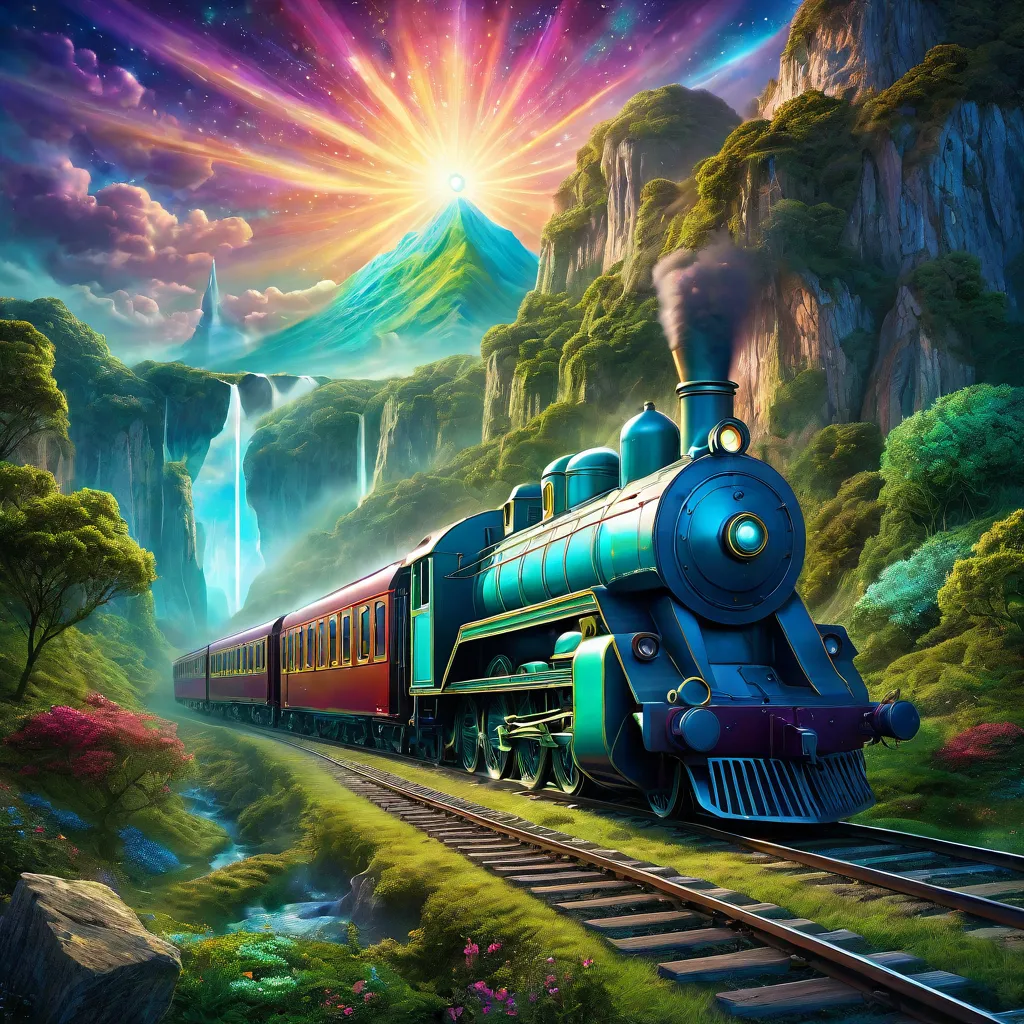
Train
Jungian Archetypes
Meaning
Rails, unlike a road, do not let a traveler improvise a route. A train in a dream carries the dreamer's life forward along a path someone or something else has already laid down, they can accelerate, sit still, or watch the window, but the direction itself is largely fixed. The dream tends to surface when a life feels like it is moving on a schedule set by circumstance, obligation, or an earlier decision, rather than a choice being made fresh in the present.
Psychological Interpretation
Whether the dreamer is driving the train, riding as a passenger, or watching it depart without them carries most of the dream's meaning. Being at the controls suggests a felt sense of agency over a trajectory, even one the dreamer did not fully choose, while riding passively as a passenger suggests a life currently being carried along by other people's decisions, a job's demands, or a plan made long ago that has not been revisited. Missing the train, or watching it leave the platform, is one of the most common anxiety images connected to trains and typically reflects a fear of falling permanently behind some milestone, whether that milestone is realistic or entirely imagined. What happens along the route matters as much as the departure or arrival: a train that stops unexpectedly between stations often names a period of enforced waiting the dreamer resents, while unfamiliar scenery outside the window can mean the dreamer no longer recognizes the direction their own life has quietly taken.
Traditional Symbol Meaning
Nineteenth-century literature reached for the train almost immediately as a symbol of fate running on rails no character could personally redirect. Tolstoy frames Anna Karenina between two deaths beneath a train's wheels, using the railway's fixed schedule and unstoppable mass as the clearest possible image for a destiny that industrial modernity had made to feel mechanical rather than divinely ordained. The train, in this reading, replaces the ancient wheel of fortune with something colder, a timetable. Folklore added a supernatural layer to the same unease. Japan's yurei densha, the ghost train, is said to run on tracks that have been decommissioned for decades, still carrying passengers toward a destination that no longer exists on any current map. The image trades on a specifically modern anxiety that earlier ghost stories, built around houses and roads, could not quite capture: the fear of being carried, against one's will, toward a stop that has already been erased. American vernacular music took the same machine and reversed its meaning entirely, turning the train into an image of hard-won deliverance rather than trapped fate. Gospel and blues recordings across the nineteenth and twentieth centuries repeatedly used the train as a vehicle out of bondage and hardship toward freedom, a tradition running from spirituals sung during slavery through Curtis Mayfield's 1965 civil rights anthem People Get Ready. Read against Tolstoy and the ghost train, these traditions make clear that the train's fixed track has never had one settled meaning: the same rails that trap one traveler carry another one home.
Jungian / Archetypal
Jung held that dreams serve a prospective function as much as a compensatory one, pointing toward a direction the psyche is already moving in rather than only revealing what has already happened. A train dream is an unusually literal staging of that idea: the dreamer is placed on a track that is, in some sense, already laid, and the dream's real content is how they respond to discovering that the direction has been set before they consciously agreed to it. The Threshold Guardian appears here most often as the conductor, a ticket inspector, or an obstacle on the line, testing whether the dreamer has actually done the inner work their current direction requires rather than simply going through its motions. Being unable to find a ticket, or being removed from a train partway through the journey, tends to mean the ego has claimed a direction in life it has not yet genuinely earned. A train dream that ends in real anxiety, rather than confidence, is often less about the destination than about the dreamer's relationship to the Self's larger direction for their life, which does not always match the ego's stated plans. Individuation sometimes requires getting off at an unplanned stop, and a dream in which the dreamer resists leaving a train that no longer serves them is worth reading as resistance to exactly that kind of course correction.
Gestalt / Parts of Self
Gestalt dreamwork treats the train itself as a disowned part of the dreamer worth speaking from directly: something built for momentum, bound to a track it did not choose, carrying weight it may or may not want to carry. Say a few sentences as the train, and notice whether it sounds relieved to be moving or resentful of being unable to stop. Passenger and conductor form the dream's central polarity, and both deserve a voice before either is accepted as the whole truth. The passenger, carried along, can name what it resents about having no say in the route; the conductor, in control of speed and stops, can name what the responsibility of that control actually feels like. Most dreamers recognize themselves more readily in one voice than the other, which is worth noticing honestly. The moment of missing the train, if it appears, deserves to be inhabited rather than only feared: stand on the platform as the train pulls away and say out loud what is actually being lost. Often the answer is smaller and more specific than the panic of the dream suggested, and naming it directly tends to drain most of the dream's anxious charge.
Psychodynamic / Freudian
Freud's concept of the compulsion to repeat, the mind's tendency to return to familiar patterns even painful ones rather than risk an unfamiliar alternative, maps unusually well onto a train's fixed track. A dream in which the dreamer cannot get the train to change course, no matter how urgently they want to, often stages this same compulsion: a pattern, relationship, or habit the dreamer keeps riding precisely because it is known, even when it no longer serves them. The conductor or driver frequently functions as a stand-in for an internalized authority figure, most often a parent, whose voice the dreamer still defers to about which direction counts as acceptable. A dreamer who fantasizes about seizing the controls but never quite does so in the dream is often describing a real ambivalence about breaking from that authority's expectations rather than a literal wish to operate a train. Derailment dreams, in this frame, are less about external catastrophe than about an unconscious wish for the fixed pattern to be interrupted by something the dreamer did not have to choose themselves, since choosing it directly would carry too much guilt or fear of consequence. The derailment lets the dreamer arrive somewhere new without having to take responsibility for leaving the old track.
Contemporary Psychological
Rosalind Cartwright's research on dreaming during major life transitions, most notably divorce, found that dream content shifts in fairly trackable ways as people move through a difficult change, often processing the same emotional material repeatedly until it resolves. Train dreams cluster particularly reliably around exactly this kind of transition, since the image so directly matches the felt experience of a life moving forward on a schedule the dreamer did not fully set. There is also a plausible sensory layer specific to trains: research on vestibular stimulation and sleep has found that a gentle rocking motion measurably promotes deeper, more continuous sleep, which may partly explain why train travel itself so often produces vivid, easily remembered dreams, and why the rhythmic motion of a train can appear even in dreams unconnected to any real train the dreamer has recently ridden. Beyond the physical rocking, the specific anxiety of missing a train is one of the most commonly reported dream scenarios in survey research on typical dream themes, alongside being chased or unprepared for an exam, which suggests the image taps into a fairly universal, low-grade fear of falling behind schedule rather than any deep personal pathology. Its frequency says more about shared modern time pressure than about any individual dreamer's specific crisis.
Cultural & Historical Origins
Leo Tolstoy used the train with devastating precision in Anna Karenina, opening the novel with a death beneath a train's wheels and closing it with Anna's own suicide by throwing herself under one, turning the railway into industrial Russia's clearest image of a fate that runs on a fixed, unstoppable schedule no personal will can reroute. Japanese ghost-story tradition contributed the yurei densha, the ghost train, a phantom locomotive said to run routes that no longer officially exist, carrying the idea that some journeys continue on rails long after the reason for the trip has ended. The London Underground, opened in 1863 as the world's first underground railway, reshaped an entire city's sense of time and distance and gave rise to its own folklore of vanished stations and lines that never quite reach a stated destination. American gospel and blues music, from spirituals sung under slavery through Curtis Mayfield's 1965 civil rights anthem People Get Ready, repeatedly cast the train as a vehicle of both hard labor and deliverance, a journey toward freedom that is also, unmistakably, a journey with no scheduled stop for turning back.
Contextual Variations
Running to catch a train that keeps pulling away
This is one of the most common anxiety dreams connected to trains, and it usually reflects a fear of falling behind some milestone the dreamer measures themselves against, whether that milestone is genuinely urgent or largely self-imposed. The impossibility of closing the gap, no matter how fast the dreamer runs, often says more about an unrealistic internal deadline than about any real opportunity actually closing.
Realizing you boarded the wrong train entirely
Discovering partway through the journey that the train is headed somewhere unintended usually points to a real decision, job, or relationship the dreamer suspects they entered for the wrong reasons or without checking the destination carefully enough. The useful question the dream raises is not whether to panic but whether it is still possible, and worth the trouble, to get off at the next stop.
A train that keeps speeding up with no way to stop it
A train accelerating beyond the dreamer's control usually reflects a life or a schedule that has picked up momentum faster than the dreamer feels able to manage, whether from work, family obligation, or a decision that snowballed further than intended. The absence of brakes in the dream is rarely about a real inability to stop; it more often exaggerates how difficult slowing down currently feels.
A stranger in your compartment who won't stop talking
A talkative stranger sharing the dreamer's compartment often represents an unwelcome piece of unsolicited advice, judgment, or expectation currently being pressed on the dreamer by someone in waking life. The enclosed space of the train carriage matters here, unlike other settings, there is no easy way to leave the conversation, which mirrors a real situation the dreamer feels stuck inside.
Frequently Asked Questions
Why do I keep dreaming about missing a train?
Is it bad to dream about a train derailing?
Does it matter if I'm driving the train or just riding in it?
Why does the destination in my train dream feel unclear or unreachable?
Journaling Prompts
- Think about the track your train was running on in the dream. What real schedule, plan, or expectation in your current life does that fixed route most resemble, and who originally set it?
- If you were the conductor of your own train right now, what stop would you announce next, and what would you say to the passengers about why you're choosing to slow down or speed up there?
- Picture the moment the train in your dream either arrived or failed to arrive. What did you feel in your body in that instant, and when was the last time you felt something similar while awake?
- Imagine getting off at a stop you did not plan to take. What would you have to leave behind on that train, and does any part of you already want to leave it there?
Related Symbols
Dreamed about Train?
Get a personalized AI interpretation that connects this symbol to your specific life circumstances.
Interpret My Dream