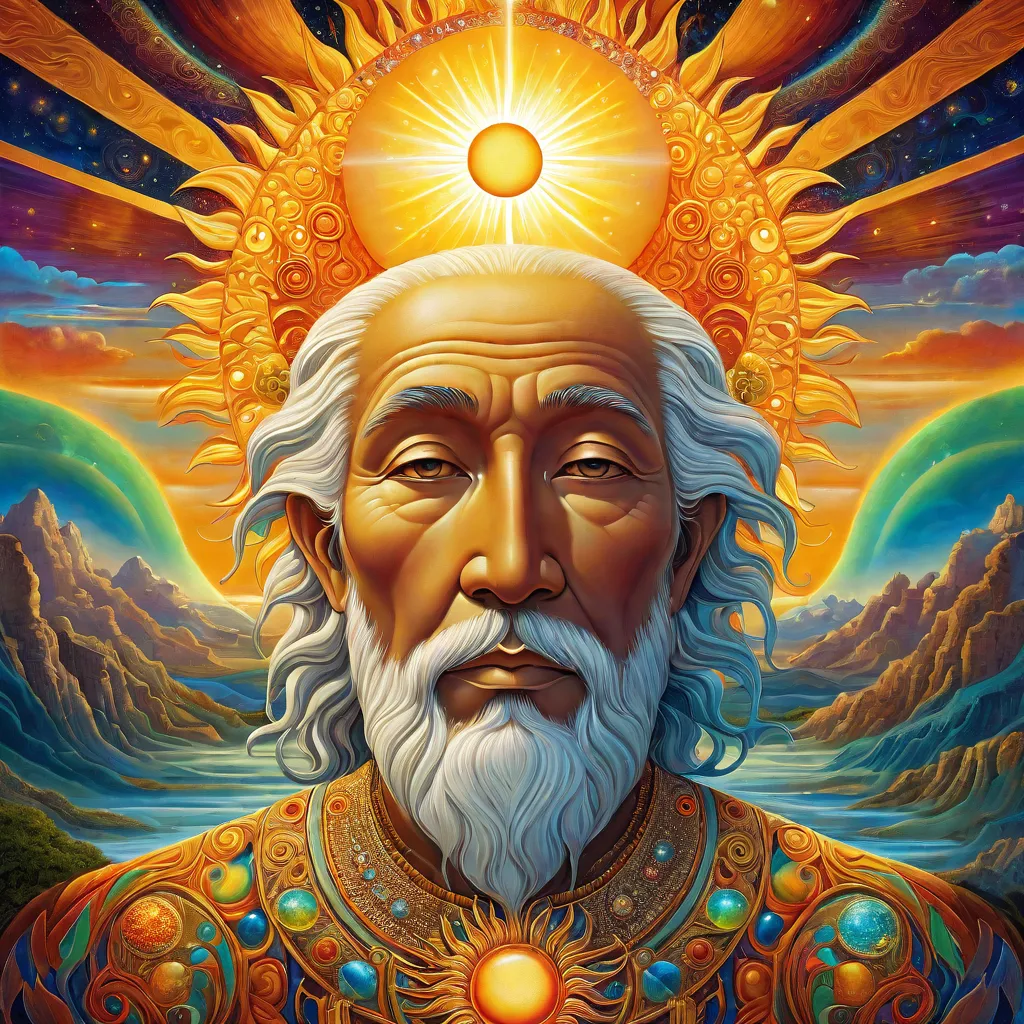
The Sun God
Jungian Archetypes
Meaning
The Sun God is the dream figure of illumination arriving with demands attached — warmth that also asks something of the dreamer, light that reveals a decision rather than simply making one feel good. The dream rarely presents comfort without consequence: shadows shrink only once the dreamer stops explaining themselves, a small hidden sun wakes sleeping people the moment it is opened, advice becomes legible only after real attention is paid. What the figure offers is not passive positivity but a clarity that expects the dreamer to act differently once it arrives.
Psychological Interpretation
A Sun God dream tends to appear when the dreamer has been living with some unresolved ambiguity — about a decision, a relationship, or their own standing — and something in their waking life has recently made a clearer view available, whether or not it has been consciously welcomed yet. The Wise Old Man archetype frequently supplies the illuminating quality of this figure, translating vague feeling into something closer to legible counsel, while the Self tends to show up in the dream's insistence on inner authority over external validation: shadows recede specifically once the dreamer stops performing for an audience and starts operating from their own sense of what is true. The warmth and the demand that so often arrive together in this dream are not contradictory; genuine clarity is rarely comfortable in isolation, since seeing a situation accurately usually requires giving something up, whether that is a comforting uncertainty, an old excuse, or a version of events the dreamer had been avoiding. The dream's real subject is less the sun itself than what the dreamer does once the light is unavoidable.
Traditional Symbol Meaning
Ra's nightly journey through the underworld, recorded across Egyptian funerary texts, made the sun's return each morning contingent on a real struggle rather than automatic renewal: Apophis, the serpent of chaos, attacked the solar barque every night, and only Ra's victory, aided by other deities in his retinue, restored daylight. This structure treated vitality as something continually re-earned through confrontation with dissolution, not a resource that simply persisted on its own once granted. Akhenaten's Amarna period reform pushed this reverence for the sun to an unusual extreme, replacing Egypt's traditional multiplicity of gods with near-exclusive devotion to the Aten, depicted not as a personified deity with a human or animal form but as the disk itself, its rays ending in small hands offering life directly to the royal family. The reform's collapse soon after Akhenaten's death, and the subsequent restoration of the older pantheon, suggests how difficult it proved for a single source of illumination, however total, to permanently replace a more distributed and familiar religious order. Japanese Shinto mythology offers a striking counterexample in Amaterasu, the sun goddess, whose withdrawal into a cave after being offended by her brother plunged the entire world into darkness. The other gods could not command her back into the sky; they had to lure her out with a mirror, a dance, and collective celebration, curiosity eventually drawing her toward the light reflected in the mirror. The myth suggests something rarely captured in solar imagery centered on gods rather than goddesses: that light withdrawn is not always restored by force or authority, and sometimes returns only once it becomes genuinely curious about what it would be missing.
Jungian / Archetypal
Jung repeatedly found solar imagery at the center of mandala drawings produced by patients during periods of significant psychic integration, treating the sun as one of the clearest available images for the Self, the archetype of psychic wholeness toward which individuation moves. A Sun God appearing with unusual radiance or authority in a dream often marks a moment when scattered, previously unconnected parts of the personality are beginning to organize around a more central, stable sense of identity. The Wise Old Man frequently lends this figure its instructive quality, translating the Self's larger movement toward wholeness into something the ego can actually use — an image, a piece of advice, a single legible sentence out of an otherwise overwhelming flood of light. This is why the sun in the dream so often produces words or direction rather than simply washing everything in brightness: the psyche is attempting to make its own deeper reorganization available to conscious understanding, not just to felt experience. The demand this figure carries alongside its warmth reflects an accurate feature of individuation: approaching the Self is rarely comfortable, because it requires relinquishing a smaller, more defended identity built for protection rather than wholeness. A dreamer who experiences the Sun God as simultaneously comforting and exacting is registering, correctly, that real integration asks something of the ego it has not yet been willing to give.
Gestalt / Parts of Self
The Sun God in your dream is your own claimed authority, externalized because you have not yet let yourself hold that much presence directly. When shadows shrink as the figure walks past and you stop explaining yourself, notice that the explaining was always yours to stop — the god did not silence anyone, your silence did. Try sitting with that realization in your body rather than moving past it quickly. Speak as the sun itself for a moment: describe how it feels to be warmth that also expects something, to give without apologizing for the fact that receiving you requires change. Most people discover they are more comfortable being warm and undemanding than being warm and clear, and that discomfort is worth sitting inside rather than resolving too fast. Notice the specific thing the light revealed that you did not want to see. That is not a punishment from the dream; it is information you already had access to before you were shown it this directly. The invitation is to stop waiting for a dramatic dream-sun to force clarity and instead practice giving yourself the same unflinching light on ordinary days, in smaller doses, before it needs to arrive at this intensity again.
Psychodynamic / Freudian
The psychologist Henry Murray coined the term Icarus complex to describe a pattern combining intense ambition toward brilliance or recognition with an equally intense, often paralyzing fear of the fall that comes with reaching too high — a dynamic the myth of the boy who flew too close to the sun captures almost exactly. A Sun God dream that feels simultaneously exhilarating and vaguely dangerous may be surfacing exactly this tension: a wish to be seen in full light competing with an old fear that visibility this total invites destruction rather than admiration. The manifest warmth of the sun figure often sits over a latent wish for an idealized, powerful parental presence — one capable of giving without depleting, illuminating without scorching — and the specific quality of demand that accompanies the warmth in this dream can reveal how the dreamer's early experience of receiving from a powerful figure was rarely free of conditions. When the dream's light reveals something the dreamer did not want to see, a defensive process is often loosening: material that has been kept out of awareness through avoidance or denial is becoming harder to keep suppressed, precisely because some other part of the psyche has judged that continued concealment is now costing more than exposure would.
Contemporary Psychological
The psychologist Jennifer Campbell's research on self-concept clarity examines how confidently and consistently a person can describe who they are, distinct from simply having high or low self-esteem, and finds that low clarity is associated with more anxiety and indecision regardless of how positively a person otherwise feels about themselves. A Sun God dream that delivers legible advice rather than vague brightness looks like a dramatized version of exactly this process: a mind moving from unclear, diffuse self-knowledge toward something specific enough to act on. This reading also explains why the dream's clarity so often arrives paired with demand rather than simple relief. Greater self-concept clarity in waking research is linked to more decisive behavior, not necessarily more comfortable behavior, since knowing clearly what one wants or believes tends to close off previously convenient ambiguity and force a choice that vagueness had been quietly deferring. What makes this dream worth attending to is the specific content of the advice it renders legible, since that detail — not the brightness itself — is the closest thing to new information the dream provides. A mind capable of generating clear, actionable guidance during sleep is signaling that the necessary self-knowledge already exists; the dream's real function is delivering it past whatever daytime uncertainty has been keeping it illegible.
Cultural & Historical Origins
In ancient Egyptian religion, Ra sailed across the sky by day in a solar barque and descended each night into the underworld, where he had to defeat the chaos serpent Apophis before being reborn at dawn — a myth that fused vitality directly to a nightly confrontation with dissolution rather than treating the sun's light as an uncomplicated gift. The pharaoh Akhenaten, ruling Egypt in the fourteenth century BCE, attempted a startling religious reform, elevating the sun disk Aten above Egypt's traditional pantheon in what many historians read as history's earliest documented move toward monotheism, a change so disruptive to established priesthoods that it was largely reversed within a generation of his death. Greek religion assigned the sun to Apollo, who governed light, prophecy, and reasoned clarity together, treating illumination and truth-telling as a single divine domain rather than separate gifts.
Contextual Variations
The sun god hands you a mirror instead of speaking
A mirror offered in place of words usually indicates that the clarity the dreamer needs is not information from outside but a more honest look at something already visible to them. The dream withholds speech deliberately, insisting that the dreamer supply their own reading of what the reflection shows.
Sunlight melts a frozen object you had been avoiding
A frozen object thawing under direct sunlight typically represents a feeling or decision the dreamer has kept deliberately unresolved, now becoming impossible to leave suspended any longer. The melting is rarely destructive in the dream's own terms; it simply returns the object to a state where it can finally be handled.
You feel the sun god's warmth but cannot see its face
Warmth without a visible face often reflects a source of confidence or support the dreamer trusts without being able to fully identify or name yet — an emerging sense of self-assurance that has not been consciously located in a specific belief, relationship, or achievement.
The sun god's light exposes a crowd's true reactions to you
Light that reveals a crowd's real feelings, rather than their performed ones, usually signals a wish to know honestly where the dreamer actually stands socially rather than continuing to guess. The exposure can be unsettling but frequently resolves a longer-running anxiety about hidden judgment more efficiently than continued uncertainty would.
Frequently Asked Questions
Why does the sun god in my dream feel comforting but also demanding?
Is it bad if the sun god's light reveals something I didn't want to see?
Does dreaming of a sun god mean I'm becoming more confident?
Why do I keep dreaming about the sun instead of a person or animal figure?
Journaling Prompts
- Recall the exact piece of advice or insight the sun god's light made legible in your dream. Where in your waking decisions has that same insight already been available but harder to read clearly?
- Notice where in your life you are currently explaining or justifying yourself more than the situation actually requires. What would change if you simply stopped, the way the shadows shrank once you stopped in the dream?
- Describe what the sun's warmth felt like in the dream, separately from what its light demanded of you. Which of those two, comfort or clarity, do you find easier to accept from other people right now?
- If your own inner sense of vitality had a single sentence of advice for you today, written the way the dream translated light into words, what would that sentence say?
Related Symbols
Dreamed about The Sun God?
Get a personalized AI interpretation that connects this symbol to your specific life circumstances.
Interpret My Dream