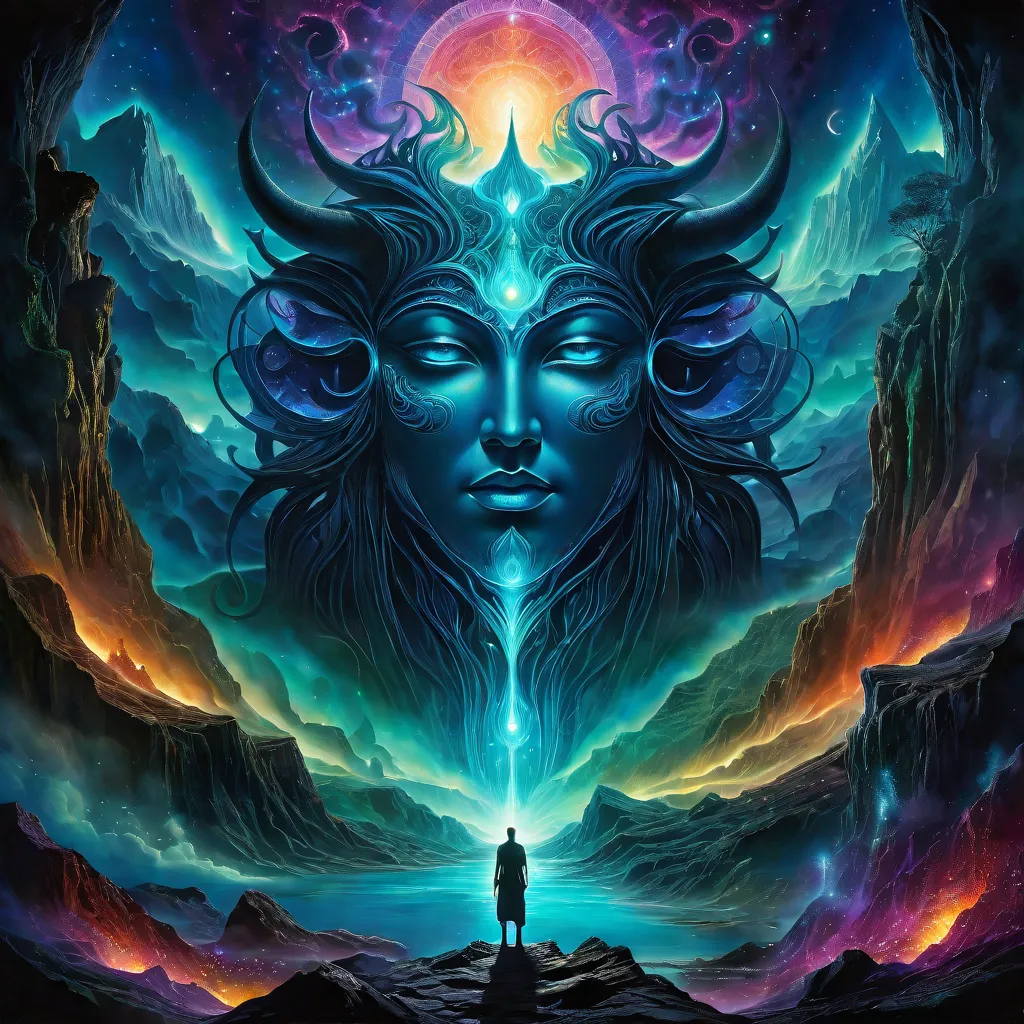
The Underworld God
Jungian Archetypes
Meaning
This symbol signifies a confrontation with inner fears and shadow aspects. It represents a psychological mechanism for integrating darker impulses, fostering transformation through acceptance.
Psychological Interpretation
From a Jungian lens, it embodies the Shadow archetype, urging exploration of suppressed traits. Cognitive theories may interpret it as a reflection of anxieties. Practical psychology suggests it encourages resilience by facing fears directly.
Cultural & Historical Origins
In Egyptian mythology, Osiris represents resurrection and the underworld, symbolizing transformation through death. In Greek mythology, Hades embodies the underworld, emphasizing the necessity of confronting mortality and hidden aspects of self.
Contextual Variations
You descend into a temple beneath the ground, where a god-like figure judges without insults. The figure doesn’t punish you; it shows you a fear you’ve avoided, and the fear dissolves as you admit you’re not okay.
The Underworld God signifies confrontation with inner fears and Shadow integration. Judgement without insults suggests your psyche is aiming for honest accounting—transforming fear through recognition rather than denial.
A masked figure offers you a deal: carry a dark object upward, or stay in the underworld forever. When you pick up the object, it burns at first, then becomes a tool you can use to protect someone.
The deal reflects a psychological mechanism of integrating darker impulses into functional power. The burn-to-tool shift indicates the psyche is converting threatening energy into agency and care.
You meet the underworld god in a familiar place at home, but the floor becomes stone and the air turns heavy. You feel a surge of anger and grief, and the god’s presence makes it impossible to keep pretending you’re fine.
A familiar setting suggests the confrontation is internal and immediate, not distant. Heavy air and forced honesty indicate Persona collapse is part of integration—your system can’t keep compartmentalizing fear and sadness.
Frequently Asked Questions
Why does The Underworld God feel like both a threat and a guide?
What does it mean if the god judges me quietly rather than angrily?
Does this dream imply I’m doing shadow work correctly?
Journaling Prompts
- What specific fear or dark emotion did the underworld god reveal, and what did you do with it once it was visible?
- What did you have to “carry upward” in the dream—anger, grief, desire, or a need—and what would carrying it look like in daily life?
- If the god’s presence makes pretending impossible, what truth have you been avoiding, and what would change if you faced it gently?
Related Symbols
Dreamed about The Underworld God?
Get a personalized AI interpretation that connects this symbol to your specific life circumstances.
Interpret My Dream