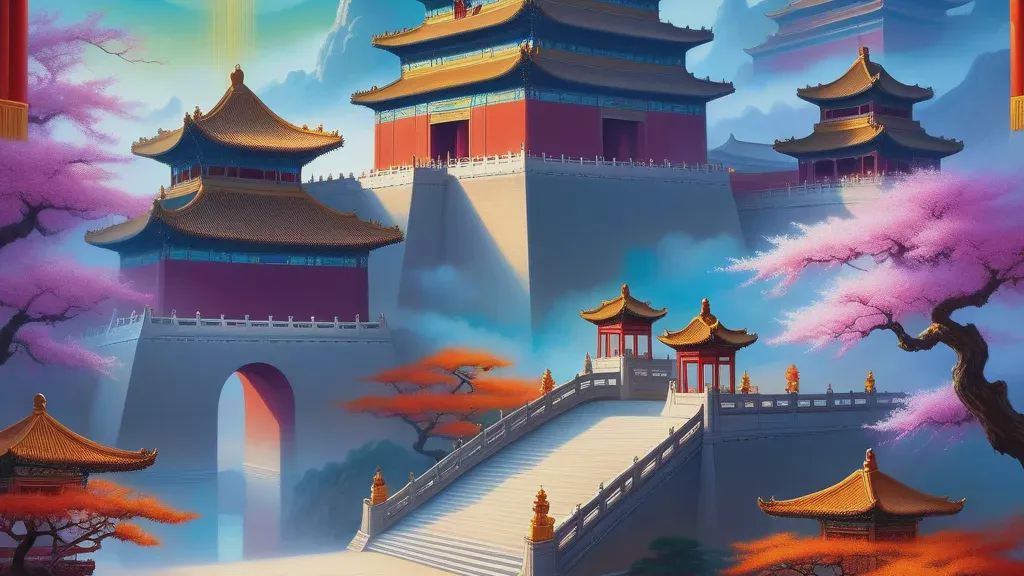
Forbidden Palace
Jungian Archetypes
Meaning
A forbidden palace in dreams symbolizes unattainable goals or aspirations. It reflects the psychological mechanism of desire vs. fear, often representing areas of the self that are deemed off-limits due to guilt or societal expectations.
Psychological Interpretation
From a Jungian viewpoint, this symbolizes the quest for self-knowledge and the integration of the unconscious. Cognitive theories suggest it reflects cognitive dissonance between aspirations and perceived limitations, while practical psychology encourages confronting fears to access potential.
Cultural & Historical Origins
The 'Forbidden City' in Beijing represents imperial power and restricted access, while the 'palace of the gods' in various folklore signifies the unattainable divine experience, embodying the allure of seeking what is culturally deemed forbidden.
Contextual Variations
A dreamer stands outside a palace with ornate doors that open only for others, watching people inside celebrate while they feel excluded and curious.
The palace symbolizes status, belonging, or emotional “access” you believe you don’t qualify for. The exclusion feeling suggests the psyche is exploring boundaries around worthiness and the longing to be chosen.
Inside the forbidden palace, the dreamer follows shifting hallways that keep rearranging, and a trickster voice laughs whenever they get close to a room they want.
The Trickster energy points to how the mind sabotages certainty or turns desire into a chase. Psychologically, it can reflect fear of getting what you want—because the fantasy may collapse once you enter it.
The dreamer receives an invitation written in their own handwriting, but when they arrive, the palace gates lock behind them and the dreamer must “perform” to stay inside.
The Self and exclusion dynamic suggests a conflict between authentic longing and the persona required to be accepted. The performance requirement highlights how you may feel you must act a certain way to belong.
Frequently Asked Questions
Why do I feel excluded even though the palace seems inviting?
What does it mean if the palace keeps changing or shifting when I try to reach a specific room?
How can a forbidden palace be about personal growth rather than just longing?
Journaling Prompts
- What does the palace represent for me—love, status, safety, recognition, or freedom?
- Where do I feel I must “perform” to be let in, and what part of me resents that requirement?
- If the palace is unattainable, what value am I actually trying to protect or reclaim?
Related Symbols
Dreamed about Forbidden Palace?
Get a personalized AI interpretation that connects this symbol to your specific life circumstances.
Interpret My Dream