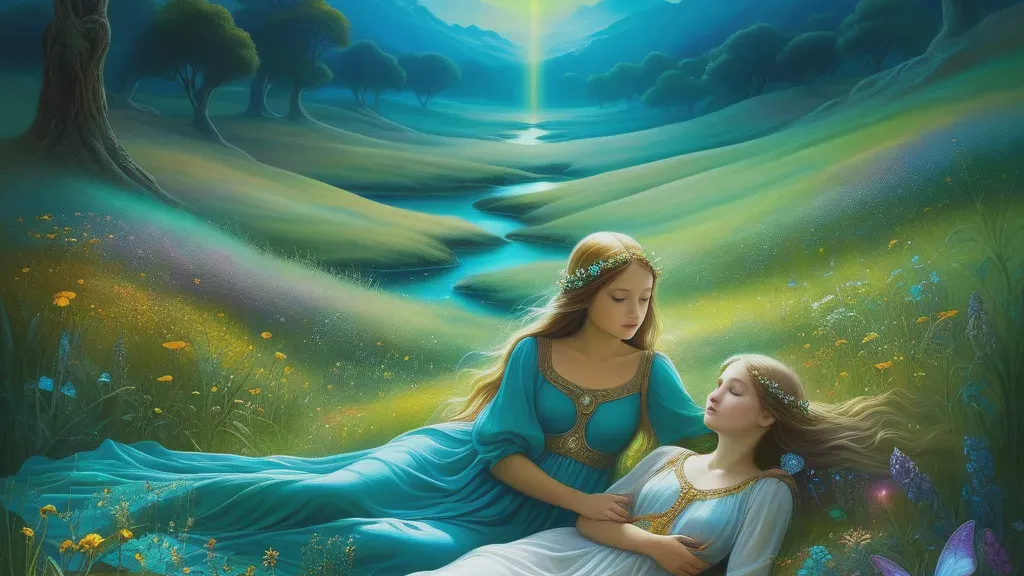
Dying Meadow
Jungian Archetypes
Meaning
A dying meadow in dreams can symbolize the loss of innocence or happiness, reflecting personal transitions or grief. It urges the dreamer to confront feelings of nostalgia or to seek renewal in areas that feel stagnant.
Psychological Interpretation
Jungian analysis might interpret this as the Child archetype, representing innocence lost. Cognitive psychology may view it as a manifestation of sadness or fear of change, while practical psychology suggests it encourages embracing new beginnings.
Cultural & Historical Origins
In pastoral literature, meadows symbolize peace and natural beauty; for instance, in William Wordsworth's poetry, meadows evoke nostalgia for simpler times. Additionally, Celtic myths often celebrate meadows as sacred spaces of transformation and rebirth.
Contextual Variations
A meadow you used to love is turning brown, and small flowers close as if night is arriving too early. You feel grief like you’re mourning a version of yourself that enjoyed life effortlessly.
A dying meadow symbolizes loss of innocence or happiness, often tied to childhood-like joy or a lighter identity. Psychologically, the dream may surface grief for a phase that ended and a need to mourn without forcing yourself to “move on” too quickly.
You run through the meadow trying to find one last bright patch, but every time you reach it, it’s already fading. You wake with the sense that chasing joy is making you more tired.
This reflects struggling with acceptance when happiness changes form. Psychologically, the dream suggests you might be trying to retrieve a past emotional state instead of learning how to cultivate new forms of wellbeing.
A childlike version of you sits in tall grass and refuses to leave, even as the meadow dies around you. When you sit beside them and hold their hand, the grass doesn’t revive, but the fear eases.
The childlike presence points to vulnerability and the emotional need for comfort during transition. Psychologically, it suggests your healing may begin with companionship to your hurt, rather than attempts to restore what’s gone.
Frequently Asked Questions
Why did the meadow feel like it represented happiness?
What does it mean if I’m searching for one last bright patch?
Is there a positive message in a dying meadow dream?
Journaling Prompts
- What part of my identity feels like it’s losing innocence or ease, and what grief is underneath that change?
- Where am I chasing a past happiness instead of learning a new way to feel safe or joyful?
- If I could sit beside the child in the meadow, what comfort would I offer them—and what would that teach me about myself?
Related Symbols
Dreamed about Dying Meadow?
Get a personalized AI interpretation that connects this symbol to your specific life circumstances.
Interpret My Dream