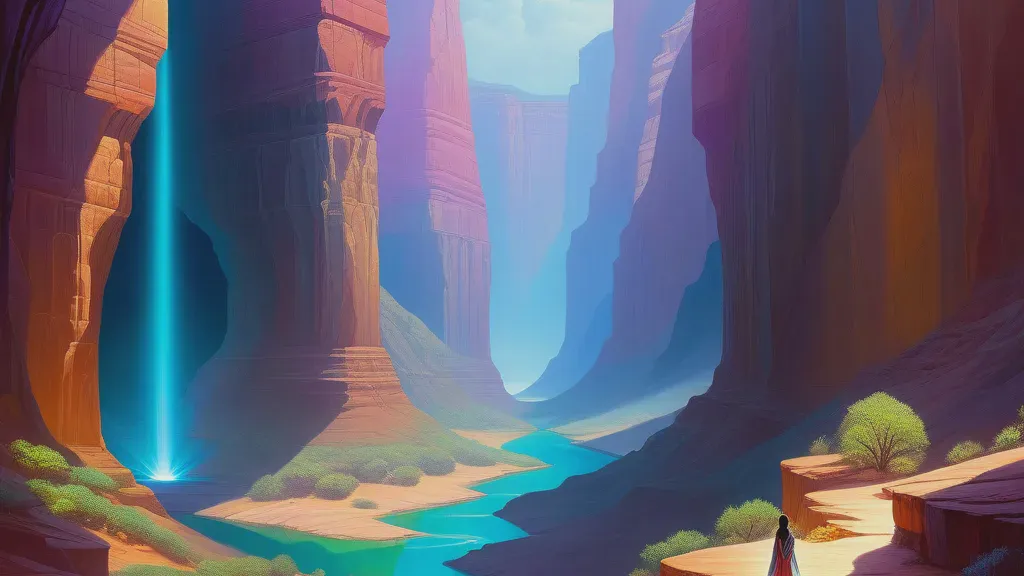
Canyon
Jungian Archetypes
Meaning
Dreaming of a canyon often reflects deep emotional experiences and the exploration of the unconscious. Psychologically, canyons symbolize the mind's journey through challenges and obstacles, highlighting the contrast between light and dark.
Psychological Interpretation
Jungian analysis might see the canyon as a representation of the Shadow, revealing fears and hidden depths. Cognitive psychology interprets it as a metaphor for personal growth, while practical psychology emphasizes the need to confront life’s barriers.
Cultural & Historical Origins
In Native American mythology, canyons are often seen as sacred spaces, with stories of creation tied to their formation. The Grand Canyon, in American culture, symbolizes the grandeur of nature and the journey of life, as depicted in many literary works.
Contextual Variations
You stand at the edge of a canyon and can’t see the bottom. The wind carries distant voices, and every step forward makes the ground feel less stable.
A canyon can symbolize a psychological gap—between what you know and what you fear or avoid. The unseen bottom often points to unconscious material that feels both compelling and risky to approach.
You’re trying to cross a canyon using narrow ledges, and your footsteps echo loudly. When you whisper instead of calling, the echoes soften and you find a safer route.
Echoes can represent rumination: thoughts bouncing back and intensifying anxiety. Whispering and finding a route suggests that lowering emotional intensity helps you access clearer solutions.
A canyon opens inside a familiar room, and water flows through it. You realize the “chasm” is temporary, and you can redirect the flow with simple changes in direction.
A canyon appearing in a known space can reflect internal conflict entering daily life. Redirecting water suggests agency: your mind is showing that emotional currents can be rerouted rather than endured passively.
Frequently Asked Questions
What does it mean if I’m afraid to look down into the canyon?
Why do canyons feel so lonely or echoing in dreams?
Is there a positive meaning if I successfully cross the canyon?
Journaling Prompts
- Where in my life is there a “gap” I’m not fully willing to face, even though I’m aware it’s there?
- What do the canyon echoes represent in my thoughts—repeating worries, old conversations, or self-criticism?
- If I could redirect the canyon’s flow, what emotional current would I change first?
Related Symbols
Dreamed about Canyon?
Get a personalized AI interpretation that connects this symbol to your specific life circumstances.
Interpret My Dream