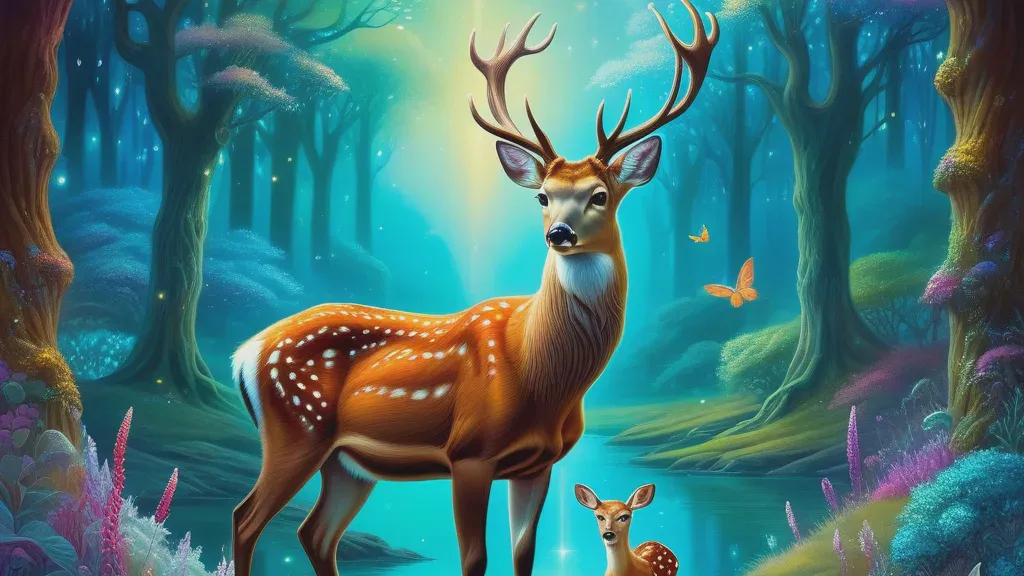
Deer
Jungian Archetypes
Meaning
Deer in dreams represent grace, gentleness, and sensitivity. They symbolize the feminine principle, intuition, and the ability to move through life with elegance and awareness. Deer often appear when you need to trust your instincts or embrace your softer, more vulnerable side.
Psychological Interpretation
The Anima/Animus archetype in the deer represents the contrasexual aspects of the psyche—the feminine in men and the masculine in women. The Child archetype embodies innocence, wonder, and the capacity for growth. Dreams of deer suggest the need to balance strength with gentleness and to honor both your assertive and receptive qualities.
Contemporary Psychological
The deer in dreams often represents the brain's processing of heightened alertness and sensitivity to environmental threat signals. From a contemporary neuroscience perspective, the deer embodies the state of hypervigilance—a cognitive mode where the nervous system is primed to detect danger, scan for threats, and respond rapidly to subtle environmental cues. When a dreamer encounters a deer, the dream may be rehearsing this state of acute awareness, exploring what it feels like to maintain constant environmental monitoring and to process sensory information with heightened sensitivity. This threat simulation function allows the brain to practice the neural patterns associated with vigilance without the metabolic cost of sustained waking alertness. The freeze response—the deer's characteristic immobility when threatened—is a central element of how the brain processes fear and defensive strategies during sleep. Dreams featuring deer often encode the tension between the impulse to flee and the impulse to remain still, reflecting the brain's exploration of different survival responses to perceived danger. This is not symbolic passivity but rather a cognitive rehearsal of a genuine physiological response: the dorsal vagal shutdown that occurs when fight-or-flight feels impossible. The dream allows the brain to integrate this response pattern, to understand when freezing might be adaptive, and to process the emotional weight of situations where movement feels blocked or dangerous. Environmental scanning—the deer's constant attention to its surroundings—mirrors the brain's own scanning function during threat processing. In dreams, the deer represents the cognitive state of divided attention, where awareness is distributed across multiple potential threat vectors rather than focused on a single task. This reflects real waking experiences of anxiety or hypervigilance, where the mind cannot settle on one thing because it is monitoring for danger across multiple domains. The dream processes this exhausting cognitive state, allowing the brain to consolidate the experience of sustained alertness and to work through the emotional regulation challenge of maintaining sensitivity without becoming overwhelmed. The sensitivity that the deer embodies extends beyond threat detection to include emotional and interpersonal sensitivity. Dreams featuring deer often emerge during periods when the dreamer is processing heightened emotional reactivity, increased awareness of others' emotional states, or a need to be more attuned to subtle social cues. The brain uses the deer's delicate, responsive nature to rehearse the cognitive and emotional patterns of sensitivity itself—what it feels like to be easily affected, to pick up on nuance, and to respond quickly to relational shifts. This processing serves the emotional regulation function of integrating sensitivity as a cognitive trait, neither pathologizing it nor ignoring its costs, but rather understanding its role in the dreamer's current psychological state.
Gestalt / Parts of Self
In Gestalt dream work, the deer represents a part of the dreamer's own psyche that embodies gentleness, sensitivity, and natural grace. When a deer appears in a dream, it is not a separate creature but rather an aspect of the dreamer themselves—the part that moves through the world with quiet awareness, that knows how to navigate with both strength and delicacy. This part of self is attuned to subtle shifts in the environment, responsive to danger without being paralyzed by it, and capable of moving with fluid elegance even in challenging terrain. The deer's alertness speaks to the dreamer's capacity for vigilance and presence. This is not the aggressive watchfulness of a predator, but rather the open, receptive awareness of a being who must stay attuned to their surroundings to survive. In owning the deer within, the dreamer claims their own ability to sense what is happening around them, to notice the small signals that others might miss, and to respond with appropriate caution without losing their grace. The deer's ears are always listening; the dreamer is invited to reclaim this quality of attentive presence in their own life. Gentleness in the Gestalt sense is not weakness—it is the strength of the deer that can bound away swiftly, that can stand firm in its own space, yet does so without aggression or hardness. When the deer appears, the dreamer is being invited to integrate this softer, more vulnerable part of themselves that they may have disowned or projected onto others. Perhaps the dreamer has labeled gentleness as weakness in themselves while admiring it in others, or has hardened themselves against their own capacity for tenderness. The deer asks: what happens when you own your own grace, your own gentle strength, your own ability to move through the world with both sensitivity and resilience?
Jungian / Archetypal
In Jungian psychology, the deer emerges as a powerful symbol of the Anima—the feminine principle within the psyche that embodies grace, sensitivity, and intuitive knowing. The deer's gentle nature and natural elegance represent the dreamer's connection to qualities often suppressed in a rationalist, achievement-driven culture: receptivity, emotional attunement, and the capacity to move through the world with awareness rather than force. When the deer appears in dreams, it frequently signals an invitation to reclaim these softer, more vulnerable aspects of the self that are essential to psychological wholeness and individuation. The deer's vigilance—its acute sensitivity to danger and readiness to flee—speaks to the Anima's protective wisdom. This is not weakness but a different form of strength: the ability to sense threat, to trust instinct, and to preserve oneself through awareness rather than aggression. In the collective unconscious, the deer carries the archetype of the innocent, the natural creature untouched by civilization's hardening influences. It represents spiritual innocence and the soul's original purity before it becomes conditioned by social demands. The deer's swift, graceful movement embodies the flow of psychic energy when the conscious mind releases its rigid control and allows the deeper self to guide action. As a spiritual messenger, the deer often appears when the unconscious seeks to communicate something vital about the dreamer's current life situation. It may signal a need to slow down, to listen more carefully to inner promptings, or to honor the body's wisdom and emotional truth. The deer's natural habitat—forests, wild places—connects it to the realm of the unconscious itself, suggesting that the dream is calling the dreamer back to nature, to instinct, and to the authentic self beneath social masks. This symbol frequently emerges during periods of transition or when the psyche is working to integrate shadow material that has been rejected as "too soft" or "too feminine." The appearance of a deer in dreams often represents a compensatory message from the unconscious: a reminder that individuation requires not the conquest of the Anima but its integration. The dreamer is being invited to recognize that gentleness, sensitivity, and spiritual awareness are not liabilities but essential components of a mature, whole personality. The deer teaches that true strength includes the capacity to be vulnerable, to trust, and to move through life with grace rather than force—a crucial rebalancing for those who have over-identified with aggressive, rational, or dominating aspects of the psyche.
Psychodynamic / Freudian
In psychodynamic dream interpretation, the deer emerges as a potent symbol of vulnerability and the wish to preserve innocence in a world perceived as threatening. The deer's delicate frame, alert posture, and readiness to flee embody the dreamer's own fragility—a latent anxiety about being exposed, hunted, or overwhelmed by aggressive forces. This vulnerability is not merely passive; it often masks a deeper wish: the desire to be gentle, to remain untouched by the harshness of reality, and to maintain a state of protected innocence. The deer becomes a projection of the self as it wishes to be seen—graceful, harmless, deserving of tenderness rather than attack. The maternal dimension of the deer symbol runs deep in the psychodynamic unconscious. The doe nursing her fawn, or the gentle, nurturing quality attributed to the deer, connects to early maternal imago—the internalized image of the mother as protector and source of unconditional care. When the deer appears in dreams, it often signals a longing for that maternal tenderness, a wish to return to a state of being held and protected without demand or judgment. This can reflect either a hunger for maternal comfort that was insufficiently provided in childhood, or a defensive idealization of maternal care as a refuge from a world experienced as aggressive or demanding. The deer, in this sense, carries the wish to be mothered, to be seen as worthy of gentle handling. Beneath the surface, the deer also embodies a fear of aggression—both external and internal. The predator-prey dynamic is encoded in the deer's very existence; it lives in constant vigilance against threat. In the dreamer's psyche, this may represent a conflict between aggressive impulses that feel dangerous and the need to maintain a facade of harmlessness. The deer's flight response becomes a defense mechanism, a way of avoiding confrontation rather than engaging with one's own capacity for assertion or anger. The fear is not only of being attacked but of becoming the aggressor—of losing the gentle, vulnerable identity and revealing a more dangerous, assertive self underneath. The deer symbol thus condenses multiple psychodynamic currents: the wish to remain innocent and untouched, the longing for maternal protection, the fear of aggression both from without and within, and the defensive maintenance of a gentle persona. It speaks to the tension between vulnerability and the need for safety, between the desire to be cared for and the anxiety of being exposed. In dreams, the deer invites the dreamer to examine what vulnerability means, whether gentleness is a strength or a shield, and what aggressive or assertive impulses may be repressed beneath the surface of this tender, watchful creature.
Cultural & Historical Origins
In Celtic mythology, the white deer is a magical creature that leads heroes on spiritual quests. Hindu traditions associate the deer with Lakshmi, goddess of grace and abundance. In East Asian cultures, deer symbolize longevity, peace, and good fortune.
Contextual Variations
Deer running away
Fleeing from confrontation or avoiding necessary challenges; fear of vulnerability
Deer standing still
Moment of awareness and presence; pausing to listen to your intuition before acting
Frequently Asked Questions
What does a wounded deer symbolize?
Why do deer appear in dreams about relationships?
Journaling Prompts
- What gentle or vulnerable part of yourself needs acknowledgment?
- How can you move through current situations with the deer's grace and awareness?
Related Symbols
Dreamed about Deer?
Get a personalized AI interpretation that connects this symbol to your specific life circumstances.
Interpret My Dream