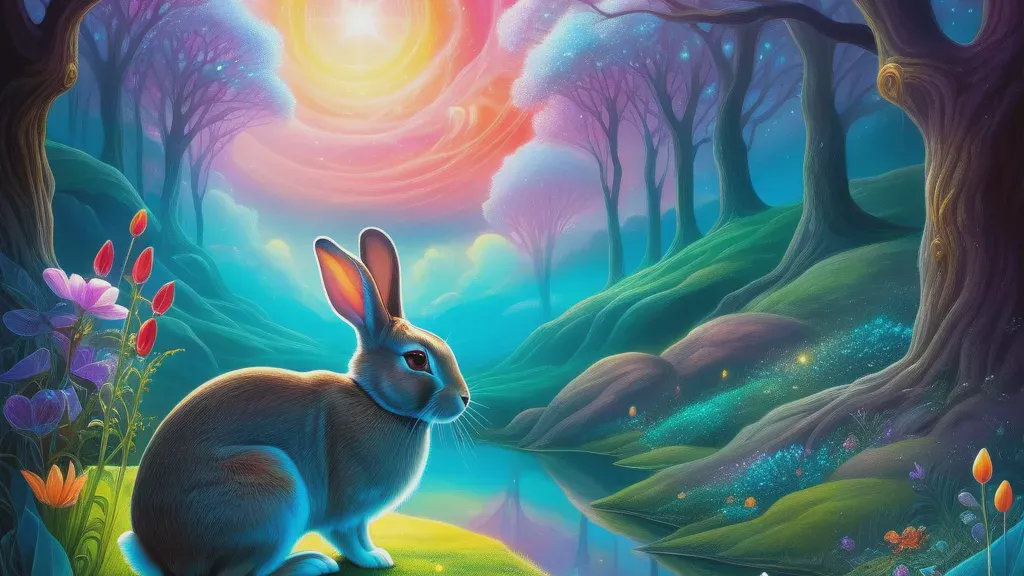
Rabbit
Jungian Archetypes
Meaning
The rabbit represents fertility, abundance, and quick thinking. It symbolizes agility, vulnerability, and the ability to escape danger through cleverness and speed. The rabbit embodies both innocence and cunning, reflecting the duality of survival instincts.
Psychological Interpretation
In Jungian psychology, the rabbit embodies the Child archetype, representing innocence, curiosity, and vulnerability. It also reflects the Trickster archetype, symbolizing cleverness, adaptability, and the ability to navigate challenges through wit and unconventional thinking.
Contemporary Psychological
In contemporary psychology, the rabbit in dreams functions as a somatic representation of the nervous system's threat-detection mode. The rabbit's defining characteristic—its acute sensory vigilance and hair-trigger startle response—mirrors the hypervigilant state that emerges when the brain is processing accumulated anxiety or perceived danger. From a neuroscience perspective, the dreaming brain is rehearsing the physiological and cognitive patterns associated with threat awareness: rapid scanning of the environment, quick decision-making between fight-or-flight options, and the constant readiness to respond to danger. When a rabbit appears in a dream, it often signals that the dreamer's waking nervous system is operating in a heightened state of alert, and the dream is consolidating this anxiety-processing work during sleep. The flight response embodied by the rabbit is particularly significant in threat simulation theory, which proposes that dreams serve as evolutionary practice grounds for dangerous scenarios. A rabbit's instinctive escape behavior—the sudden bolt, the zigzag evasion, the reliance on speed and agility—represents the brain's rehearsal of avoidance strategies. This is not merely symbolic; it is functional. The dream is allowing the nervous system to practice rapid threat assessment and escape execution without real-world consequences. If the dreamer is facing a situation in waking life that feels inescapable or overwhelming, the rabbit may embody the part of the psyche that is still searching for an exit route, still believing that flight is possible. The rabbit's anxiety processing function also connects to memory consolidation during REM sleep. Recent experiences of stress, social pressure, or situations where the dreamer felt exposed or vulnerable are being integrated into long-term memory through the lens of the rabbit's nervous system. The rabbit is prey; it lives in a world where danger is constant and survival depends on vigilance. When this animal appears in dreams, it often reflects the dreamer's current emotional load—a period where threats (real or perceived) feel numerous, where the cost of being caught off-guard feels high, and where the nervous system has learned to stay alert. The dream is not creating this anxiety; it is processing it, consolidating the lessons of recent threat encounters into the brain's threat-response library. Understanding the rabbit as a contemporary anxiety-processing symbol invites the dreamer to ask: What in my waking life has my nervous system categorized as dangerous? Where am I operating in flight mode rather than rest mode? The rabbit's presence suggests that the brain is doing necessary work—rehearsing responses, consolidating threat memories, and maintaining the vigilance that may have been adaptive in recent circumstances. The dream is not a warning; it is a reflection of the emotional and cognitive labor already underway, the brain's attempt to regulate and integrate the anxiety that has accumulated during waking hours.
Gestalt / Parts of Self
In Gestalt dream work, the rabbit represents the vulnerable, responsive, and generative parts of the dreamer's own psyche. When a rabbit appears in a dream, it is not a separate creature but an aspect of the self that embodies sensitivity, quick reactivity, and the capacity for growth and renewal. The rabbit's natural alertness and tendency to flee at the slightest threat mirror the dreamer's own capacity to sense danger and move swiftly away from what feels unsafe. Its fertility and prolific nature speak to creative potential, abundance, and the dreamer's own generative power—the ability to bring forth new ideas, relationships, or possibilities. The rabbit's vulnerability is not weakness but aliveness. In Gestalt terms, this part of the self is in direct contact with the environment, responsive to every shift in the atmosphere, every sound and movement. When the dreamer encounters a rabbit in a dream, they are being invited to own this sensitive, quick-moving part of themselves—to recognize it not as something to be ashamed of or to protect, but as a vital aspect of their being. The rabbit's speed and agility represent the dreamer's own capacity to adapt, to change direction, to respond with immediacy to what life presents. The fertility of the rabbit speaks to the dreamer's creative and generative potential. This is not only about biological fertility but about the capacity to produce, to multiply, to bring forth. When this part of the self appears in dreams, it often signals that the dreamer has untapped creative resources, or that they are being called to claim their own power to generate and nurture. The rabbit's prolific nature invites the dreamer to ask: What am I capable of creating? What wants to be born through me? What part of my generative power have I been denying or hiding? To work with the rabbit in Gestalt dream interpretation is to reclaim the vulnerable, quick, fertile parts of the self—to stop projecting these qualities onto external circumstances or other people, and instead to own them as one's own aliveness, responsiveness, and creative power. The rabbit is not something happening to the dreamer; it is something the dreamer is.
Jungian / Archetypal
The rabbit in dreams embodies a constellation of archetypal energies that speak to fundamental human vulnerabilities and instinctual wisdom. As a creature of fertility and rapid reproduction, the rabbit connects to the generative forces of the unconscious—the creative potential that emerges from the depths of the psyche. Yet this same fecundity carries an undercurrent of vulnerability; the rabbit's small frame and prey status make it a symbol of exposure to predatory forces, both external and internal. In Jungian terms, the rabbit often represents the fragile, innocent aspects of the self that must navigate a world of threats, embodying the tension between creative potential and existential precarity. The rabbit's association with speed and escape speaks to the psyche's flight mechanisms—the instinctive impulse to evade danger, conflict, or uncomfortable truths. When the rabbit appears in dreams, it may signal that the dreamer is employing avoidance strategies, whether consciously or unconsciously, to sidestep shadow material or difficult psychological work. This evasiveness is not merely pathological; it reflects a legitimate survival instinct that has become habituated. The rabbit's rapid movements and keen alertness suggest a nervous system attuned to threat, a state of perpetual vigilance that, while protective, can prevent deeper engagement with one's inner world and authentic self-expression. As a lunar symbol, the rabbit connects to the feminine principle, the cycles of the moon, and the realm of instinct and emotion rather than rational consciousness. In many traditions, the rabbit is associated with the Great Mother archetype and the mysteries of birth, death, and regeneration. This lunar dimension adds a layer of psychological depth: the rabbit may represent the dreamer's connection to cyclical time, emotional rhythms, and the wisdom of the body. Simultaneously, in certain mythological contexts, the rabbit embodies the Trickster archetype—a figure of cunning, boundary-crossing, and subversive intelligence that challenges rigid structures and conventional thinking. The Trickster rabbit reminds us that innocence and cunning are not opposites but can coexist, and that the psyche's capacity for deception and misdirection serves important adaptive functions in the individuation process. When the rabbit appears in dreams, it invites the dreamer to examine their relationship with vulnerability, instinctual knowing, and the shadow aspects of avoidance and fear. The dream may be asking: What am I running from? What fertile creative potential lies dormant within my vulnerability? Can I honor both my need for safety and my capacity for authentic engagement? The rabbit's presence suggests that wholeness requires integrating not only our strength and courage but also our fragility, our instinctual wisdom, and our capacity for both escape and transformation.
Psychodynamic / Freudian
The rabbit in dreams often embodies the dreamer's encounter with primitive anxiety and the impulse to flee from threatening situations. From a psychodynamic perspective, the rabbit's defining characteristic—its capacity for rapid escape—represents the ego's flight response when confronted with repressed material or unbearable affect. The rabbit does not fight; it runs. This makes it a symbol of avoidance and the defensive maneuver of withdrawal, particularly when the dreamer faces internal conflicts that feel overwhelming or dangerous to the conscious mind. The rabbit's vulnerability and small stature amplify this dynamic: it is prey, not predator, and its survival depends entirely on evasion rather than confrontation. Sexuality and instinctual life also cluster around the rabbit symbol, rooted in both cultural associations (the rabbit's prolific breeding) and the animal's embodiment of raw, unguarded vitality. In dreams, the rabbit may represent repressed sexual impulses or the dreamer's ambivalence about their own erotic nature—particularly when the rabbit appears in contexts of danger, pursuit, or capture. The chase itself becomes a condensation of both desire and fear: the hunter pursuing the rabbit mirrors the superego pursuing the id, or the dreamer's conscious self pursuing disowned instincts. This dynamic often surfaces when the dreamer has internalized shame or prohibition around sexuality, and the rabbit becomes the vehicle through which forbidden desire presses toward consciousness while simultaneously being hunted down. The rabbit's childlike quality—its softness, its wide eyes, its dependence—connects it to early developmental vulnerabilities and the dreamer's own infantile self. In psychodynamic terms, the rabbit may represent the dreamer's inner child: innocent, defenseless, and in need of protection. When the rabbit appears in distress or danger in a dream, it often signals that the dreamer's own childlike needs, curiosity, or spontaneity are being threatened or suppressed by internalized parental figures or harsh superego demands. The rabbit's presence can also evoke the dreamer's identification with a small, powerless creature in a world of larger forces—a regression to early experiences of helplessness or a current life situation where the dreamer feels similarly diminished or at risk. The rabbit thus functions as a multivalent symbol: it is the flight response to anxiety, the embodiment of instinctual sexuality and vitality, and the representation of the dreamer's vulnerable, childlike self. The specific context of the rabbit's appearance—whether it is hunted, captured, free, or injured—determines which layer of meaning predominates, but all point toward the dreamer's relationship with primitive impulses, early fears, and the defensive strategies employed to manage what feels dangerous or unacceptable within the psyche.
Cultural & Historical Origins
In many Western traditions, the rabbit is associated with luck and fertility, particularly the rabbit's foot as a charm. In Chinese culture, the rabbit is one of the zodiac animals, representing gentleness and grace. In Native American traditions, the rabbit is a trickster figure known for outsmarting predators through intelligence.
Contextual Variations
Dreaming of a rabbit running
Quick escape from a situation or the need to move swiftly; trust your instincts to guide you to safety
Dreaming of a rabbit in a burrow
Seeking safety and comfort; a need to retreat and find security in familiar spaces
Frequently Asked Questions
What does it mean if the rabbit is hopping playfully?
What if the rabbit is being hunted?
Journaling Prompts
- What situations require me to be quick-thinking and adaptable?
- How can I balance vulnerability with the cleverness needed to protect myself?
Related Symbols
Dreamed about Rabbit?
Get a personalized AI interpretation that connects this symbol to your specific life circumstances.
Interpret My Dream