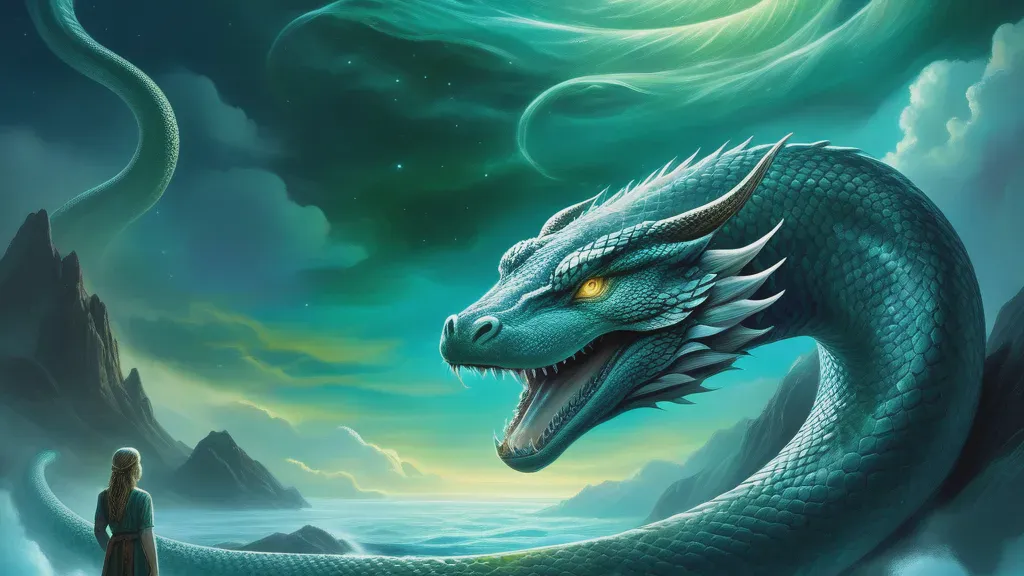
Jormungandr
Jungian Archetypes
Meaning
Jormungandr, the World Serpent, symbolizes the unconscious, boundaries, and transformation. Dreaming of this figure may indicate a confrontation with deep-seated fears or the need for personal metamorphosis.
Psychological Interpretation
Jungian analysis views Jormungandr as embodying the Child archetype, representing potential and renewal. Cognitive psychology interprets such dreams as responses to existential anxiety, while practical psychology focuses on embracing change and overcoming fears.
Cultural & Historical Origins
In Norse mythology, Jormungandr represents chaos and the cyclical nature of life, as seen in the Ragnarok prophecy. Similarly, in Mesoamerican culture, serpents often symbolize transformation and rebirth, reflecting the duality of creation and destruction.
Contextual Variations
You see Jormungandr coiled around a landscape, and the closer you approach, the more the ground vibrates; you feel awe mixed with fear.
Jormungandr often represents overwhelming unconscious forces tied to chaos and transformation. The vibrating ground suggests change is already happening underneath your awareness, even if you’re not controlling it.
A childlike version of the serpent speaks through your thoughts, asking you to look at what you’ve been avoiding; the serpent’s eyes feel strangely familiar.
The Child archetype points to fears that began early—emotions you learned to ignore or manage. The “familiar” quality suggests the fear isn’t random; it’s connected to a personal history of not being heard or protected.
You try to fight the serpent, but it transforms into a current of water that carries you forward; you end up riding the motion rather than stopping it.
This is a transformation-through-engagement theme: instead of resisting the chaos, you learn to navigate it. Psychologically, it can indicate growth in agency—your animus energy becomes “directed” rather than reactive.
Frequently Asked Questions
Why does Jormungandr show up as a threat rather than a guide?
What does it mean if the serpent is connected to the ground or landscape?
Does dreaming of Jormungandr mean I’m going through a major life change?
Journaling Prompts
- Where in your life do you feel the “coil” tightening—what situation makes you sense larger forces at work beneath the surface?
- If the serpent communicates through your thoughts, what message is it trying to get you to face without panic?
- What would it look like to ride the transformation rather than fight it—what support, skill, or belief would help you do that?
Related Symbols
Dreamed about Jormungandr?
Get a personalized AI interpretation that connects this symbol to your specific life circumstances.
Interpret My Dream