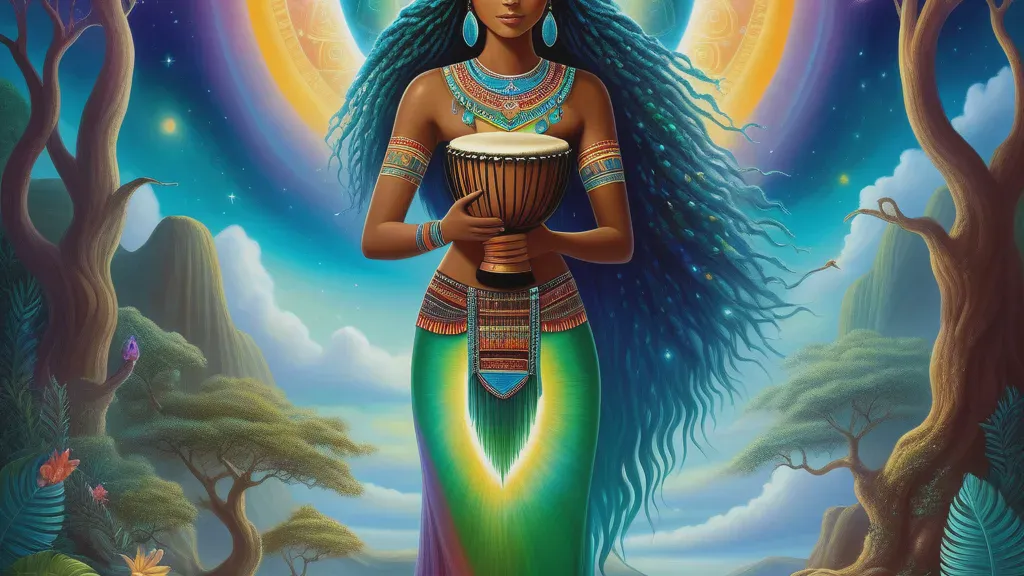
Djembe
Jungian Archetypes
Meaning
Dreaming of a djembe often symbolizes rhythm, community, and cultural identity. This instrument may emerge when individuals seek connection or expression through creativity.
Psychological Interpretation
Jungian analysis may link the djembe to the Great Mother archetype, representing nurturing creativity. Cognitive psychology sees it as a manifestation of social bonds, while practical psychology highlights the therapeutic value of music.
Cultural & Historical Origins
Originating in West Africa, the djembe is central to communal storytelling and rituals. In Malian traditions, it accompanies ceremonies that honor ancestors, reflecting deep cultural roots and connections.
Contextual Variations
You’re sitting in a circle of people, and someone places a djembe in your lap. When you tap it, the rhythm syncs with your breathing, and everyone’s faces look like family even though you don’t recognize them.
A djembe often points to your need for communal rhythm—belonging through shared cadence, tradition, or cultural roots. The synchronization with breathing suggests your psyche is asking you to find steadiness through connection and embodied practice.
You try to play the djembe, but your hands won’t strike the right spots; the drum makes muted thuds. Then a child starts laughing, and the laughter becomes a beat that guides you until the sound finally opens up.
This can reflect a blocked pathway to heritage or creative voice—skills may feel “off,” but the dream shows an invitation to learn through play. The child’s laughter turning into a beat suggests permission to be guided by curiosity rather than perfectionism.
You’re walking through your neighborhood carrying a djembe, but you keep hearing it from inside your own chest. When you reach a street corner, the sound calls you toward a community event that you’ve been postponing.
Hearing the drum from within indicates internal rhythm seeking expression, not just external culture. The call toward an event suggests your mind believes community participation could restore emotional order and meaning.
Frequently Asked Questions
Why would I dream about a djembe if I don’t play drums in real life?
What does it mean if I can’t make the djembe sound right?
Does the dream mean I should reconnect with my heritage?
Journaling Prompts
- Where do I currently feel out of rhythm—emotionally, socially, or in my daily routines—and what would “tapping into a beat” look like?
- Who or what in my life feels like the circle of listeners from the dream, and what do I need from them (or from myself)?
- When the djembe finally sounded clear, what changed inside me—confidence, safety, or permission?
Related Symbols
Dreamed about Djembe?
Get a personalized AI interpretation that connects this symbol to your specific life circumstances.
Interpret My Dream