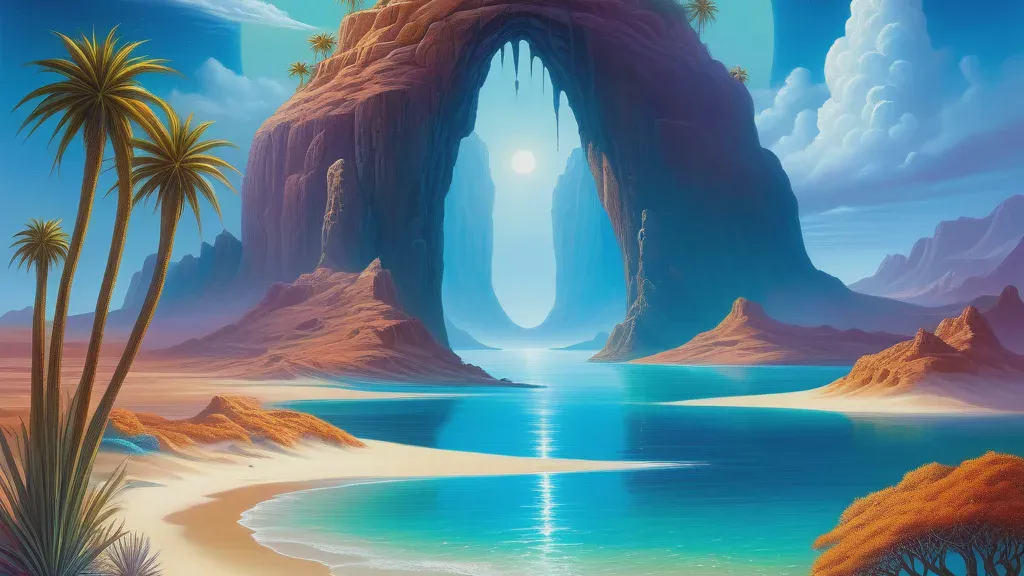
Desert Island
Jungian Archetypes
Meaning
Dreams of a desert island often symbolize isolation or a desire for escape. Psychologically, this reflects the mind's need for solitude to process emotions, recharge, or confront personal issues away from external pressures.
Psychological Interpretation
Jungian psychology views the desert island as a representation of the self, emphasizing the need for introspection. Cognitive approaches may interpret it as a response to stress, while practical psychology highlights the importance of solitude for self-reflection and healing.
Cultural & Historical Origins
In literature, Robinson Crusoe's isolation on a desert island symbolizes survival and self-discovery. Additionally, the myth of the Lotus-Eaters illustrates themes of escapism and the allure of isolation from societal responsibilities.
Contextual Variations
You land on a desert island with enough supplies to survive, but you immediately feel lonely. You build a shelter and talk out loud to yourself, and the loneliness gradually shifts into calm.
A desert island often symbolizes isolation used for emotional processing—solitude as a tool. Psychologically, the shift from loneliness to calm suggests your mind is teaching that separation can become self-regulation rather than punishment.
You find a radio that only works when you turn it to a certain angle. When you do, you hear a faint voice, but it’s unclear if it’s real or imagined, and you feel torn between hope and doubt.
This reflects the struggle between connection and self-reliance. The uncertain signal suggests your psyche is testing whether you can trust support while still tolerating uncertainty and distance.
You meet someone else on the island who insists you were never alone, but you can’t see them clearly. You realize you’ve been avoiding a part of yourself that needs attention.
The “someone else” you can’t fully locate points to internal companionship—neglected feelings or needs. Psychologically, the island becomes a stage for meeting inner aspects when external social input feels insufficient.
Frequently Asked Questions
Why do I dream of being on a desert island?
What if I don’t want to be rescued in the dream?
Does a desert island dream mean I’m unhappy with my relationships?
Journaling Prompts
- What did “survival” look like on the island—food, shelter, routines, or emotional coping—and what does that map to in my life?
- Was the dream loneliness painful, neutral, or clarifying—and what emotion might be asking for space?
- If rescue appeared, would I welcome it or resist it, and what would that reveal about my current boundaries?
Related Symbols
Dreamed about Desert Island?
Get a personalized AI interpretation that connects this symbol to your specific life circumstances.
Interpret My Dream