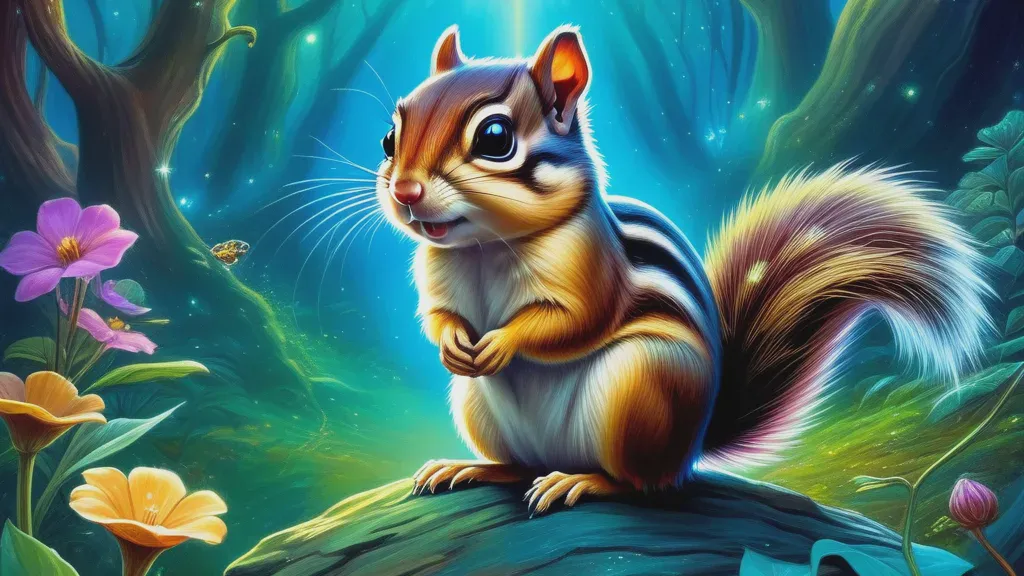
Chipmunk
Jungian Archetypes
Meaning
Chipmunks in dreams often symbolize playfulness and resourcefulness, reflecting psychological themes of adaptability and joy. They indicate a need to embrace spontaneity and find pleasure in life's small moments.
Psychological Interpretation
From a Jungian standpoint, chipmunks may symbolize the animus, representing playful aspects of the self. Cognitive psychology could interpret them as reminders to engage in self-care, while practical psychology suggests they encourage balance between work and leisure.
Cultural & Historical Origins
In Native American stories, chipmunks are seen as tricksters, symbolizing cleverness and adaptability. In children's literature, they often appear in tales like 'The Chipmunk Song,' representing innocence and joy in everyday life.
Contextual Variations
A chipmunk runs back and forth collecting tiny items—buttons, seeds, scraps—and hides them in several spots. You follow and notice you’ve been hoarding your energy and attention in similar ways, even when you don’t trust you’ll be okay.
Chipmunks often symbolize resourcefulness and playfulness, but also the habit of stockpiling as protection. Psychologically, it can reflect anxiety about scarcity and a need to balance preparation with trust in your current support system.
You’re trying to watch the chipmunk, but it keeps popping up unexpectedly, making you jump. After a while you laugh in the dream and realize the surprises aren’t threats—they’re reminders to stay light.
Unexpected popping can mirror how your mind interrupts you with impulses—worry, curiosity, or sudden urges. The shift to laughter suggests a move toward integrating spontaneity instead of treating it as danger.
A chipmunk leads you to a small stash of food you forgot you had. When you take some, you feel relief and decide not to keep counting what’s left.
Finding a forgotten stash symbolizes rediscovery of internal resources—skills, strengths, or past support you undervalued. Psychologically, it points to learning that security can come from within, not only from constant saving.
Frequently Asked Questions
Why did the chipmunk keep hiding things?
What does it mean if I feel playful in the chipmunk dream?
Is a chipmunk dream about productivity or about enjoyment?
Journaling Prompts
- What do I currently “stash” in my life—money, time, affection, words—and what fear drives that habit?
- Where could I allow more playfulness or spontaneity without losing responsibility?
- What internal resource did the dream remind me of, and how can I use it more intentionally this week?
Related Symbols
Dreamed about Chipmunk?
Get a personalized AI interpretation that connects this symbol to your specific life circumstances.
Interpret My Dream