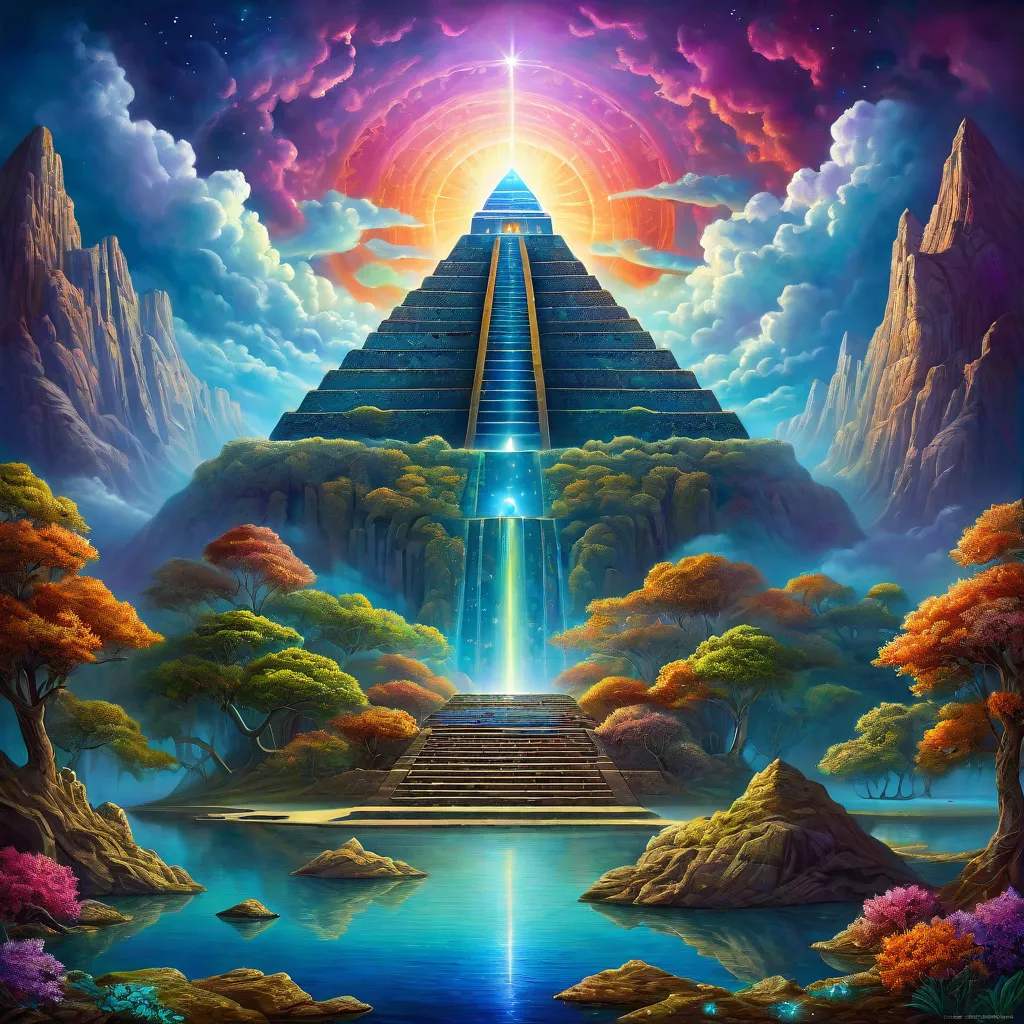
Ziggurat
Jungian Archetypes
Meaning
Ziggurats in dreams often symbolize aspiration and the journey toward self-actualization. They reflect psychological mechanisms of ambition and the need for stability, representing the structures we build in our lives to reach higher goals.
Psychological Interpretation
From a Jungian perspective, ziggurats may symbolize the archetypal journey toward individuation, with each level representing stages of personal growth. Cognitive theories might see them as metaphors for overcoming obstacles, while practical psychology connects them to goal-setting and achievement.
Cultural & Historical Origins
Ziggurats are prominent in Mesopotamian mythology, particularly in the Epic of Gilgamesh, where they are seen as bridges to the divine. Similarly, in ancient Sumerian culture, they served as temples, reflecting humanity's quest for connection with higher powers.
Contextual Variations
You climb a ziggurat made of sun-warmed stone, but each step changes into a different material—wood, glass, then ice. Halfway up, you realize the climb is also a test of your attention: when you look down, you lose traction; when you look straight ahead, the next step appears.
Ziggurats symbolize aspiration toward higher understanding and structured ambition. The changing materials suggest your growth requires flexibility—your goals may demand different skills at different levels, and your confidence depends on focus rather than certainty.
You’re at the base watching others climb faster, and you feel stuck on a lower tier. When you finally reach the next level, you discover it contains the same room you left behind, only with better lighting and new symbols on the walls.
This can reflect cyclical learning—progress that looks like repetition from the outside but becomes meaningful with new perspective. The improved lighting suggests insight arriving when you stop comparing and start reinterpreting what you already have.
You enter a ziggurat at night, and the interior walls are carved with rules and rankings. A trickster figure offers to let you skip levels, but every shortcut removes something from you—your voice, your memory, then your ability to feel urgency. You refuse, and the ziggurat opens into a wide sky view.
The hierarchical carvings point to ambition structured by external standards. The trickster shortcuts removing parts of you suggests that “faster” paths may cost essential motivation or self-trust; choosing the climb can symbolize reclaiming values over speed.
Frequently Asked Questions
What does it mean if the ziggurat feels like a test?
Why did I keep repeating the same place on different levels?
Is the trickster in the ziggurat dream a warning?
Journaling Prompts
- What “higher understanding” are you pursuing, and what steps have you been skipping by trying to jump ahead?
- How do I respond when I look down versus look straight ahead in the dream—what does that reveal about my focus habits?
- Which external rules or rankings feel embedded in my ambition, and what would my climb look like without them?
Related Symbols
Dreamed about Ziggurat?
Get a personalized AI interpretation that connects this symbol to your specific life circumstances.
Interpret My Dream