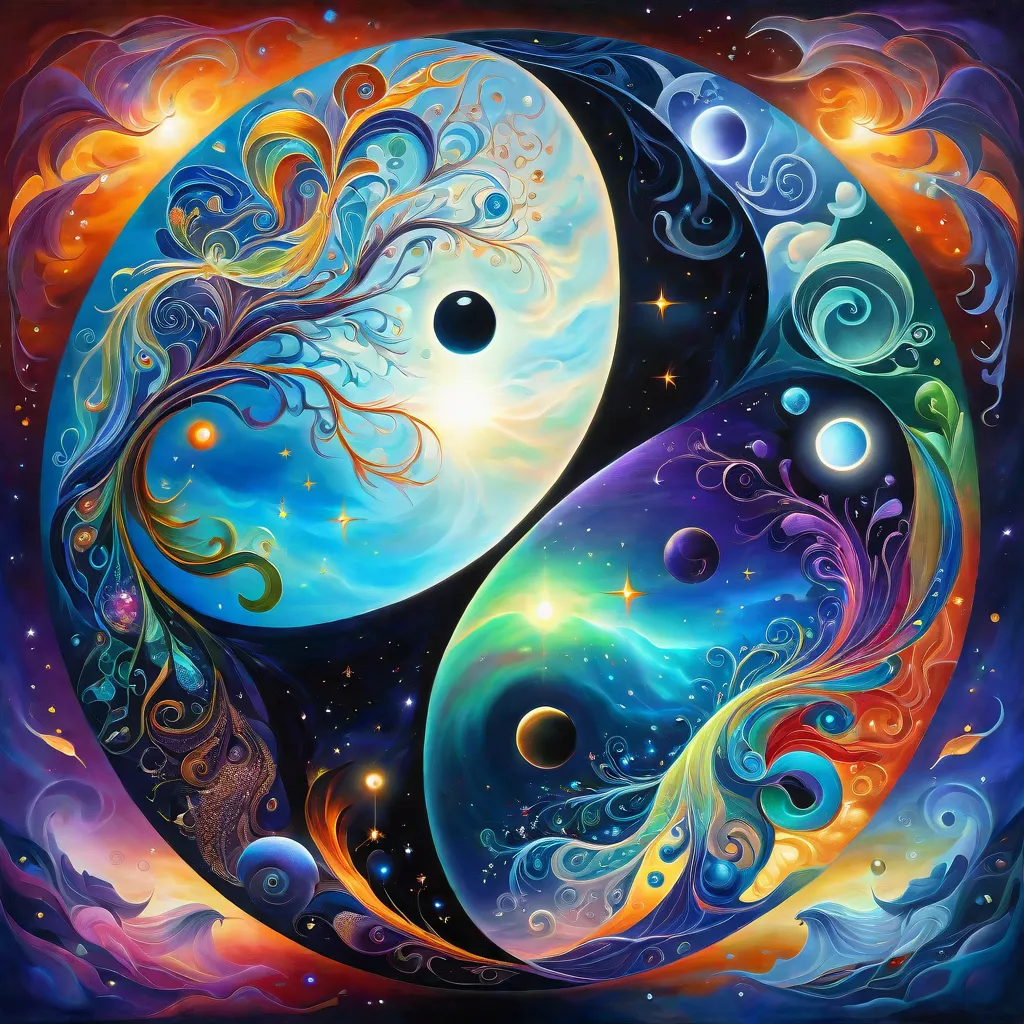
Yin Yang
Jungian Archetypes
Meaning
Dreams involving yin-yang symbolize the balance of opposites within the self. This duality reflects internal conflicts and the pursuit of harmony between contrasting aspects of one’s personality.
Psychological Interpretation
Jungian psychology views yin-yang as representing the integration of the Shadow and conscious self. Cognitive psychology may see it as a reflection of one's attempt to reconcile conflicting emotions, while practical psychology encourages the pursuit of balance in everyday life.
Cultural & Historical Origins
The yin-yang symbol originates from Chinese philosophy, representing dualism in nature. It is also referenced in Daoist texts, emphasizing the interplay of opposites, and parallel themes can be found in the Hindu concept of Shakti and Shiva.
Contextual Variations
You draw a yin-yang symbol on paper, but the black and white halves keep swapping, and you feel both relief and frustration at the change.
Swapping halves suggests your internal opposites alternate in dominance—your psyche is tracking shifting needs. Psychologically, it may reflect a conflict between control and softness, or between rest and action.
In the dream, you stand in a doorway where one side is bright and the other side is dark, and you can’t cross until you make peace with both.
This points to integration: you’re being asked to accept that competing feelings belong to the same self. Psychologically, it suggests harmony requires acknowledging what you resist rather than eliminating it.
The yin-yang symbol appears on your chest, and when you breathe, the dot in each half moves like it’s balancing your rhythm.
A breathing-linked symbol indicates your body is regulating internal dualities. Psychologically, it suggests you’re learning a functional balance—how to alternate without inner war.
Frequently Asked Questions
What does yin-yang balance mean in my dream?
Why do the yin and yang keep switching in the dream?
Does a yin-yang dream mean I’m conflicted?
Journaling Prompts
- What opposites in me are currently fighting, and what do they each need to feel safe?
- Where do I expect one side (light/dark, active/rest) to be ‘the real me,’ and what happens when it changes?
- What would balanced action look like for me this week—what rhythm should I alternate?
Related Symbols
Dreamed about Yin Yang?
Get a personalized AI interpretation that connects this symbol to your specific life circumstances.
Interpret My Dream