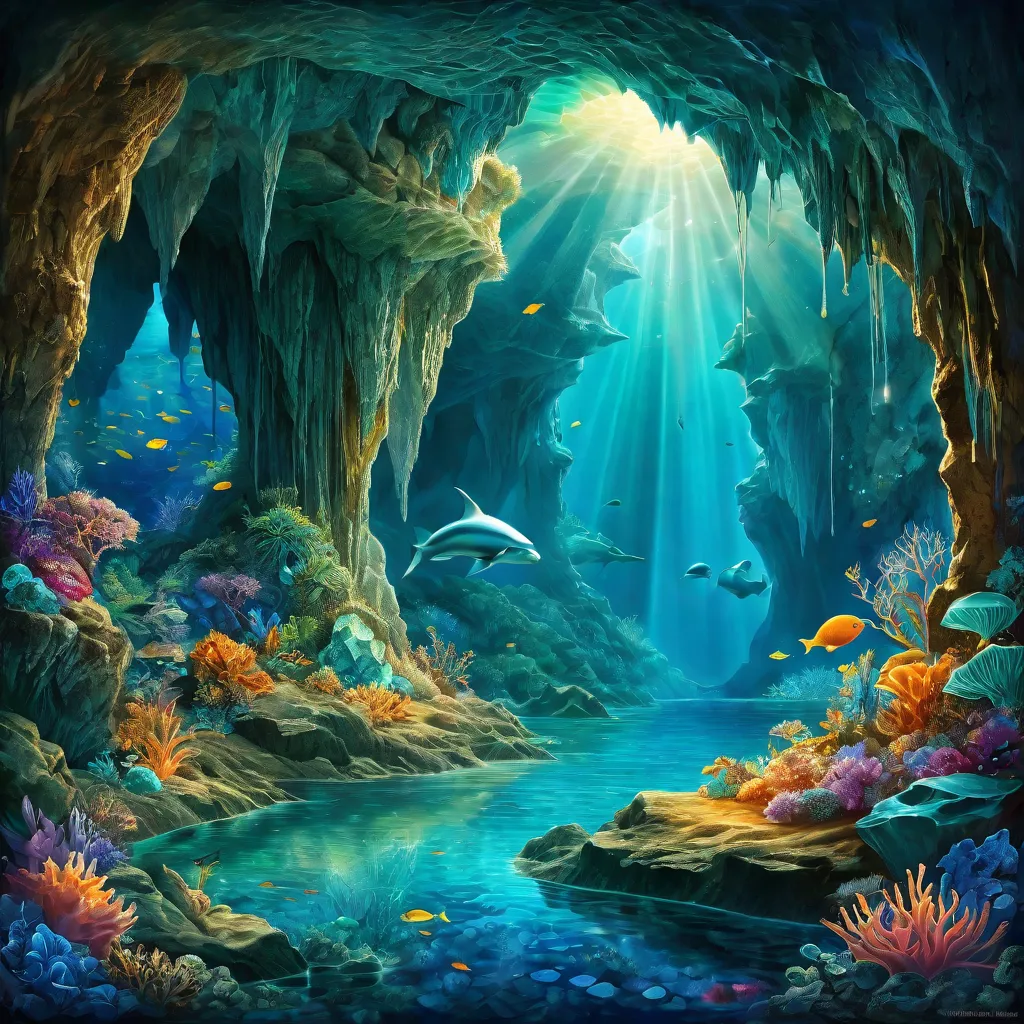
Underwater Cave
Jungian Archetypes
Meaning
An underwater cave represents the depths of the unconscious mind, often symbolizing hidden aspects of the self or buried emotions waiting to be explored. It invites introspection and self-discovery.
Psychological Interpretation
From a Jungian lens, this symbolizes the exploration of the anima or inner femininity. Cognitive psychology views it as a metaphor for confronting hidden fears, while practical psychology emphasizes the need for self-exploration in personal development.
Cultural & Historical Origins
In Greek mythology, the cave of the nymphs symbolizes hidden wisdom and transformation. Similarly, in the stories of the Taino people, underwater caves are places of spiritual significance, often associated with creation and the unconscious.
Contextual Variations
You swim into a cave underwater and the darkness thickens, but you can still move. As you go deeper, you see shapes that resemble old fears, and bubbles rise like thoughts you can’t stop.
An underwater cave symbolizes deep unconscious exploration—hidden emotions that require immersion rather than avoidance. The rising bubbles suggest thoughts surfacing during vulnerability, indicating a process of confronting suppressed feelings.
You try to reach an exit, but the cave walls change and your air supply feels limited. When you touch the rock, you hear muffled voices that sound like your own worries.
This reflects feeling trapped while searching for relief—especially when mental pressure limits your capacity to think clearly. The muffled voices imply inner dialogue that’s hard to separate from fear, making the path out feel uncertain.
You find a chamber inside the cave where light filters through water and you discover something safe—an object that calms you. You realize the cave isn’t only danger; it’s a place where you can process.
This suggests that confronting the unconscious can be stabilizing when you find structure or meaning. The safe chamber indicates readiness to integrate difficult emotions without total overwhelm.
Frequently Asked Questions
Does an underwater cave mean I’m going to face something traumatic?
Why is the dream underwater instead of just in a cave?
What should I do if the dream feels scary?
Journaling Prompts
- What did you encounter inside the underwater cave (shapes, voices, light, an exit), and what emotion did each element trigger?
- How did your breathing or air supply feel in the dream, and what might that correspond to in your waking life (stress tolerance, burnout, emotional capacity)?
- If the cave had a safe guide or a calming object, what would that be for you now—and how could you create that safety while exploring difficult feelings?
Related Symbols
Dreamed about Underwater Cave?
Get a personalized AI interpretation that connects this symbol to your specific life circumstances.
Interpret My Dream