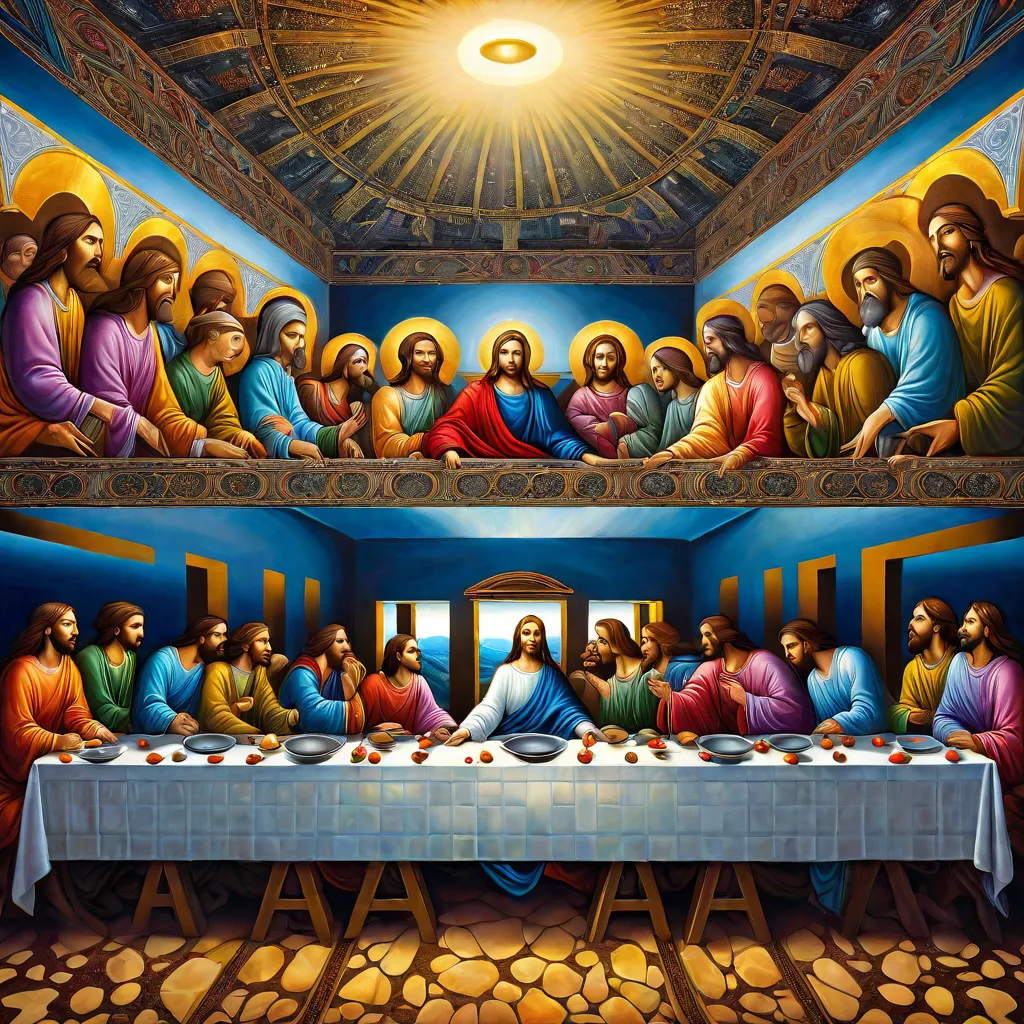
The Last Supper
Jungian Archetypes
Meaning
Dreams of the Last Supper evoke themes of sacrifice, community, and finality, reflecting the psychological process of confronting mortality and the need for connection in the face of existential dilemmas.
Psychological Interpretation
Jungians see this as a confrontation with the archetype of the self, symbolizing unity and shared experiences. Cognitive psychology views it as a reflection on relationships and choices, while practical psychology emphasizes the importance of closure and reconciliation.
Cultural & Historical Origins
The Last Supper is a pivotal event in Christianity, symbolizing Jesus' sacrifice and the importance of community. In art, Da Vinci's depiction highlights themes of betrayal and forgiveness, resonating across cultures as a powerful narrative of human experience.
Contextual Variations
You sit at a long table where everyone looks familiar, but you notice your own seat is different—closer to the edge—and you feel responsible for what happens next.
This dream can symbolize responsibility, sacrifice, and the weight of community. Psychologically, it may indicate you’re preparing to take a difficult role—one that requires letting go of personal comfort for a greater outcome.
During the meal, someone offers you bread, but you refuse; later you feel guilt, then relief, as if refusing was honest.
Refusal in such a charged setting can reflect boundaries and fear of obligation. Psychologically, it suggests you’re renegotiating loyalty—deciding what you will and won’t carry, even if it disappoints others.
The table becomes quiet and then suddenly everyone starts talking about endings; you realize you’ve been avoiding a real conversation about mortality or loss.
Talk of endings often points to confronting impermanence. Psychologically, it may be your mind processing grief, time pressure, or the need to clarify priorities before life changes them.
Frequently Asked Questions
Why did I dream of the Last Supper specifically instead of a normal dinner?
What does it mean if I refuse the offered food or drink?
Is the dream about death or grief?
Journaling Prompts
- What in my life feels like a “turning point meal”—a moment before things change permanently?
- How did I feel at the table: responsible, guilty, relieved, reverent, or numb—and what does that reveal about my current commitments?
- If this dream is about sacrifice, what am I sacrificing, and what do I want to stop offering?
Related Symbols
Dreamed about The Last Supper?
Get a personalized AI interpretation that connects this symbol to your specific life circumstances.
Interpret My Dream