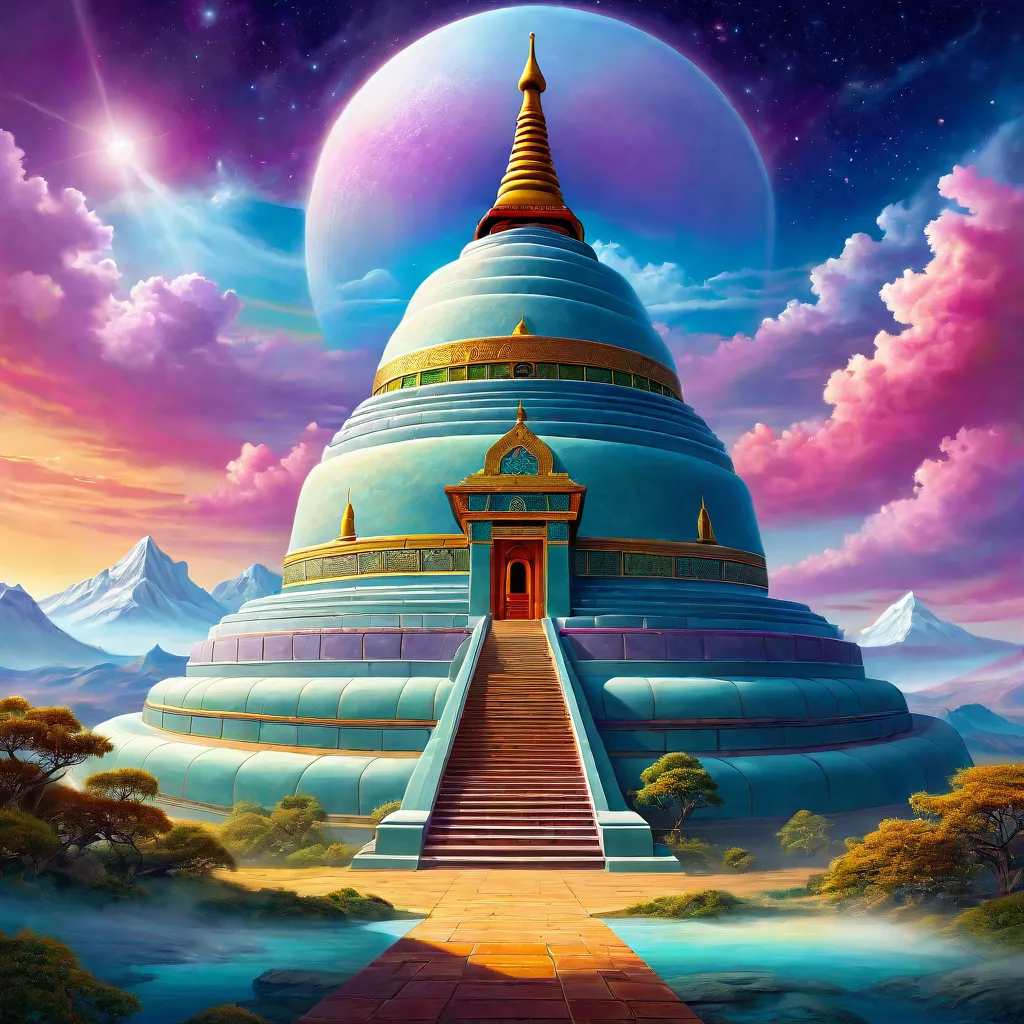
Stupa
Jungian Archetypes
Meaning
Dreaming of a stupa often signifies a search for spiritual enlightenment and a desire to connect with deeper truths. It represents a quest for inner peace and the aspiration to transcend worldly concerns.
Psychological Interpretation
Jungian theory sees the stupa as a symbol of the Animus, representing spiritual guidance. Cognitive psychology associates it with self-awareness and mindfulness practices. Practically, it suggests a yearning for balance and a need for spiritual exploration.
Cultural & Historical Origins
In Buddhism, stupas are sacred structures representing the Buddha's enlightenment. In Hinduism, stupas symbolize the journey towards moksha, emphasizing the importance of spiritual practice and meditation.
Contextual Variations
You climb a tall stupa made of layered stone; each step you take reveals a different symbol etched in the wall, and when you reach the top, you hear your own thoughts chanting like a mantra.
This symbolizes a quest for inner truth through gradual ascent—patience, discipline, and meaning-making. The chanting thoughts suggest a new internal rhythm forming, helping integrate conflicting feelings.
You enter a stupa room where wind moves through a central opening; you try to speak questions, but the answers arrive as shifting light patterns instead of words.
The dream indicates learning through nonverbal insight—intuition and emotional knowing. Psychologically, it can reflect difficulty putting feelings into language, while still showing that guidance is available.
A trickster-like figure offers to guide you through the stupa, but it keeps changing the route signs; you finally stop following directions and choose a path based on your breath.
This highlights the tension between external guidance and inner authority. The trickster shifting signs can represent confusing advice or overthinking, while choosing by breath suggests returning to a steadier self.
Frequently Asked Questions
Why does the stupa feel spiritual in my dream but also confusing?
What does it mean if I can’t find the right entrance or route?
Does the stupa dream mean I should meditate or seek guidance?
Journaling Prompts
- What does “enlightenment” mean to me right now—less stress, deeper honesty, a new identity, or something else?
- Where in my life am I being guided by signs (advice, rules, expectations) instead of my own internal rhythm?
- When the stupa answers arrive as light or sound, what kind of knowing do I usually ignore in waking life?
Related Symbols
Dreamed about Stupa?
Get a personalized AI interpretation that connects this symbol to your specific life circumstances.
Interpret My Dream