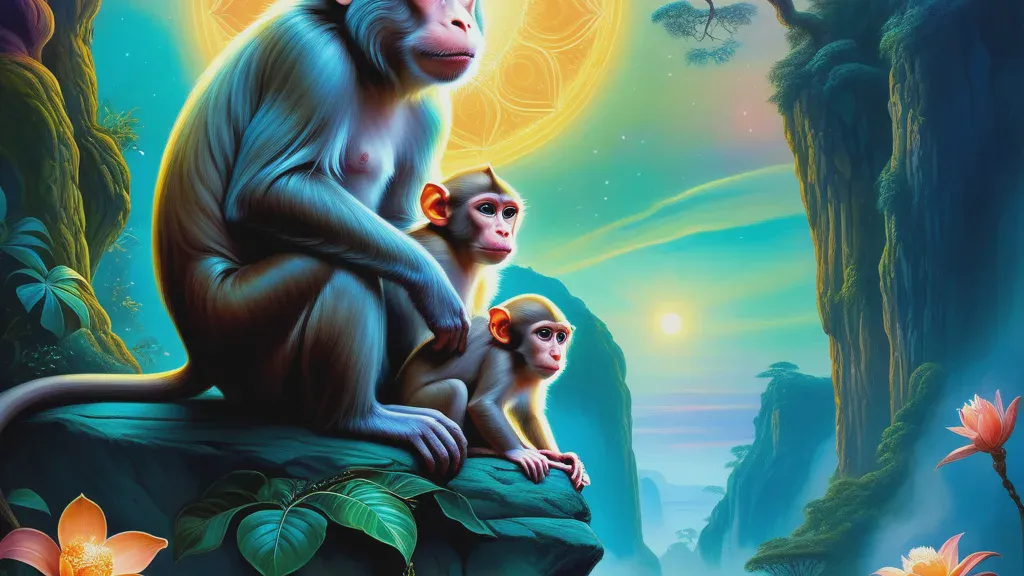
Macaque
Jungian Archetypes
Meaning
Dreams of a macaque often symbolize playfulness and trickery, reflecting the dreamer's inner child and the need for levity. This suggests a psychological mechanism for coping with stress through humor and spontaneity.
Psychological Interpretation
Jungian analysis sees the macaque as a Trickster, challenging norms and encouraging creativity. Cognitive psychology might suggest this reflects a need for flexibility in thought. Practically, it emphasizes embracing joy and spontaneity in daily life.
Cultural & Historical Origins
In Hindu mythology, the macaque is associated with Hanuman, the monkey god symbolizing loyalty and cleverness. In Chinese folklore, the Monkey King, Sun Wukong, represents rebellion and humor, embodying the Trickster archetype.
Contextual Variations
A macaque steals your hat and then mimics your facial expressions in a playful way. You laugh despite embarrassment, and you realize you’ve been taking yourself too seriously in a recent situation.
Macaques symbolize playful trickery and the inner child’s need for lightness. The laughter after embarrassment suggests your psyche is loosening rigid self-judgment and inviting humor as a coping tool.
You’re in a market and a macaque keeps dropping objects at your feet, each time revealing something you didn’t want to look at—receipts, messages, evidence of a misunderstanding. When you confront what’s revealed, you feel a mix of irritation and relief.
This links trickster energy to uncovering hidden truths, even if they arrive awkwardly. Psychologically, it suggests your mind is disrupting denial so you can address a misunderstanding directly.
A macaque sits beside you and chatters while you try to read; every time you focus, it makes silly noises that break your concentration. Later, you stop reading and join in a harmless distraction, and your stress drops quickly.
The distraction reflects an urge for levity when seriousness becomes draining. The stress drop indicates that play is not avoidance here—it’s regulation, giving your nervous system a needed break.
Frequently Asked Questions
Why do macaque dreams feel funny but also slightly annoying?
What does it mean if the macaque steals something important?
Does a macaque dream mean someone is being deceptive?
Journaling Prompts
- Where in your life could more humor reduce pressure—and what do you resist about that idea?
- What did the macaque steal or reveal, and what does that object represent emotionally (image, certainty, comfort)?
- How did you respond—laugh, chase, scold—and what does that say about your current relationship with your inner child?
Related Symbols
Dreamed about Macaque?
Get a personalized AI interpretation that connects this symbol to your specific life circumstances.
Interpret My Dream