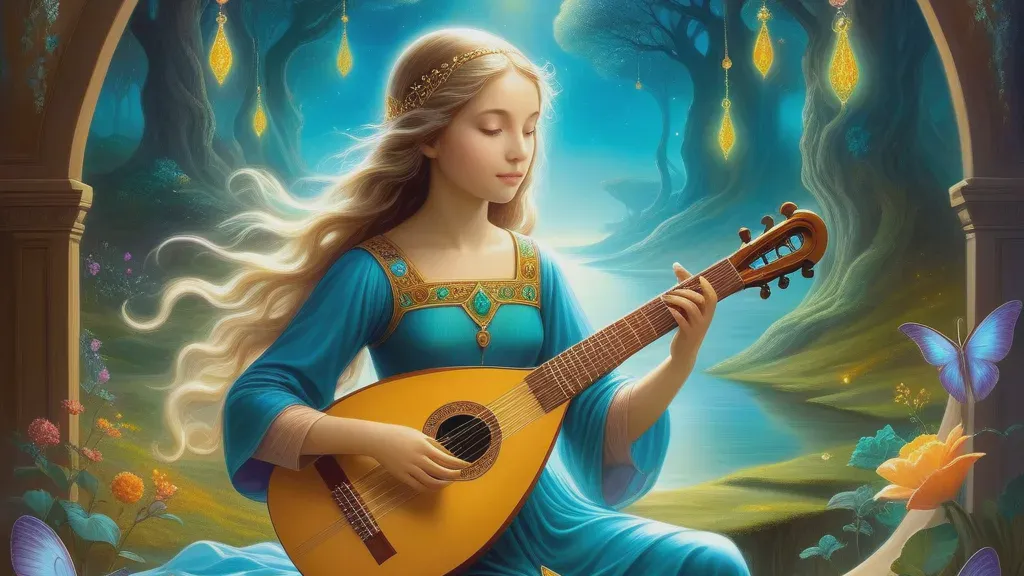
Lute
Jungian Archetypes
Meaning
Dreaming of a lute often reflects a desire for harmony and emotional expression. The lute's musicality represents the integration of feelings and creativity, acting as a psychological mechanism to soothe anxiety and foster connections.
Psychological Interpretation
From a Jungian standpoint, the lute symbolizes the Anima, representing the dreamer's inner feminine qualities. Cognitive psychology may interpret this as a need for emotional balance. Practically, it suggests exploring one’s creative outlets to enhance emotional well-being.
Cultural & Historical Origins
In Persian mythology, the lute is associated with the legendary poet Rumi, who emphasized love and spirituality through music. Additionally, in medieval European traditions, lutes were integral to courtly love narratives, symbolizing romantic expression.
Contextual Variations
You sit alone in a room and tune a lute, but each string you tighten changes the room’s mood—bright when tuned correctly, heavy when off. When you finally play a simple melody, you feel your chest loosen and you remember a feeling you’d buried.
A lute’s music symbolizes emotional harmony—how well your feelings are integrated into expression. Tuning reflects adjustment and self-regulation, while the sudden memory suggests suppressed emotion is ready to be brought into a playable, shareable form.
A stranger hands you a lute and asks you to accompany them, but your fingers keep slipping as if you’re afraid to make mistakes. You decide to play anyway, and the “wrong” notes turn into a rhythm that feels true to you.
This points to fear of emotional imperfection—believing you must perform flawlessly to be accepted. When the rhythm becomes authentic, it indicates growing confidence in expressing your inner world without needing perfection.
You find a lute in a closet and it’s covered in dust; when you wipe it clean, the sound comes out softer than expected. You realize you’ve been judging your feelings as too small, and you start singing quietly to yourself.
Dust suggests feelings that were neglected or kept out of reach. The softer sound can represent gentle emotional truth—your psyche may be inviting you to value subtle expression rather than forcing intensity.
Frequently Asked Questions
What does it mean if I’m playing the lute well versus failing?
Why does the lute show up as dusty or broken in my dream?
Does a lute dream relate to relationships or to my own inner world?
Journaling Prompts
- What emotion did the lute’s music make possible in the dream—relief, sadness, longing, joy?
- Which string felt “wrong” or hard to tune, and what part of you does that correspond to in waking life?
- Where are you trying to create harmony—externally with others, or internally with your own feelings?
Related Symbols
Dreamed about Lute?
Get a personalized AI interpretation that connects this symbol to your specific life circumstances.
Interpret My Dream