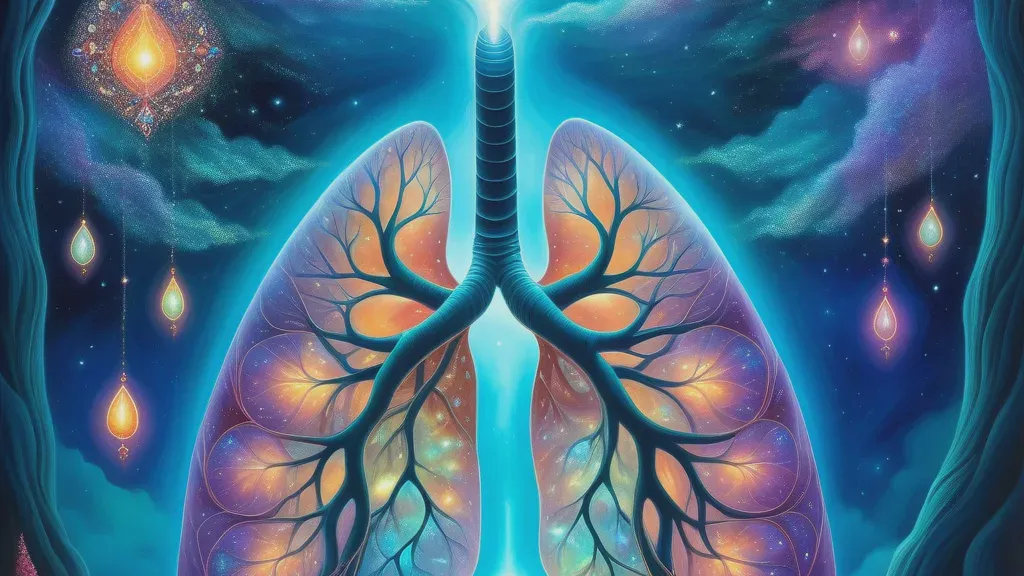
Lung
Jungian Archetypes
Meaning
Dreaming of lungs often symbolizes issues related to breath, life force, and emotional expression. Psychologically, it reflects the need for self-care and the management of stress or anxiety.
Psychological Interpretation
From a Jungian perspective, lungs can signify the Hero's struggle for freedom and authenticity. Cognitive psychology emphasizes the relationship between breathing and emotional regulation. Practically, it may indicate a need to address health or emotional concerns.
Cultural & Historical Origins
In Chinese medicine, the lungs are linked to grief and emotional balance, highlighting their significance in health. Additionally, in ancient Egyptian beliefs, the heart was weighed against the feather of Ma'at after death, symbolizing truth and emotional integrity.
Contextual Variations
You’re running but your lungs feel tight, and every attempt to inhale is like breathing through cloth. You stop moving to catch your breath, and when you finally breathe deeply, you start crying without understanding why.
Lung dreams often translate breath restriction into emotional restriction. The crying after relief suggests that once you allow fuller breath (and therefore more safety), suppressed emotions can finally move.
In a dream hospital, a doctor shows you your lungs as if they’re clouded with dust, and you’re asked to “clean them” by speaking honestly. You try to talk, but your words come out as sighs until you say one truth you’ve avoided.
This frames your lungs as a symbol for emotional expression that’s been blocked by avoidance. The dust implies accumulated stress, while speaking truth becomes the “treatment,” linking self-expression to self-care.
You’re underwater for a long time and keep trying to breathe, but you only get bubbles that form into words you can’t read. When you surface, you gasp and feel a sudden urge to pull away from a draining situation.
Underwater breathing highlights a mismatch between your needs and your current environment. The unreadable bubble-words suggest emotions you haven’t had language for yet, and the urge to pull away points to the need for boundary-setting.
Frequently Asked Questions
Could a lung dream be about a health issue rather than emotions?
What does it mean if I can’t catch my breath in the dream?
Why do some lung dreams end with relief or crying?
Journaling Prompts
- Where do you feel you’re holding your breath in waking life—at work, in a relationship, or around a difficult topic?
- What situations make your breathing feel shallow or strained (even subtly), and what emotion is usually underneath that sensation?
- If your lungs could ask for one specific kind of support, what would it be—space, honesty, rest, or help?
Related Symbols
Dreamed about Lung?
Get a personalized AI interpretation that connects this symbol to your specific life circumstances.
Interpret My Dream