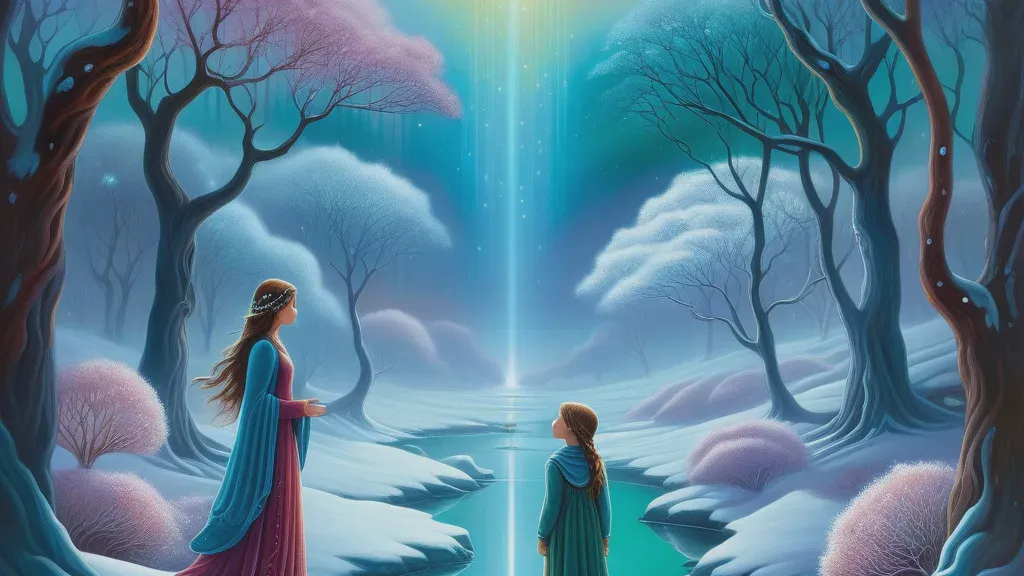
Late Winter
Jungian Archetypes
Meaning
Dreaming of late winter often signifies a transitional phase, where individuals confront feelings of stagnation or renewal. Psychologically, it can represent the struggle between comfort and change, reflecting personal growth processes.
Psychological Interpretation
From a Jungian perspective, late winter may symbolize the 'shadow' aspect, where repressed emotions surface. Cognitive psychology views this as a reflection of current life challenges, while practical psychology suggests it signifies readiness for change and new beginnings.
Cultural & Historical Origins
In Norse mythology, late winter is tied to the concept of 'Ragnarok,' the end and rebirth cycle. Additionally, in Celtic traditions, Imbolc celebrates the coming of spring and new life, marking transitions from dark to light.
Contextual Variations
You’re inside your house, and the windows keep frosting over, but you notice small cracks of light coming through. You feel numb at first, then notice your body warms slightly as you bring out spring bulbs you forgot you bought.
Late winter often marks transition from stagnation toward renewal, even if it’s subtle. Psychologically, it can reflect a slow reactivation of hope: your system may be moving from preservation mode into preparation.
You walk through a park where the snow is melting unevenly—some paths are clear, others are still hard. You keep stepping around ice patches, and you realize you’re afraid to move too quickly.
Uneven thaw can symbolize partial readiness: parts of you are ready to change, while other parts still need safety. The careful stepping suggests you’re negotiating risk—protecting yourself while testing new momentum.
At night, you dream you’re caring for a child-sized plant in a cold room. The plant doesn’t grow much, but it keeps reaching, and you decide to keep watering anyway.
This leans into transitional vulnerability: “child” imagery can represent new life or new self-trust that needs time. Psychologically, it suggests persistence—choosing renewal despite slow visible results.
Frequently Asked Questions
Why did my late-winter dream feel stuck but also hopeful?
What does melting snow that doesn’t melt evenly mean?
Does late winter signal an ending?
Journaling Prompts
- Where do I feel emotionally “frozen,” and what small sign of thaw did the dream highlight?
- What does the dream’s caution (stepping around ice, keeping the plant warm) suggest about what I need to feel safe enough to change?
- What would it mean for me to water the “slow-growing” part of myself without demanding immediate results?
Related Symbols
Dreamed about Late Winter?
Get a personalized AI interpretation that connects this symbol to your specific life circumstances.
Interpret My Dream