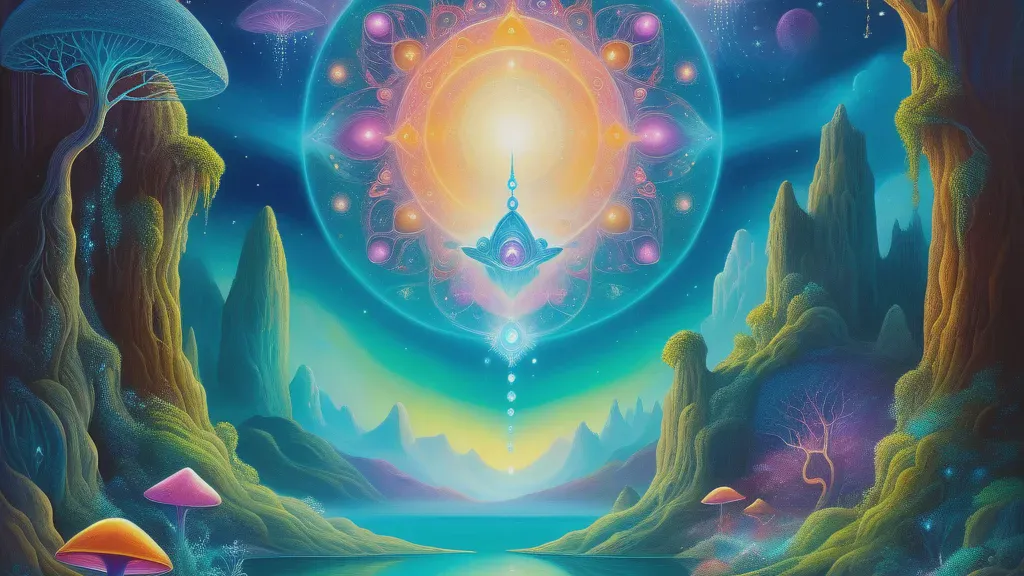
Hypnagogic State
Jungian Archetypes
Meaning
Experiencing hypnagogic states in dreams reflects the blending of consciousness and subconsciousness, often representing creativity and the exploration of ideas. This state engages the mind's natural propensity for imagination.
Psychological Interpretation
Jungian analysis sees it as a space for the Child archetype, fostering creativity and playfulness. Cognitive psychology connects it to the brain's transition between states, while practical psychology suggests utilizing this state for problem-solving and inspiration.
Cultural & Historical Origins
In Tibetan Buddhism, the hypnagogic state is associated with the Bardo, a transitional phase between life and death. In literature, surrealist works like those of Salvador Dalí explore the boundaries of consciousness, emphasizing creativity in dream states.
Contextual Variations
The dreamer drifts and realizes images are forming before they fully fall asleep. They notice they can “steer” the visuals by focusing on a melody, and the dream becomes creative rather than scary.
A hypnagogic state often represents the blending of subconscious material with waking intention. Steering with a melody suggests your creativity is accessible when you gently guide attention instead of forcing control.
The dreamer tries to stay still to prevent the dream from happening, but the scene keeps generating playful characters. The dreamer laughs, and the characters begin arranging objects into a pattern that resembles a personal goal.
Trying to stop the state reflects resistance to uncertainty during transition. The playful patterning implies your psyche uses liminal creativity to organize goals—turning anxiety into playful structure.
A trickster-like voice offers the dreamer a riddle during the in-between moments. When the dreamer answers honestly, the dream stabilizes into a clear story about a choice they’ve avoided.
The trickster voice can symbolize your mind’s attempt to bypass rigid thinking and bring up truth through metaphor. Stability after honest answering suggests that clarity emerges when you stop dodging your own decision-making.
Frequently Asked Questions
Why do hypnagogic dreams feel unusually vivid or half-real?
What does it mean if I can influence the dream during the hypnagogic state?
Does a trickster character in a hypnagogic dream have a specific meaning?
Journaling Prompts
- During the hypnagogic state, what helped the dream become clearer (music, laughter, honesty, attention), and what does that say about your creative process?
- What “riddle” or choice did the dream try to surface, and what have you been postponing in waking life?
- Where do I resist transitions or uncertainty, and how can I practice guiding instead of fighting the in-between?
Related Symbols
Dreamed about Hypnagogic State?
Get a personalized AI interpretation that connects this symbol to your specific life circumstances.
Interpret My Dream