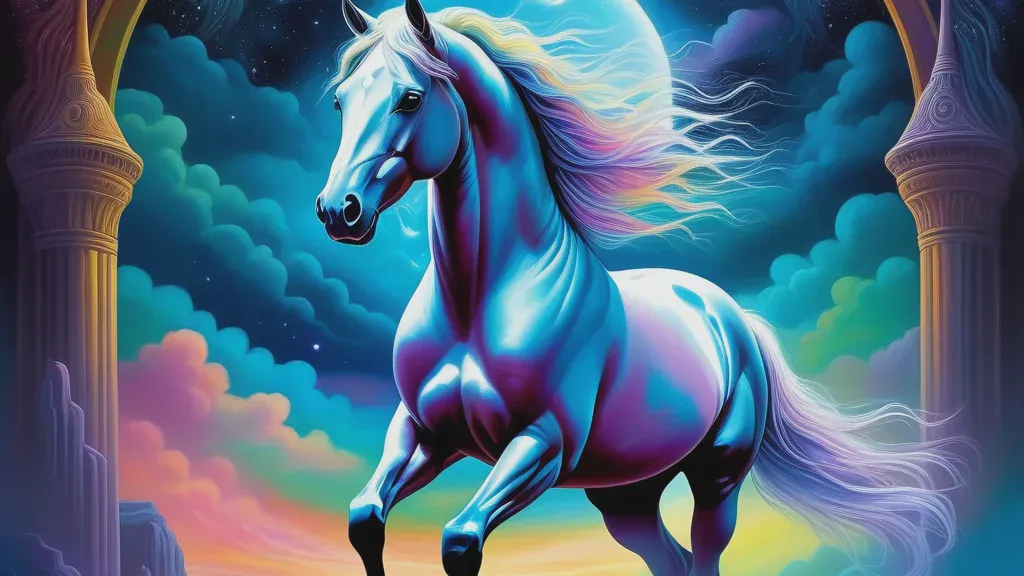
Horse
Jungian Archetypes
Meaning
Horses in dreams represent vital energy, personal drive, and the power of natural instincts. Riding a horse suggests mastery over your passions, while a wild horse may indicate untamed desires or energy that feels uncontrollable.
Psychological Interpretation
The horse symbolizes the libido — life force energy that can be harnessed or runs wild. A horse you ride well represents integrated vitality, while being thrown suggests your drives have overwhelmed your conscious control.
Contemporary Psychological
In contemporary psychology, the horse in dreams functions as a symbol of embodied agency and autonomic nervous system activation. When the brain processes themes of power, freedom, and movement through the horse, it is often working through questions of personal control and the balance between instinctive responses and deliberate action. The horse represents the body's capacity to move, respond, and assert itself in the world—a neurobiological metaphor for the integration of emotional impulse with intentional behavior. Dreams featuring horses frequently emerge when the dreamer is navigating situations that require both confidence and restraint, or when the nervous system is processing the tension between fight-or-flight readiness and the need for measured, purposeful action. From a threat simulation perspective, horses in dreams often rehearse scenarios involving speed, escape, or the ability to outpace danger. The dreamer's brain may be running simulations about whether they can move fast enough to avoid harm, whether they have the stamina to endure a challenge, or whether they can trust their instincts in a threatening situation. The horse's power becomes a test case: Can I harness this energy? Can I stay in control while moving at speed? These simulations help the brain prepare for real-world situations requiring quick decision-making, physical or emotional agility, or the ability to assert boundaries. The dream is essentially asking, "Do I have the resources to handle what's coming?" Memory consolidation involving horses often relates to recent experiences of autonomy, physical exertion, or moments when the dreamer felt either empowered or constrained by their own body or circumstances. The brain may be integrating lessons about pacing, endurance, or the consequences of pushing too hard. If the dreamer has recently experienced a situation requiring courage, risk-taking, or the management of powerful emotions, the horse becomes the neural vehicle for consolidating that learning. The cognitive pattern at work is often about calibration: learning where the boundaries are between healthy assertion and recklessness, between freedom and responsibility. The emotional regulation function of horse imagery centers on processing the dreamer's relationship with their own power and instinctive nature. In cultures and contexts where instinct, physicality, or assertiveness are valued, horses may appear as the brain's way of affirming and integrating these capacities. In contexts where such qualities are feared or suppressed, horses may represent the emotional work of reclaiming agency. The contemporary reading suggests that horses in dreams are less about external freedom and more about the internal negotiation between the body's impulses and the mind's need for control—a fundamental emotional regulation task that the sleeping brain is actively working to resolve.
Gestalt / Parts of Self
In Gestalt dream work, the horse is a part of the dreamer's own psyche—specifically, the embodied life force, instinctual power, and raw vitality that lives within. The horse represents the dreamer's capacity for movement, drive, and authentic expression. It is not something external to be controlled or admired from a distance; it is the dreamer's own energy, strength, and forward momentum. When a horse appears in a dream, it invites the dreamer to ask: What part of my own power am I encountering? Am I owning my vitality, or am I projecting it onto something "out there"? Often, dreamers project their own untamed energy onto the horse, treating it as wild, dangerous, or needing to be mastered. This projection reveals an internal split: the dreamer may be disowning their own instinctual nature, their sexuality, their anger, or their desire to move freely. The dialogue between parts becomes clear—there is the part that wants to run, to be free, to express raw power, and the part that fears this energy, tries to contain it, or believes it must be controlled. The horse in the dream is not the problem; the dreamer's relationship to their own power is. Integration happens when the dreamer stops seeing the horse as something to be tamed or feared, and instead claims it as their own. This means acknowledging: "This power is mine. This drive is mine. This vitality belongs to me." The horse becomes not an obstacle or a wild thing to manage, but a vehicle for authentic movement through life. The dreamer is invited to ride the horse—to partner with their own strength rather than fight it, to direct their own energy consciously rather than be driven by it unconsciously, and to trust their instinctual knowing. Ownership of the horse means reclaiming the parts of self that have been split off, denied, or projected outward. The work is not about becoming the horse or being consumed by its power, but about integration—bringing the wild, vital, instinctual self into conscious relationship with the rest of the personality. When this happens, the horse becomes a symbol not of chaos or danger, but of authentic aliveness and the dreamer's capacity to move through the world with both power and presence.
Jungian / Archetypal
The horse in dreams embodies the raw life force and instinctual power that dwells within the collective unconscious. As an archetypal figure, the horse represents the vital energies—sexuality, aggression, and primal drive—that animate human existence. In Jungian terms, the horse often appears as a manifestation of the Shadow, that repository of disowned instincts and untamed nature that civilization demands we suppress. When the dreamer encounters a horse, they are meeting the wild, uncontrolled aspects of themselves that cannot be fully domesticated by the conscious ego. The horse's strength and speed symbolize the tremendous energy available to the psyche when instinct is acknowledged rather than repressed. The individuation process frequently involves a reckoning with the horse archetype. The dreamer must learn to integrate rather than reject this primal power. A wild, unbroken horse may signal that instinctual energies are running amok, threatening to overwhelm conscious intention. Conversely, a tamed or ridden horse suggests the possibility of harnessing these forces in service of the Self's larger purpose. The Hero archetype often appears alongside the horse—the hero must master the beast, not destroy it, learning to ride and direct its tremendous vitality toward meaningful goals. This is the central tension: how to honor the body's wisdom and instinctual knowing while maintaining the conscious will's necessary direction. The collective meaning of the horse across cultures reinforces its role as a bridge between the civilized and the wild, the conscious and the unconscious. In mythology, horses carry heroes into battle and shamans between worlds. They represent freedom—the capacity to move swiftly beyond constraint—yet also the animal nature that must be respected and integrated. The compensatory message the unconscious offers through the horse is clear: your instincts are not your enemy. The psyche is calling for a more honest relationship with desire, sexuality, aggression, and vitality. Without this integration, the dreamer remains split between a false persona of control and a Shadow that grows increasingly powerful in the unconscious. The horse invites the dreamer to become whole by acknowledging that power, drive, and instinct are not obstacles to individuation—they are essential fuel for the journey toward the Self.
Psychodynamic / Freudian
In psychodynamic dream interpretation, the horse represents the manifest expression of repressed instinctual drives—particularly libidinal energy, sexual desire, and primitive aggression. The manifest content of a horse in a dream is straightforward: a powerful animal, often wild or untamed. Yet the latent content reveals the dreamer's relationship to their own instinctual nature. The horse embodies what Freud termed the id—the unconscious reservoir of desire and drive that civilization demands we control. When a horse appears in dreams, it signals that repressed material is pressing toward consciousness, seeking expression despite the ego's defensive efforts to contain it. The wish fulfillment at work in horse dreams typically involves the desire to reclaim or express power, sexuality, and autonomy that have been inhibited or forbidden. The dreamer may unconsciously wish to break free from parental injunctions, social constraints, or internalized prohibitions against aggression or sexuality. However, the dream rarely presents this wish directly; instead, defense mechanisms distort and disguise it. Displacement is common—the dreamer's own forbidden impulses are projected onto the horse, allowing the ego to observe them from a safe distance. Condensation may occur, with the horse simultaneously representing both the dreamer's repressed desires and the feared consequences of acting on them. The horse may be wild and uncontrollable (expressing the wish), yet also dangerous or threatening (expressing the fear), creating the characteristic ambivalence of neurotic conflict. Childhood origins of horse symbolism often trace to early experiences of power, control, and bodily autonomy. A child who was shamed for aggression, sexuality, or physical exuberance may internalize the message that these drives are dangerous and must be tamed. The horse becomes the repository for what was forbidden—the wild, untamed self that the child learned to suppress. Parental figures who demanded obedience and emotional restraint may have created a split between the civilized, compliant self and the repressed instinctual self, now symbolized by the horse. In some cases, the horse represents an identification with a powerful parental figure whose strength or sexuality was both admired and feared, creating an ambivalent relationship to power itself. The repressed material surfacing through horse symbolism is the dreamer's own vitality, sexuality, and capacity for assertion. The dream presents an opportunity for the unconscious to communicate what the conscious mind has disowned or denied. Whether the dreamer is riding the horse, fleeing from it, or attempting to tame it, the dream is asking: What part of your own power and instinct have you abandoned? What would happen if you allowed yourself to be as alive, as driven, as uncontained as this animal? The psychodynamic work involves recognizing the horse not as an external threat but as a disowned aspect of the self—one that, when integrated rather than repressed, can provide the energy and authenticity necessary for genuine living.
Cultural & Historical Origins
Horses hold sacred status across cultures. In Greek mythology, Pegasus represents poetic inspiration. Norse mythology features Sleipnir, Odin's eight-legged horse that travels between worlds. Plato used the chariot allegory with horses representing appetite and spirit.
Contextual Variations
Riding a horse confidently
Indicates a healthy relationship with your drives and a sense of personal power and direction.
A wild horse running free
Represents untamed energy or desires that need acknowledgment before they can be channeled productively.
Frequently Asked Questions
What does a black horse mean in dreams?
Why do I dream about horses I can't control?
Journaling Prompts
- Where in my life do I feel a surge of energy or drive that I'm either harnessing or struggling to control?
- What passions have I tamed that might benefit from being given more freedom?
Related Symbols
Dreamed about Horse?
Get a personalized AI interpretation that connects this symbol to your specific life circumstances.
Interpret My Dream