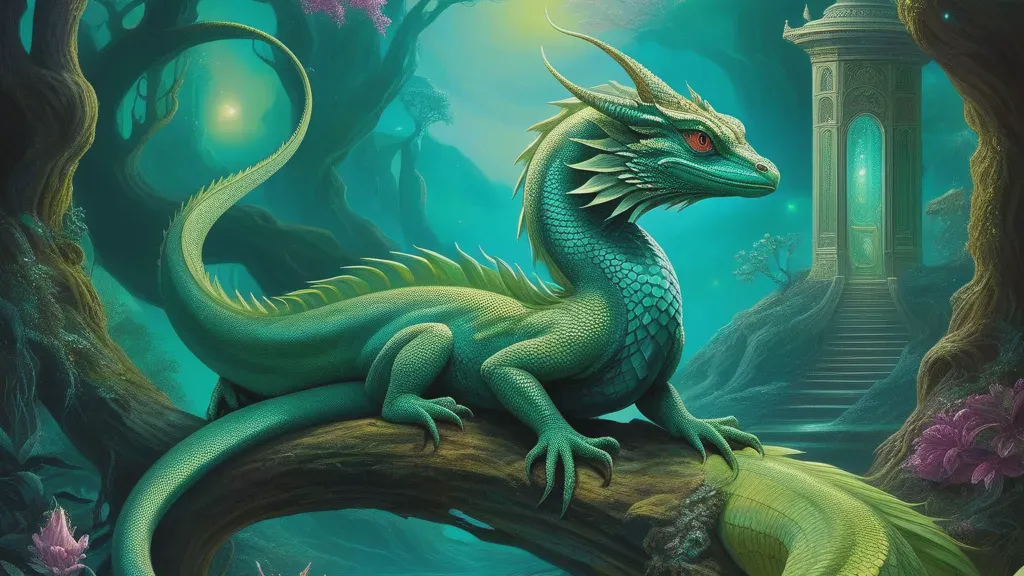
Forgotten Basilisk
Jungian Archetypes
Meaning
Dreaming of a forgotten basilisk may indicate suppressed fears or inner conflicts. This mythical creature symbolizes transformation through confronting deep-seated anxieties and the power within to overcome them.
Psychological Interpretation
Jungian theory may link the basilisk to the Animus, representing shadow traits that need integration. Cognitive psychology suggests it reflects fears of the unknown. Practically, the dream could indicate that confronting these fears may lead to personal empowerment.
Cultural & Historical Origins
In medieval bestiaries, the basilisk symbolizes death and rebirth, as seen in works like 'The Physiologus.' Additionally, in European folklore, encountering a basilisk often represents facing one's inner demons or moral dilemmas, as in various alchemical texts.
Contextual Variations
You walk through a hallway and spot a basilisk behind a curtain. You don’t see it clearly, but you feel its stare on your skin, and you try not to look directly while your thoughts race.
A forgotten basilisk often symbolizes hidden fear and the power of being “seen” by something in yourself. The stare can represent judgment, anxiety, or a warning about confronting a repressed concern.
You find a basilisk egg in a forgotten room. When you touch it, the room turns cold and you suddenly remember an old worry you tried to dismiss, then you wake.
The egg suggests a fear that’s been incubating—something unresolved that can grow if ignored. Remembering upon touch indicates that your psyche is ready to acknowledge the concern, not just keep it dormant.
You meet someone who acts friendly, but every time they talk, you feel their eyes “freeze” you. You realize you’re performing, trying to avoid triggering their disapproval.
This scenario can reflect internalized evaluation—fear of consequences for being authentic. The basilisk’s presence points to a part of you that has learned to respond to threat by controlling your expression.
Frequently Asked Questions
What does a forgotten basilisk symbolize in a dream?
Why do I feel frozen or unable to move in these dreams?
Does the basilisk mean something bad is coming?
Journaling Prompts
- What fear have I been treating as “don’t look at it,” and what happens in me when I imagine facing it?
- Who or what in the dream felt like the basilisk’s stare—an emotion, a person, or an environment?
- What would change in my waking life if I stopped performing to avoid judgment and instead told the truth of what I’m afraid of?
Related Symbols
Dreamed about Forgotten Basilisk?
Get a personalized AI interpretation that connects this symbol to your specific life circumstances.
Interpret My Dream