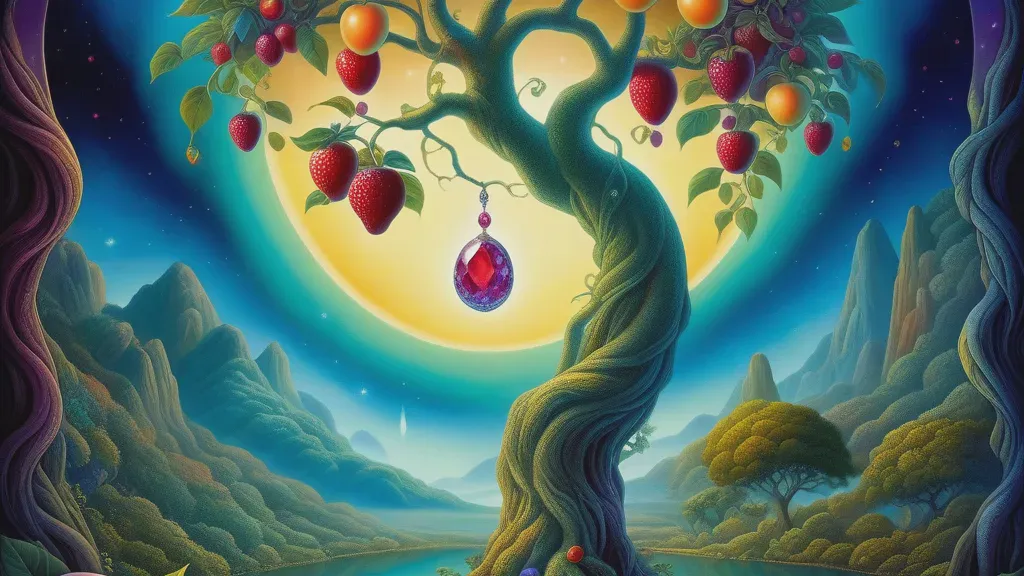
Forbidden Fruit
Jungian Archetypes
Meaning
Dreaming of forbidden fruit embodies desires for what is unattainable, often linked to guilt and temptation. It reveals psychological conflicts between morality and desire, highlighting the complexity of human cravings.
Psychological Interpretation
From a Jungian perspective, it symbolizes the Self's quest for wholeness. Cognitive theories focus on the tension between desire and societal norms, while practical psychology emphasizes the importance of navigating temptations to foster self-awareness.
Cultural & Historical Origins
In the biblical story of Adam and Eve, the forbidden fruit represents the loss of innocence and the consequences of desire. Similarly, in Greek mythology, the golden apples of the Hesperides symbolize unattainable desires and the challenges of temptation.
Contextual Variations
A dreamer finds a bowl of vividly colored fruit on a kitchen table that feels “not meant for them,” then hears someone warn them as they reach toward it anyway.
The fruit functions as a concrete stand-in for desire that feels disallowed, often mirroring a real-life rule, value, or fear of consequences. The warning voices the internal debate between curiosity and self-control, turning temptation into a moral-emotional test.
In the dream, the dreamer takes one bite, and immediately the taste turns bitter while their body feels both energized and guilty.
This reflects a learned pattern: pursuing what you want triggers immediate self-judgment or anxiety about fallout. Psychologically, the dream dramatizes how anticipation may feel exciting, while “possession” activates fear, regret, or punishment expectations.
The dreamer is offered forbidden fruit by a wise, calm figure but is told they must choose carefully because the fruit “changes what you are capable of.”
The Wise Old Man energy frames temptation as growth with conditions, suggesting the desire is not only about pleasure but about identity shift. The “choice” emphasizes agency: you can want something and still decide how it will reshape your values.
Frequently Asked Questions
Why do I keep dreaming about forbidden fruit even when I don’t want it in real life?
What does it mean if the fruit tastes bitter after I take it?
Does dreaming of someone else offering the fruit mean they influence my choices?
Journaling Prompts
- When I reach for the forbidden fruit in the dream, what am I trying to feel—relief, excitement, safety, or power?
- What rule, promise, or fear does the “forbidden” label seem to protect me from breaking?
- If the fruit changes what I’m capable of, what ability or identity am I afraid I would gain by taking it?
Related Symbols
Dreamed about Forbidden Fruit?
Get a personalized AI interpretation that connects this symbol to your specific life circumstances.
Interpret My Dream