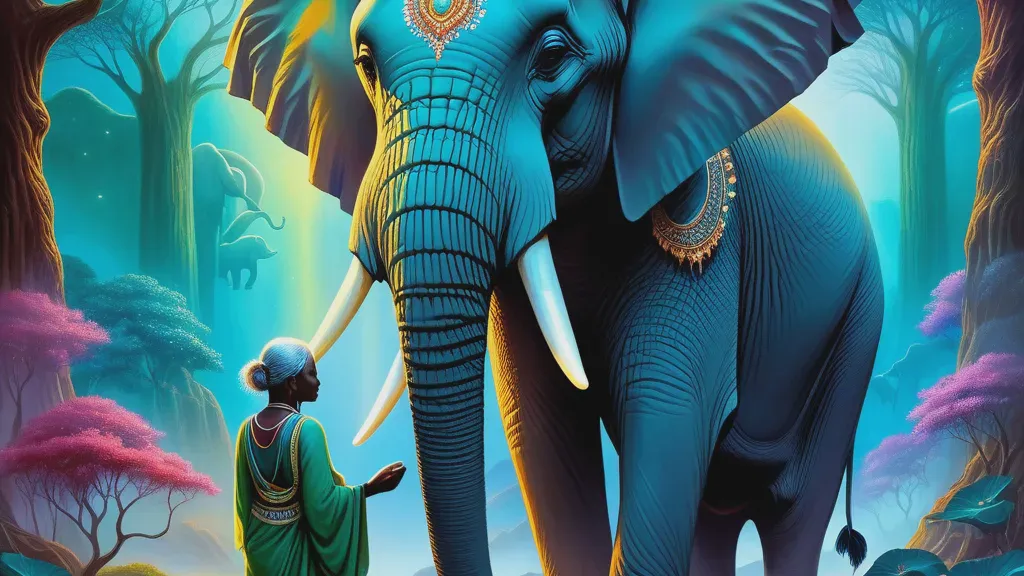
Elephant
Jungian Archetypes
Meaning
Elephants in dreams symbolize strength, wisdom, and memory. They represent the power of the unconscious mind and the ability to carry emotional weight with grace. Their presence often indicates a need to remember important lessons or to tap into deep inner knowledge.
Psychological Interpretation
From a Jungian perspective, the elephant embodies the Great Mother archetype—nurturing, protective, and grounded in earth wisdom. It also represents the Wise Old Man, offering guidance through accumulated experience. Dreams of elephants suggest integration of personal power with compassion and the need to honor ancestral wisdom.
Contemporary Psychological
The elephant in dreams functions as a somatic representation of accumulated emotional and cognitive load—the brain's way of visualizing long-term memory systems under pressure. From a contemporary neuroscience perspective, elephants embody the consolidation of experiences over time; their legendary memory capacity mirrors how the brain integrates distant past events with present emotional states. When an elephant appears in a dream, it often signals that the dreamer's emotional regulation system is processing a significant accumulation of unresolved material—not necessarily traumatic, but substantial enough to require the brain's attention during sleep. The sheer physical mass of an elephant serves as a metaphor for the weight of these memories and their emotional valence, suggesting the brain is working to integrate or reorganize long-held patterns. The threat simulation function of elephant dreams typically involves rehearsing responses to overwhelming situations or power imbalances. Elephants are simultaneously gentle and capable of tremendous force, making them ideal symbols for the brain's exploration of how to navigate situations where one feels small relative to external pressures or social hierarchies. A dreamer encountering an elephant may be running simulations about asserting boundaries, managing vulnerability in the face of larger forces, or practicing emotional responses to situations where they feel outmatched. The social intelligence of elephants—their complex family structures and emotional attunement—also suggests the dream may be processing relational dynamics, particularly around loyalty, protection, and the weight of responsibility within social groups. Memory consolidation involving elephants often reflects the brain's integration of long-term learning or the reactivation of deeply encoded experiences. The elephant's slow, deliberate movement mirrors the gradual process by which the brain consolidates distant memories into stable, accessible knowledge. If recent experiences have triggered older emotional patterns or if the dreamer has been reflecting on their personal history, the elephant may represent the brain's work to connect these temporal threads. The cognitive pattern visible here is one of integration—the brain attempting to make sense of how past and present inform each other, and how accumulated experience shapes current emotional responses. The overwhelming scale of an elephant in dreams points to a cognitive pattern where the dreamer's emotional regulation system is stretched by the sheer volume of material requiring processing. This is not necessarily pathological; it reflects the normal work of the brain when faced with significant life transitions, accumulated stress, or the need to reorganize long-held beliefs or relationships. The elephant's presence suggests the dreamer's brain is engaged in the essential work of emotional consolidation—taking what feels unmanageable and gradually integrating it into a coherent narrative of self and experience.
Gestalt / Parts of Self
The elephant in dreams represents the massive, patient, remembering part of the self—the capacity to hold weight, to endure, and to carry the accumulated wisdom of experience. In Gestalt work, the elephant is not a symbol imposed from outside; it is a part of the dreamer's own psyche made visible. When the elephant appears, it invites the dreamer to recognize their own strength, their own ability to bear what feels heavy, and their own deep memory. The elephant's presence asks: what are you carrying? What burden belongs to you, and what have you been projecting onto others as if it were theirs to bear? Often, the dreamer projects the elephant's qualities outward—seeing it as something external, powerful, separate, even threatening. But in Gestalt awareness, the elephant is the dreamer's own grounded power, their own capacity for patience and presence. The projection happens when the dreamer attributes the elephant's strength to something "out there" rather than claiming it as their own inner resource. This avoidance protects the dreamer from the responsibility of their own power; it is easier to admire or fear the elephant than to own the patient, remembering strength that lives within. The dialogue between parts becomes clear when we ask: what does the elephant want? What does the part of self that fears or resists the elephant want? The elephant seeks to be acknowledged, to be integrated, to have its weight recognized and honored. The part of self that runs from the elephant, that denies its own capacity to endure, seeks to remain small, unencumbered, free from responsibility. The invitation is toward ownership—to claim the elephant as one's own, to feel the ground beneath one's feet, to trust in the slow, steady, remembering wisdom that does not rush but carries everything forward. Integration of the elephant means accepting both the weight and the strength. It means recognizing that patience is not weakness, that memory is not burden, and that the capacity to stand firm and endure is not something to project onto others but something to own as one's own power. The dreamer is invited to dialogue with this part: to ask what it needs, to feel its presence, and to allow its grounded, patient wisdom to become a conscious resource rather than a disowned or feared aspect of self.
Jungian / Archetypal
The elephant in the collective unconscious embodies the archetype of the Wise Old Man or Woman—a figure of ancient knowledge, grounded authority, and the accumulated wisdom of generations. Its massive form and long lifespan connect it to the Self, the central archetype representing wholeness and the goal of individuation. In many traditions, particularly through the Hindu deity Ganesha, the elephant becomes a remover of obstacles and a guardian of thresholds, suggesting that encountering this creature in the psyche signals a moment of transition where old patterns must be cleared to allow new growth. The elephant's prodigious memory mirrors the collective unconscious itself—a vast repository of ancestral knowledge and archetypal patterns that the dreamer may be called to access or integrate. The elephant's strength and patience represent qualities often relegated to the Shadow in modern consciousness—the capacity to move slowly, deliberately, and with quiet power rather than aggressive force. In a culture that valorizes speed and dominance, the elephant's methodical nature and maternal protectiveness embody a compensatory message: true strength lies in patience, in the protection of the vulnerable, and in the measured use of power. The Shadow here is not the elephant itself, but rather the dreamer's potential disowning of these qualities—the refusal to acknowledge one's own capacity for gentle, sustained strength or to honor the slower rhythms of psychological growth and transformation. The elephant's role as a maternal figure connects it to the Great Mother archetype, representing nourishment, containment, and the holding of space for development. This maternal power is not sentimental but formidable—the elephant protects its young with fierce devotion and teaches through example the values of community, loyalty, and long-term commitment. When the elephant appears in the psyche, it often signals that the dreamer is being invited to reconnect with these archetypal maternal qualities, whether in themselves or in their relationship to the nurturing, grounding forces of the collective unconscious. The individuation journey at this point involves recognizing that wisdom is not abstract but embodied, that strength serves protection and care, and that the path forward requires both the elephant's patient memory and its willingness to move through obstacles with deliberate, purposeful grace.
Psychodynamic / Freudian
The elephant in dreams manifests as a container for overwhelming psychic material that the dreamer's conscious mind cannot yet process or integrate. At the manifest level, the elephant appears as a massive, powerful creature—a literal representation of size, weight, and presence. At the latent level, however, the elephant embodies repressed content: memories too painful to consciously acknowledge, authority figures whose power was never safely metabolized in childhood, or grief that has been displaced onto the body of the animal itself. The elephant's very size becomes a defense mechanism—by externalizing the overwhelming internal experience onto a creature, the dreamer can observe it from a distance rather than feel it directly. This is displacement in its purest form: the unbearable emotional weight is transferred from the self onto an external object. The "elephant in the room" idiom reveals the deeper psychodynamic truth: the elephant represents the family secret, the unspoken trauma, the truth that everyone knows but no one names. In childhood, the dreamer may have learned that certain realities—parental conflict, loss, shame, or abuse—must be silently endured rather than spoken. The elephant becomes the symbol of this enforced silence, the massive presence that structures the entire psychological landscape while remaining officially unacknowledged. The wish-defense dynamic here is complex: the dreamer wishes to be seen and heard, to have the unbearable truth recognized and validated, yet simultaneously defends against this wish through repression and denial. The elephant's presence in the dream is the return of the repressed—the psyche's insistent attempt to bring the avoided material back into consciousness, even as the dreamer's defenses work to keep it at bay. Childhood origins of the elephant symbol often trace to experiences of parental authority that felt overwhelming and indigestible. A parent whose emotional needs dominated the family system, whose anger or grief was never contained, or whose expectations were impossibly large—these become internalized as the elephant. The child learns that some realities are too big to process, too dangerous to acknowledge, and must instead be carried silently. Condensation occurs as well: the single elephant may represent multiple overwhelming experiences compressed into one symbolic form. The defense mechanisms at work include repression (the material is pushed out of consciousness), projection (the dreamer's own overwhelming feelings are attributed to the external creature), and reaction formation (the dreamer may feel compelled to minimize or deny the elephant's presence, just as the family system demanded). The elephant's appearance in dreams signals that the psyche is ready—or desperately needs—to begin integrating this material, to transform the silent, crushing weight into something that can finally be spoken, grieved, and released.
Cultural & Historical Origins
In Hindu mythology, Ganesha, the elephant-headed deity, is revered as the remover of obstacles and the lord of beginnings. African traditions honor the elephant as a symbol of dignity and community strength. In Buddhism, the white elephant represents mental clarity and spiritual awakening.
Contextual Variations
Riding an elephant
Gaining control over powerful emotions or life circumstances; mastery over challenges
Elephant charging
Confronting suppressed anger or overwhelming force that demands attention and respect
Frequently Asked Questions
What does it mean to dream of a baby elephant?
Is dreaming of an elephant always positive?
Journaling Prompts
- What wisdom or memory is the elephant trying to help you remember?
- How can you embody the elephant's combination of strength and gentleness in your waking life?
Related Symbols
Dreamed about Elephant?
Get a personalized AI interpretation that connects this symbol to your specific life circumstances.
Interpret My Dream