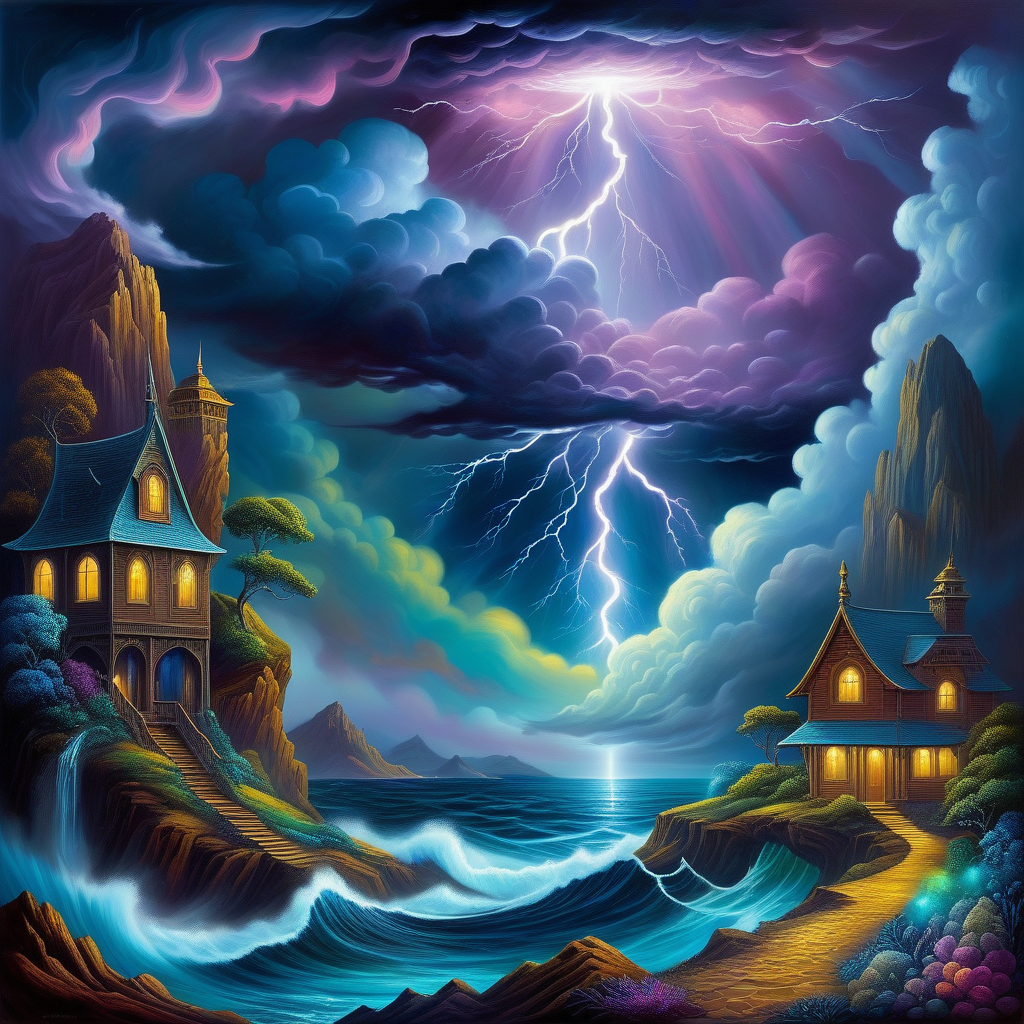
Storm
Jungian Archetypes
Meaning
Storms in dreams represent inner turmoil, sudden upheaval, and powerful emotions that demand expression. They may signal conflict, anger, or a disruptive force clearing the way for change.
Psychological Interpretation
Jung understood storms as eruptions of shadow material — repressed emotions and conflicts that can no longer be contained. The storm's destructive power parallels the psyche's need to tear down rigid structures so new growth becomes possible. Surviving a storm in a dream often marks psychological resilience.
Gestalt / Parts of Self
In Gestalt dream work, a storm represents the dreamer's own turbulent emotional energy—the part of self that is raw, powerful, and often disowned. The storm is not something happening to the dreamer; it is the dreamer. When a storm appears in a dream, it signals that intense feelings—rage, grief, fear, or overwhelming desire—are alive and demanding recognition. The wind, thunder, and chaos are the dreamer's own inner turbulence made visible. This is the part of self that cannot be controlled, managed, or rationalized away. The storm asks: What am I refusing to feel? What emotional power am I trying to suppress or deny? The storm also represents the boundary between the dreamer's controlled self and their authentic, unfiltered self. Many people learn early to contain their emotions, to be "calm" and "reasonable," and in doing so, they exile their own turbulent energy. The storm in a dream is often a reclamation—the return of what was banished. It is the part that says "I am here, I am real, I will not be ignored." In Gestalt terms, the storm is an unowned projection: the dreamer attributes their own emotional chaos to external circumstances (weather, fate, others) rather than claiming it as their own power and aliveness. To work with the storm Gestalt-style is to ask: What if this turbulence is not my enemy, but my vitality? What if the chaos is not something to survive, but something to integrate? The storm invites the dreamer to stop fighting their own intensity and instead to dialogue with it. What does the storm want? What is it protecting? Often, beneath the rage or fear is a need—for autonomy, for expression, for being truly seen. The dream asks the dreamer to own the storm, not as something destructive, but as the full spectrum of their emotional aliveness. Integration means neither being swept away by the storm nor trying to control it, but standing in the center of it and claiming: this turbulence is mine, and it is part of what makes me whole.
Jungian / Archetypal
In Jungian psychology, the storm represents a powerful eruption of the unconscious into consciousness—a psychic upheaval that shatters the ego's carefully constructed defenses and illusions. The storm is not merely destructive; it is a manifestation of the Self's compensatory force, breaking through the persona's false stability to expose what has been repressed, denied, or ignored. The wind tears away pretense, the lightning illuminates hidden truths, and the thunder announces the arrival of something that cannot be ignored. This archetypal image speaks to moments of psychological crisis when the conscious mind's control is overwhelmed by forces far greater than itself, forcing a reckoning with the deeper layers of the psyche. The storm carries the numinous quality of divine wrath—not punishment in the moral sense, but the impersonal force of nature asserting its reality against human will. In this sense, the storm is the voice of the Self demanding transformation, the voice that says "you cannot continue as you have been." It is the Shadow's violent eruption when it has been suppressed too long, the return of the repressed in overwhelming form. The dreamer caught in a storm is confronted with their own powerlessness, their inability to control the unconscious forces that shape their being. This confrontation, though terrifying, is necessary: it strips away ego inflation and opens the possibility of genuine psychological growth. Yet the storm is also fundamentally cleansing and renewing. In mythology and nature alike, storms precede fertility, growth, and new beginnings. The deluge washes away the old, the lightning strikes clear the air, and the rain nourishes what lies dormant. From a Jungian perspective, the storm represents the necessary destruction that must precede individuation—the dissolution of the old self so that a more authentic, integrated self can emerge. The psychological crisis the storm symbolizes is not an ending but a threshold, a liminal space where the old order dies and the new can be born. The dreamer who survives the storm, who does not flee but stands within it, has the opportunity to be fundamentally transformed, to integrate the shadow forces and move closer to wholeness. The storm in dreams thus embodies the paradox at the heart of psychological development: that growth requires crisis, that consciousness expands through confrontation with the unconscious, and that the most destructive forces in the psyche are also the most creative. The storm is the Self's way of saying that the current adaptation is no longer viable, that the dreamer must change or perish psychologically. It is both threat and promise—the threat of ego death and the promise of rebirth into a more complete humanity.
Psychodynamic / Freudian
In psychodynamic dream interpretation, the storm represents the eruption of repressed affect into consciousness—the breakthrough moment when defended-against material can no longer be contained by the ego's defensive structures. The manifest content of a storm (wind, rain, thunder, chaos) masks the latent content: an overwhelming surge of rage, grief, terror, or shame that has been pushed into the unconscious through repression or dissociation. The storm is not the problem itself but the symptom of a psychic crisis—the moment when the barrier between conscious and unconscious collapses, and what has been held down by psychological defenses suddenly floods the psyche with raw, unmediated intensity. The storm often signals a breakthrough of aggression or grief that has been forbidden, denied, or displaced elsewhere in waking life. A person who cannot consciously acknowledge anger at a parent, authority figure, or lost love may dream of a violent storm—the weather becomes the container for the forbidden affect. Similarly, unprocessed grief may manifest as a tempest, where the dreamer experiences the full force of loss that conscious defenses have kept at bay. The storm's destructive power mirrors the destructive potential of the repressed material itself; the psyche is saying, "This feeling is so powerful, so dangerous to my sense of self, that I have had to bury it—but it is still alive, still pressing outward." From a developmental perspective, the storm often echoes early experiences of overwhelming affect in childhood—moments when the dreamer's emotional needs were not met, when feelings were shamed or punished, or when the environment itself felt chaotic and unsafe. The dream storm may be a replay of that original trauma, or it may be the psyche's attempt to finally process and integrate the affect that was too much to bear at the time. The storm is thus both a danger signal and a healing opportunity: it announces that repressed material is demanding recognition, and that the dreamer's psyche is ready—or being forced—to face what has been hidden. The storm in dreams ultimately represents the necessity of emotional truth-telling. It is the psyche's refusal to let defended-against material remain buried indefinitely. Whether the dreamer experiences the storm as terrifying or cathartic often depends on their capacity to tolerate the affect and integrate it into conscious awareness. The storm passes, but what it reveals—the rage, the grief, the fear—must eventually be acknowledged and metabolized if the dreamer is to move toward greater psychological wholeness and authenticity.
Contemporary Psychological
In contemporary neuroscience, storms in dreams represent the brain's simulation of emotional flooding and amygdala activation. When the dreaming mind conjures a storm—with its overwhelming sensory input, unpredictability, and force—it is essentially running a threat-simulation scenario where emotional intensity reaches a peak. The storm's chaos mirrors the neurological state of high emotional arousal: the amygdala is hyperactive, the prefrontal cortex's regulatory capacity is temporarily diminished, and the dreamer's cognitive system is processing what it feels like to be overwhelmed. This is not metaphorical; it is the brain's way of rehearsing emotional regulation under conditions of maximum stress. The storm functions as a controlled exposure to emotional flooding within the safe container of sleep. Rather than experiencing unmanageable stress in waking life, the brain creates a dream scenario where the dreamer can practice navigating intense emotional states without real-world consequences. The wind, rain, thunder, and lightning become embodied representations of the physiological cascade of stress hormones—adrenaline, cortisol—and the sensory overload that accompanies them. By simulating this state repeatedly in dreams, the brain is essentially stress-testing its emotional regulation systems, building neural pathways that will help the dreamer respond more effectively when actual high-stress situations arise. From a memory consolidation perspective, storms often appear when the dreamer is integrating recent experiences of emotional intensity or unpredictability. The brain may be processing a conflict, a loss, an unexpected change, or a period of sustained anxiety. The storm's destructive potential—the sense that things are being torn apart or washed away—reflects the cognitive work of reorganizing one's understanding of safety, control, and predictability. The dream is not predicting disaster; it is consolidating the emotional learning that comes from recognizing that some things cannot be controlled, and that survival and adaptation are possible even in chaos. The storm symbol ultimately reveals a brain engaged in active emotional processing and threat preparation. It indicates not pathology but rather healthy cognitive work: the dreaming mind is building resilience by rehearsing responses to overwhelming emotional states, integrating recent stressful experiences, and recalibrating the dreamer's sense of what they can endure. The intensity of the storm in the dream correlates with the intensity of emotional material being processed in waking life—not as a prediction of future disaster, but as evidence that the brain is taking the emotional load seriously and working to metabolize it.
Cultural & Historical Origins
Zeus wielded thunderbolts as king of the Greek gods. Thor in Norse mythology commanded storms with Mjölnir, protecting the cosmic order. In Yoruba tradition, Shango is the orisha of thunder and lightning, embodying justice and passionate power.
Contextual Variations
Watching a storm approach from a distance
Suggests you sense emotional upheaval coming but still have time to prepare or take shelter.
Being inside a storm, wind and debris everywhere
Indicates you are currently in the midst of a crisis or emotional breakdown that feels chaotic and uncontrollable.
Frequently Asked Questions
What does a thunderstorm mean in a dream?
Is surviving a storm in a dream positive?
Journaling Prompts
- What conflict or emotion in my life feels like it's building to a breaking point?
- Is there something destructive happening that might actually be clearing the way for necessary change?
Related Symbols
Dreamed about Storm?
Get a personalized AI interpretation that connects this symbol to your specific life circumstances.
Interpret My Dream