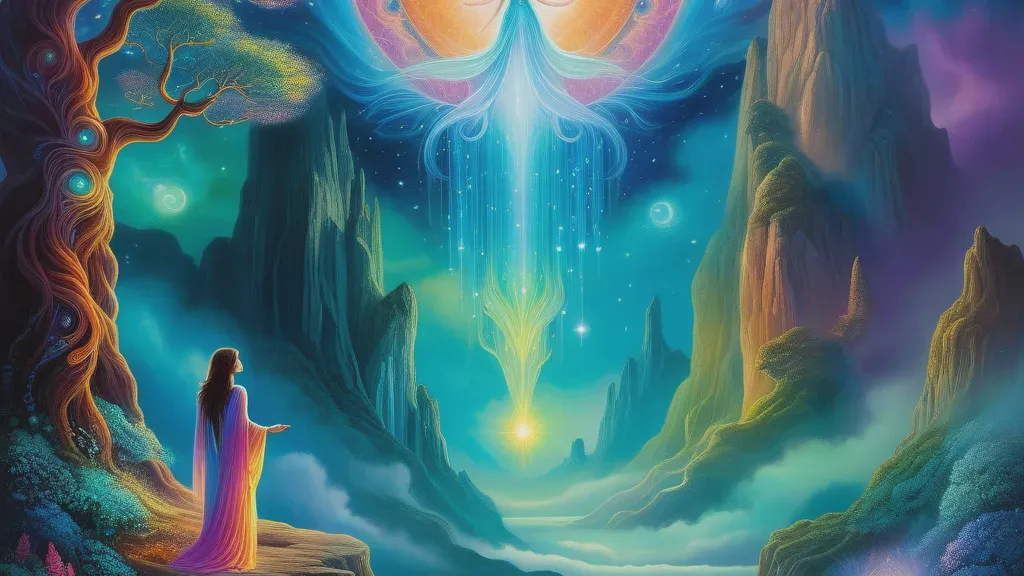
Dream Spirit
Jungian Archetypes
Meaning
Dream spirit imagery often reflects a felt presence of attitude or instinct—an externalized “inner agent.” Hero/Anima/Trickster indicates attraction plus confusion: your mind summons a companion energy to negotiate identity.
Psychological Interpretation
Jung: spirit as autonomous psyche (Hero) with Anima guidance and Trickster interference. Cognitive: personification of internal processes to make them actionable. Practical: note what the spirit wants/offers—then translate it into a concrete value or boundary.
Cultural & Historical Origins
Spirits in dreams appear in ancient Greek oneiromancy and Homeric “dreams as messengers.” In Tibetan Bardo teachings, consciousness meets transformative presences. In Slavic folklore, domovoi/other spirits shape household psyche narratives.
Contextual Variations
A dream spirit appears as a flickering presence in the corner of a room, and it keeps changing its mood as you speak about your plans.
A dream spirit can externalize instinctive attitude—your inner stance made visible. Mood shifts tied to your speaking suggest your psyche is responding to honesty vs. avoidance, highlighting how your inner “agent” tracks your alignment.
You meet a spirit that behaves like a trickster, offering helpful shortcuts but hiding the cost until later in the dream.
Trickster-like spirits often represent coping strategies that work short-term but create complications. Psychologically, the delayed cost suggests you’re noticing a pattern: quick fixes that undermine long-term stability or trust.
A spirit with heroic energy guides you across a dangerous bridge, and when you doubt yourself, it steps closer and steadies you.
Heroic guidance reflects your psyche mobilizing courage when confidence drops. It suggests a protective inner resource that can be activated through trust, preparation, and willingness to move despite uncertainty.
Frequently Asked Questions
Why did the spirit feel like my own attitude rather than a separate being?
What does it mean if the spirit was trickster-like?
Is a dream spirit always symbolic of danger or threat?
Journaling Prompts
- What did the spirit do in the dream—guide, trick, comfort—and what real-life inner tension does that behavior mirror?
- When the spirit’s mood changed, what did I say or avoid, and what does that reveal about my alignment?
- What “cost” or consequence did the spirit introduce, and where might I be underestimating it in waking life?
Related Symbols
Dreamed about Dream Spirit?
Get a personalized AI interpretation that connects this symbol to your specific life circumstances.
Interpret My Dream