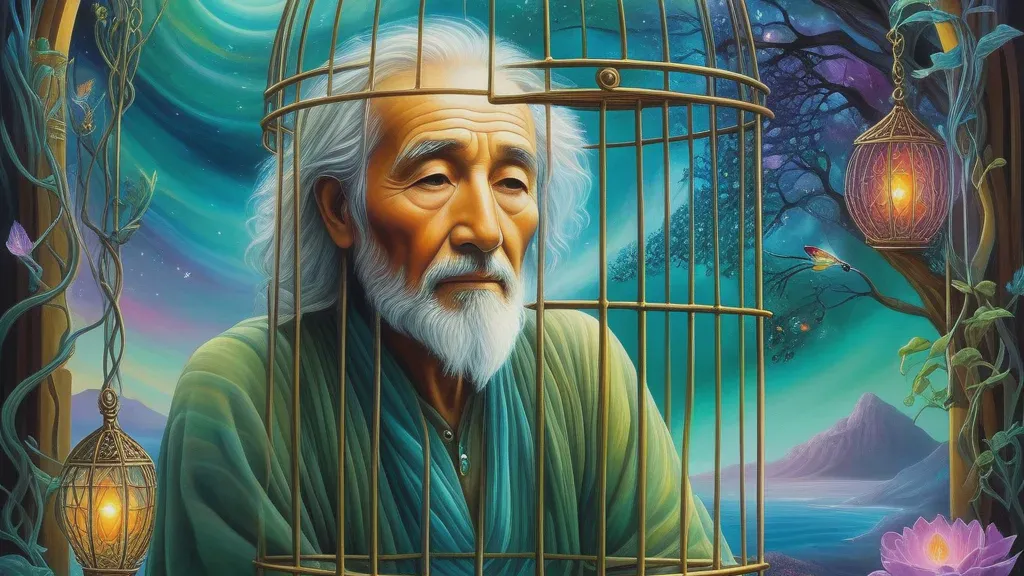
Caged Emotion
Jungian Archetypes
Meaning
Dreaming of caged emotions signifies repression of feelings, indicating a struggle to express oneself. It reflects the psyche's turmoil over unacknowledged aspects of one's emotional life.
Psychological Interpretation
From a Jungian perspective, caged emotions represent the Shadow, aspects we wish to hide. Cognitive psychology views them as manifestations of internal conflict, while practical psychology suggests they indicate a pressing need for emotional release and authenticity.
Cultural & Historical Origins
In literature, caged emotions are often explored in works like 'The Yellow Wallpaper' by Charlotte Perkins Gilman, which illustrates mental health struggles. In Buddhism, caged emotions can symbolize the attachments that bind individuals, emphasizing the need for emotional liberation.
Contextual Variations
You hold a glass cage in your hands, and inside it a bright feeling (like heat or light) presses against the bars.
A caged emotion symbolizes repression or delayed expression—feelings still active but contained. The bright pressure suggests the emotion has energy and urgency, asking for a safe outlet rather than continued restriction.
You unlock the cage, but the emotion immediately rushes away and you chase it through a hallway of closed doors.
Unlocking then losing the emotion can reflect fear of what expression will cost. The closed doors may represent obstacles—practical, relational, or internal—that make release feel risky.
A cage sits on your chest while you try to talk; every time you open your mouth, the words come out muffled.
This points to emotional constriction tied to communication—difficulty saying what you truly feel. The muffling suggests your body may be carrying the emotion, and your mind is translating it into silence.
Frequently Asked Questions
Why do I dream about emotions being trapped?
What if I’m the one keeping the emotion caged?
How can I tell whether the dream is asking me to express or to regulate?
Journaling Prompts
- What emotion was caged, and what situation in my waking life might be keeping it contained?
- What did the cage look like (glass, metal, size), and what does that suggest about how safe or unsafe I believe expression will be?
- If I could release the emotion in a controlled way, what would a “safe opening” look like—who would know, and how slowly?
Related Symbols
Dreamed about Caged Emotion?
Get a personalized AI interpretation that connects this symbol to your specific life circumstances.
Interpret My Dream