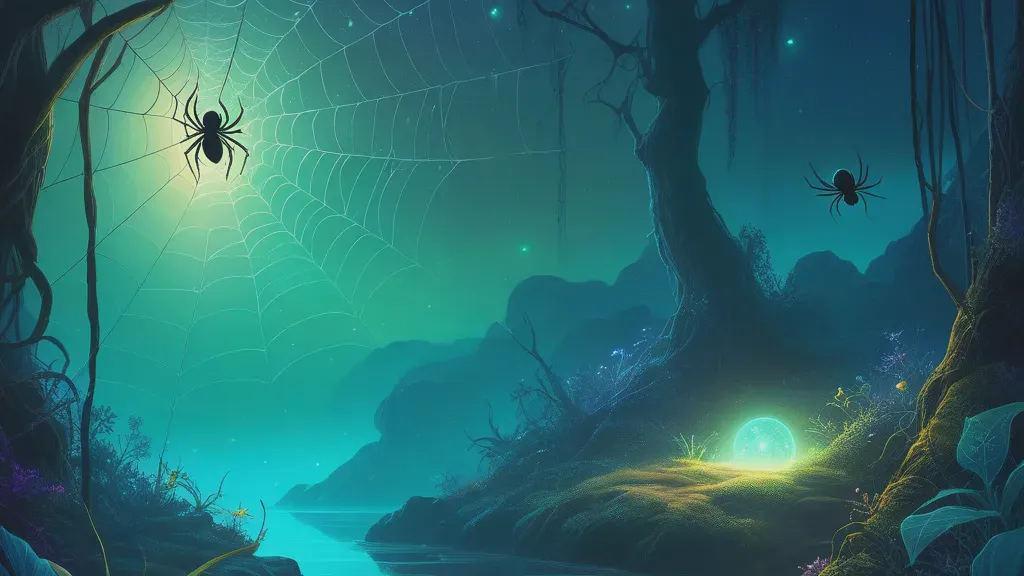
Spider Dreams
Dreams about spiders often reflect feelings of being trapped or caught in a web of circumstances. These dreams frequently involve intricate webs, crawling sensations, or encounters with spiders in unexpected places.
Psychological Interpretation
Spider dreams typically symbolize creativity, patience, and the interconnectedness of life. They may also represent anxiety about being trapped or manipulated by others, depending on the dream's context and emotional tone.
Had this dream?
Are spiders crawling over your skin, hanging in intricate webs, or appearing in unexpected rooms? Tell us what happened and get a personalized interpretation of your own dream.
Interpret My DreamPsychodynamic / Freudian
In psychodynamic terms the manifest content of a spider dream—seeing a large, often moving spider, feeling its web, or being chased by it—functions as a symbolic veil for deeper, latent material. The spider’s eight legs and intricate web are frequently interpreted as a representation of the dreamer’s own unconscious network of repressed wishes, fears, and conflicts that have been woven together over time. The latent content may involve a wish for control over a situation that feels tangled or a suppressed anxiety about being caught in a trap of one’s own making. Because the spider is both alluring and threatening, it can serve as a compromise formation that allows the unconscious to express a wish for mastery while simultaneously defending against the anxiety that such mastery would provoke. The dreamer’s emotional response—often a mixture of fascination, disgust, or terror—reflects the operation of defense mechanisms such as displacement, where the fear of a more intolerable real-life source is shifted onto the spider, and projection, where undesirable traits are attributed to the external creature rather than recognized within the self. The psychological significance of recurring spider dreams lies in the pattern of avoidance and attraction that the dreamer exhibits toward complex, entangled aspects of their inner life. When the dreamer feels a pull toward the spider’s web, it may indicate a latent desire to confront and integrate repressed material, while the simultaneous urge to flee signals a defensive recoil that protects the ego from overwhelming affect. This ambivalence often emerges in people who experience chronic stress in relationships or work environments that feel “sticky,” where they fear being ensnared by obligations or expectations. The dream thus becomes a rehearsal space in which the unconscious tests the limits of the dreamer’s capacity to tolerate and negotiate these pressures. A practical insight for the reader is to notice moments in waking life when a situation feels “web-like” and to ask whether the instinct to withdraw is a protective defense or a missed opportunity for purposeful engagement; consciously choosing to untangle a small part of that web can gradually diminish the need for the spider to appear in sleep as a symbolic stand-in for unresolved tension.
Personal Meaning
When a spider appears in a dream, the sleeper is often being invited to examine the way they weave connections in their waking life. The image of a spider’s web can point to a situation where the dreamer feels both the architect and the captive of a complex network of obligations, relationships, or self-talk. If the spider is active, moving deliberately across the strands, the dream may be highlighting a personal pattern of meticulous planning or a tendency to over-manage details; if the spider is idle or the web is tangled, it can signal a feeling of being trapped by expectations that the dreamer has helped create. To make this meaning concrete, the dreamer might ask themselves whether there is a project, a family dynamic, or a set of habits that feels simultaneously protective and restrictive, and whether they are the one tightening or loosening the threads. From a psychological standpoint, the spider often activates the dreamer’s underlying anxiety about control and vulnerability. The creature’s quiet, patient predation can mirror an inner critic that watches from the shadows, waiting for a slip that would expose a perceived weakness. The emotional pattern that typically accompanies such dreams includes a mixture of fascination and dread—an attraction to the intricate design of the web paired with an unease about being caught in it. This ambivalence arises because the brain is trying to reconcile the desire for order with the fear that order may become a cage. The dream therefore serves as a barometer of how the sleeper is managing the tension between autonomy and the need for structure in their daily routines. A practical insight that emerges from this pattern is the value of consciously untangling one’s own “webs” before they become overwhelming. The dreamer can experiment with setting a small, specific boundary—such as designating a time-free zone each day or delegating a recurring task—and observe how the sense of control shifts. Reflecting on questions like “Which responsibilities feel self-imposed rather than truly necessary?” and “What would happen if I allowed a part of my routine to loosen its grip?” can transform the symbolic spider from a source of anxiety into a guide for intentional restructuring of one’s personal and professional life.
Contemporary Psychological
In contemporary psychological and neuroscientific accounts, a dream in which a spider appears is often interpreted as the brain’s way of rehearsing a subtle threat that has been encoded in the limbic system. The spider’s intricate web and sudden movements activate the amygdala’s threat-detection circuitry, while the visual detail of the creature engages the ventral visual stream, allowing the sleeper to simulate a scenario that feels both familiar and unsettling. This simulation is not random; it reflects a recent episode of feeling trapped, observed, or judged—perhaps a conflict at work, a strained relationship, or an unresolved anxiety about personal boundaries. The spider’s eight legs and ability to weave complex patterns are processed as symbols of pervasive, multi-directional stressors that the mind is trying to untangle, and the emotional tone of the dream—whether fear, fascination, or disgust—mirrors the affective valence attached to those stressors in waking life. Neuroscience research on memory consolidation suggests that during slow-wave sleep the hippocampus replays recent emotional memories, and the cortex integrates them into existing schemas. When a spider dream occurs, it is the product of that replay, with the brain stitching together fragments of a recent threat-related experience with long-standing schemas about vulnerability and control. The continuity of waking concerns is preserved because the dream’s narrative is shaped by the same neural networks that guide decision-making and social cognition during the day. A practical insight for the reader is to notice the specific feeling that the spider evokes—whether it is a sense of being ensnared, a sudden surge of adrenaline, or a curious fascination—and to use that affective cue as a prompt for targeted self-reflection. By identifying the underlying stressor that the spider metaphorically represents, the individual can take concrete steps, such as setting clearer boundaries or addressing a lingering fear, thereby reducing the need for the brain to rehearse the threat in subsequent dreams.
Jungian / Archetypal
In Jungian terms a spider appearing in a dream is often read as a symbol of the weaving of the unconscious itself, a living embodiment of the archetype of the Great Mother who both nurtures and entangles. The spider’s web is a visual metaphor for the psychic matrix that connects disparate aspects of the self, suggesting that the dreamer is confronting a pattern of thought or feeling that has been silently binding their inner life. When the spider is seen as a threat, the dream reflects the shadow side of this archetype: the part of the psyche that feels trapped, suffocated, or judged by an unseen order, while a calm or helpful spider signals an invitation to integrate the creative, patient qualities of the unconscious that can spin new possibilities. The emotional pattern behind spider dreams typically involves a tension between anxiety about loss of control and a yearning for structure. The dreamer may feel a subtle dread that something is building up unnoticed—perhaps repressed emotions, unacknowledged responsibilities, or relational dynamics that are tightening like silk threads. At the same time, the dream can reveal a latent desire for order and meaning, as the spider’s meticulous construction mirrors the mind’s attempt to impose coherence on chaotic inner material. Jung would argue that the recurrence of this motif signals a stage in the individuation process where the ego must acknowledge both the constraining and the generative forces of the unconscious, learning to differentiate between the oppressive aspects of the shadow and the nurturing potential of the Self. A practical insight that emerges from this interpretation is to observe the quality of the web in waking life: notice where thoughts, habits, or relationships feel tightly woven and whether they serve a protective function or merely imprison the dreamer. By consciously “unraveling” those threads—through reflective journaling, dialogue with trusted others, or symbolic creative work—the individual can transform the spider’s energy from a source of fear into a guide for purposeful self-construction, thereby advancing the journey toward wholeness.
Gestalt / Parts of Self
In a Gestalt framework the spider that appears in a dream is not a symbol that stands for an abstract idea but a fragment of the dreamer’s own personality that has been split off and placed outside conscious awareness. The spider’s web, its stillness, or its sudden movement are all ways the mind projects qualities such as meticulousness, patience, hidden anxiety, or a feeling of being trapped onto an external creature. When the dreamer watches a spider weave a delicate pattern, the mind is actually showing a part of the self that is capable of careful, systematic work but has been denied a place in the conscious narrative; when the spider attacks, the dream is dramatizing an inner impulse that feels threatening because it has been disowned and is now acting out in an uncontrolled fashion. From this perspective the emotional pattern behind spider dreams is a tension between the desire for order and the fear of being entangled in one’s own hidden processes. The dreamer may feel a lingering unease about responsibilities that require sustained attention, or a sense that something in life is “sticky” and hard to escape. The psyche produces the spider as a projection in order to keep the disowned part at a safe distance, allowing the dreamer to experience the feeling without having to acknowledge the source directly. Recognizing that the spider is a part of the self that has been pushed out of awareness opens a path to integration: by consciously attending to the qualities the spider represents—whether it is the capacity for careful planning, the need to set boundaries, or the acknowledgement of a lingering anxiety—the dreamer can begin to reclaim that fragment and dissolve the projection. A practical step is to pause when a spider appears in a dream, note the specific sensations and thoughts that arise, and then ask, “What part of me is trying to be seen or contained right now?” This simple inquiry can transform the dream from a frightening encounter into a rehearsal for bringing a neglected aspect of the self into the foreground of everyday life.
Stress & Emotional Patterns
A spider appearing in a dream often functions as a metaphor for something that feels both invisible and invasive, a small but persistent presence that can trigger a sense of being watched, trapped, or slowly overwhelmed. When the dreamer wakes with a lingering knot in the stomach, it usually mirrors an underlying anxiety about responsibilities or relationships that seem to multiply like a web—each new strand tightening the feeling of being caught in a net of expectations. The texture of the spider—its size, movement, and whether it is hostile or simply observing—can point to specific stressors: a tiny, skittering spider may represent low-grade, chronic worries such as a looming deadline or a nagging health concern, while a massive, looming spider can signal a more acute sense of threat, perhaps a major life transition or a conflict that feels out of control. The emotional tone of the dream—fear, fascination, disgust, or even a strange calm—offers clues about how the dreamer is currently processing that stress; a calm acceptance may indicate a developing resilience, whereas a frantic escape attempt often flags a heightened state of emotional overload. To move from the unsettling symbolism to practical relief, the dreamer can start by grounding the experience in concrete daily life: keep a brief dream journal that records the spider’s details alongside any notable stressors from the day, then look for patterns that connect the two. If the spider feels oppressive, a gentle exposure technique—such as visualizing the spider shrinking or turning it into a harmless creature while practicing slow, diaphragmatic breathing—can help rewire the fear response and restore a sense of agency. Complementary habits like a short evening walk, a body scan meditation, or a brief session of progressive muscle relaxation can lower the physiological arousal that fuels both the dream and daytime anxiety. When the dream recurs or the emotional charge remains intense, seeking a conversation with a therapist trained in dream-focused cognitive-behavioral work can provide a safe space to unpack the underlying worries, set realistic boundaries, and develop coping strategies that prevent the “web” of stress from tightening further.
Frequently Asked Questions
Why do I dream about spiders so often?
Recurring spider dreams often indicate unresolved anxiety or a sense of being caught in a complex situation. They may also reflect your subconscious processing of intricate problems or relationships that feel sticky or difficult to escape.
What does it mean if the spider is chasing me?
A chasing spider typically represents avoidance of a problem or fear you're running from in waking life. It suggests that something you're trying to escape requires your attention and understanding rather than evasion.
Related Symbols
Had this dream?
Get a personalized AI interpretation that connects your dream to your specific life circumstances.
Interpret My Dream