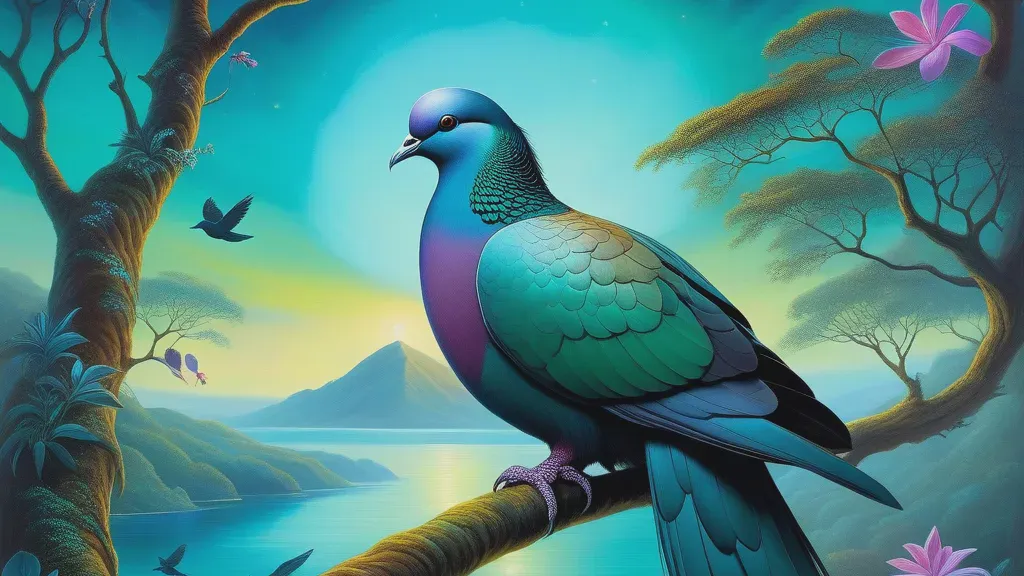
Nicobar Pigeon
Jungian Archetypes
Meaning
Dreaming of the nicobar pigeon often symbolizes adaptability and resilience. Psychologically, it reflects the dreamer's ability to navigate changes and challenges in their environment.
Psychological Interpretation
Jungian theory might view it as a symbol of the anima's grace and adaptability. Cognitive psychology sees it as a reflection of one's coping strategies, while practical psychology emphasizes the importance of flexibility in life.
Cultural & Historical Origins
In some cultures, the nicobar pigeon is seen as a symbol of peace and harmony due to its gentle nature. In the context of biodiversity, it represents the interconnectedness of ecosystems in conservation narratives.
Contextual Variations
A Nicobar pigeon lands on the dreamer’s balcony and calmly turns its head as if assessing the room, then coos while the dreamer suddenly realizes they’re in a new city with unfamiliar streets.
The pigeon’s steady presence reflects your capacity to adapt without needing everything to feel “safe” first. The cooing and gaze suggest your mind is training you to notice what’s changing and still respond with composure.
The dreamer is walking through a flooded market where stalls are collapsing, and a Nicobar pigeon keeps finding safe ledges ahead, fluttering from one stable platform to another.
This scenario highlights resilience under shifting conditions—your psyche rehearsing problem-solving when the environment feels unstable. The pigeon’s route implies you already have internal strategies for getting through disruptions.
A Nicobar pigeon follows the dreamer into a quiet courtyard, then abruptly flies away when the dreamer tries to grab it, leaving behind a single feather that the dreamer keeps noticing in different places.
Being unable to hold the bird mirrors the tension between control and flexibility. The recurring feather represents adaptive lessons that keep returning—small cues that guide you to adjust your approach rather than force outcomes.
Frequently Asked Questions
Why did a Nicobar pigeon appear when my life feels unpredictable?
What does it mean if the pigeon keeps avoiding me in the dream?
Does the pigeon’s calm behavior mean I’m coping well?
Journaling Prompts
- Where in my waking life am I being asked to adapt quickly, and what “safe ledges” do I already know how to reach?
- What do I tend to grab for when things shift—and what might I need to release to move like the Nicobar pigeon instead?
- What recurring “feathers” (small cues, instincts, or recurring thoughts) have I been ignoring that could be guiding my resilience?
Related Symbols
Dreamed about Nicobar Pigeon?
Get a personalized AI interpretation that connects this symbol to your specific life circumstances.
Interpret My Dream