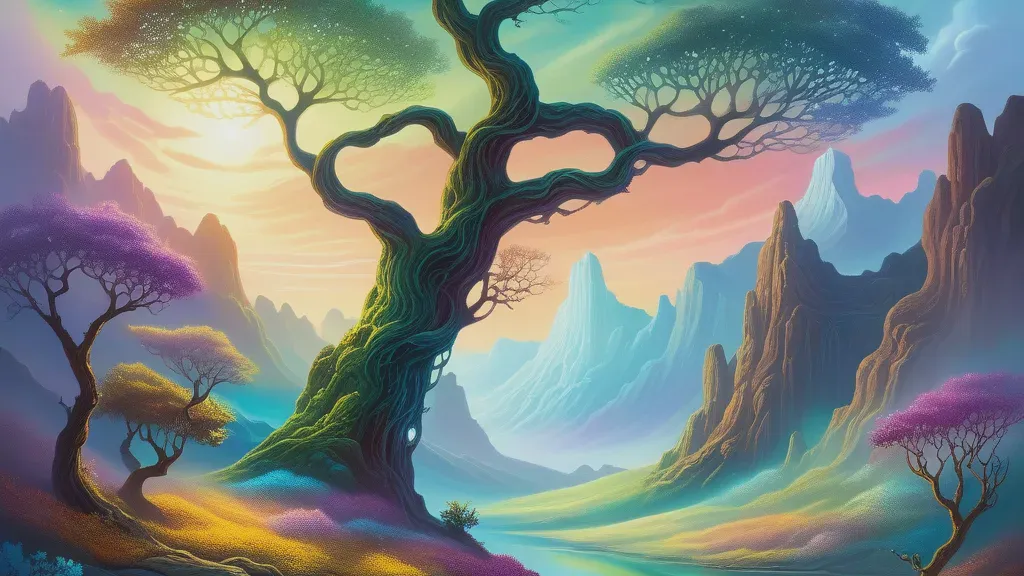
Magical Chaparral
Jungian Archetypes
Meaning
Dreaming of a magical chaparral may indicate a yearning for adventure and exploration of the self. This symbol often reflects inner conflicts or dualities, highlighting the need to integrate different aspects of one's personality.
Psychological Interpretation
Cognitive psychology views this as a manifestation of problem-solving, where the chaparral represents untamed potential. Jungian analysis would suggest the chaparral embodies the Hero's journey. It's a space for confronting the Shadow, while practical psychology sees it as a call for personal growth.
Cultural & Historical Origins
In Native American mythology, chaparrals are often seen as sacred spaces representing transformation. Additionally, in the works of writers like John Steinbeck, chaparral settings symbolize the struggle between civilization and nature.
Contextual Variations
A person pushes through thorny chaparral and hears distant music that keeps shifting location. The more they follow it, the more their own thoughts seem to argue with their next step—one part wants safety, another wants to keep going.
Chaparral’s dense, scrubby terrain reflects inner conflict where progress is possible but not smooth. The shifting music suggests motivation that changes with mood, highlighting the struggle between caution and self-directed adventure.
In the dream, the chaparral forms two paths: one is bright and open but guarded by thorns, the other is darker but has a narrow, clear trail. The dreamer chooses the dark trail and later finds a hidden spring that tastes like relief.
Dual paths often mirror competing inner narratives about what “risk” means. Choosing the dark trail suggests you may be ready to face discomfort directly, and the spring indicates that emotional relief comes from tolerating ambiguity rather than seeking instant comfort.
The dreamer meets a young person who knows the chaparral like a playground and dares them to climb a low ridge. When the dreamer hesitates, the brush suddenly parts to reveal a shadowy figure watching from behind—then the figure disappears once the dreamer commits.
The childlike guide points to inner spontaneity and the permission to explore. The shadowy figure represents the fear that appears when you move toward your own desires, and its disappearance suggests fear can soften when you take decisive, embodied steps.
Frequently Asked Questions
Why does chaparral feel like both freedom and danger?
What does it mean if I keep hearing something calling me deeper in?
Does choosing the “dark” path mean I’m making a bad decision?
Journaling Prompts
- Where in the dream did you hesitate, and what specific fear surfaced at that moment?
- What did the chaparral look like when you felt brave—did it part, soften, or become navigable?
- Which part of you wanted to stay safe, and which part wanted to prove something? What would a balanced decision look like?
Related Symbols
Dreamed about Magical Chaparral?
Get a personalized AI interpretation that connects this symbol to your specific life circumstances.
Interpret My Dream