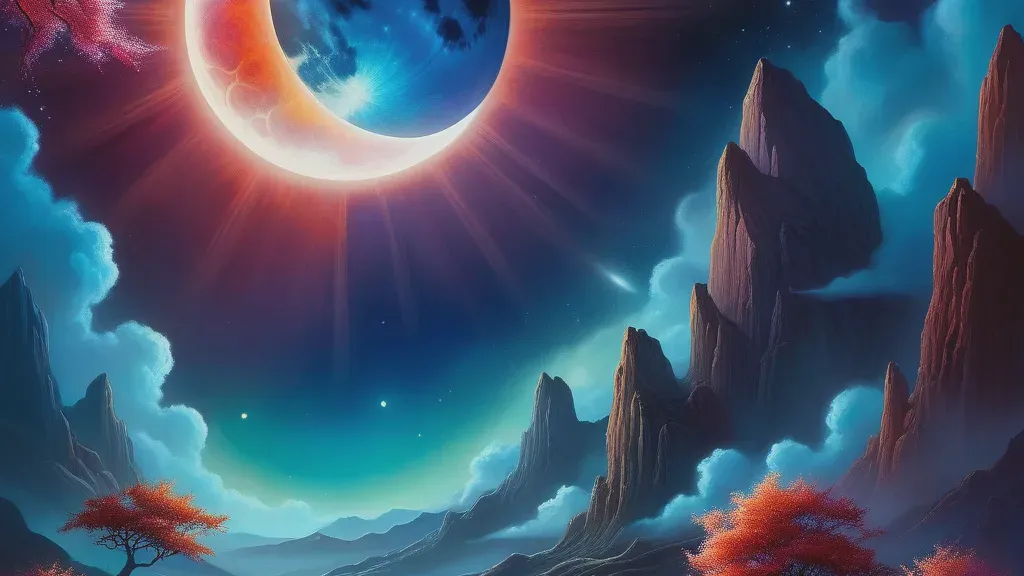
Lunar Eclipse
Jungian Archetypes
Meaning
Dreaming of a lunar eclipse often symbolizes transformation and awareness of hidden emotions. Psychologically, it reflects the interplay of light and shadow in one's psyche, indicating shifts in consciousness.
Psychological Interpretation
From a Jungian perspective, this may signify the Trickster archetype revealing hidden truths. Cognitive psychology suggests the eclipse reflects periods of emotional change. Practically, it may indicate the need to embrace change and explore repressed feelings.
Cultural & Historical Origins
In various cultures, lunar eclipses were seen as omens, such as in ancient Greek mythology where they signaled divine intervention. In Native American traditions, eclipses represented the balance of opposites and cycles of life.
Contextual Variations
You’re outside watching the moon slowly darken, and the sky feels eerily quiet while a crowd around you starts whispering about “what’s coming.” When the eclipse peaks, you notice your own feelings rising—grief, anger, or longing—that you’ve been suppressing in waking life.
The lunar eclipse mirrors a sudden shift where familiar emotional “light” dims and hidden feelings become noticeable. Psychologically, it points to an internal transition: a truth about your emotional world is breaking through, often after a period of denial or control.
You wake up in a dream apartment and see the moon eclipsed through a window, but your reflection in the glass looks delayed, as if reacting a second late. You keep trying to speak, yet your voice comes out muffled until the eclipse ends.
This links the eclipse to timing and emotional synchronization—your mind is signaling that what you feel and what you express aren’t aligned. The muffled voice suggests fear of consequences if hidden emotions are acknowledged.
During the eclipse, the moon turns red and you find yourself counting breaths or watching tides respond strangely; afterward, you feel calmer but also exposed, like you can’t un-know what you felt during the peak.
The red shift and bodily cues suggest an emotional “activation” that forces attention to deeper needs. The calm after the peak reflects integration: transformation is occurring, but it requires letting previously concealed emotions surface.
Frequently Asked Questions
Why would I dream about a lunar eclipse instead of a solar one?
What does it mean if the eclipse makes me feel afraid or guilty?
Does the eclipse ending in the dream mean I’m “over it”?
Journaling Prompts
- Where in your life are you noticing “light” dimming—habits, relationships, or roles that no longer fit your real feelings?
- During the eclipse peak, what specific emotion showed up first in your body (tight chest, heaviness, warmth, numbness)?
- What truth did you feel you couldn’t “un-know” after the eclipse—about yourself, someone else, or a situation you’ve been postponing?
Related Symbols
Dreamed about Lunar Eclipse?
Get a personalized AI interpretation that connects this symbol to your specific life circumstances.
Interpret My Dream