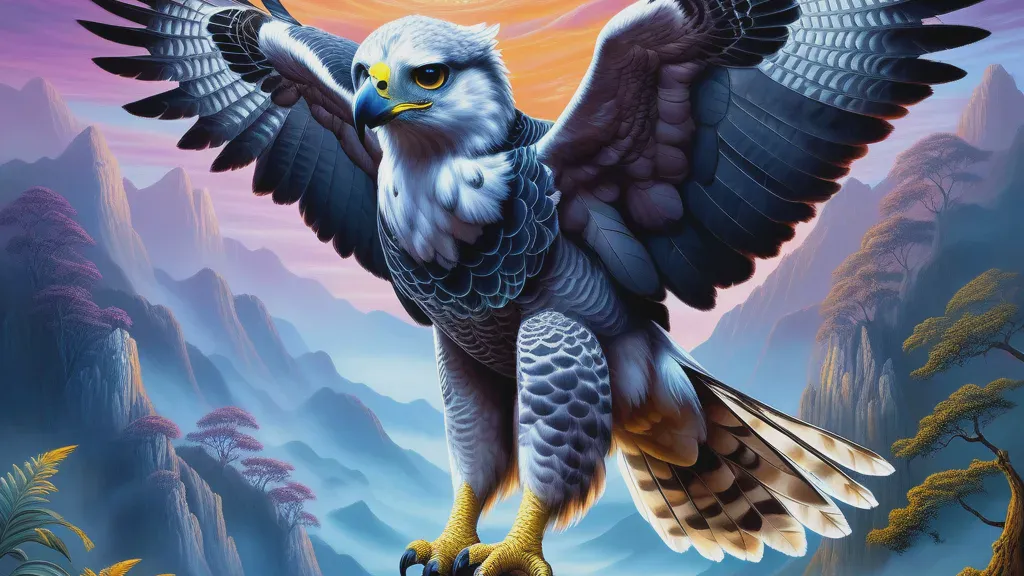
Harpy Eagle
Jungian Archetypes
Meaning
Dreaming of a harpy eagle may signify the clash between personal freedom and societal expectations. This bird's duality embodies the struggle for self-expression against oppressive forces.
Psychological Interpretation
From a Jungian perspective, it represents the Trickster archetype, challenging norms and facilitating change. Cognitive psychology suggests it reflects conflicts in identity, while practical psychology views it as a call to embrace one’s unique traits.
Cultural & Historical Origins
In Greek mythology, the Harpies were winged spirits known for stealing. In Native American cultures, the eagle symbolizes wisdom and courage, often regarded as a messenger of the divine.
Contextual Variations
A harpy eagle lands on a fence between your house and the street, and it watches you as you decide whether to go outside.
The boundary between home and public life highlights the tension between personal freedom and social expectations. The eagle’s watchfulness suggests you feel evaluated—your choices are measured against rules you didn’t fully choose.
You try to fly with the harpy eagle, but whenever you gain height, voices from below criticize your posture and timing.
This reflects internalized commentary—societal standards that interrupt self-directed movement. The loss of height symbolizes how quickly self-expression can collapse under perceived scrutiny.
The harpy eagle steals a childlike object from you (a toy, drawing, or small charm) and then drops it back when you stop apologizing.
The childlike object points to creative vulnerability or spontaneous identity. The eagle taking it can represent how expectations ‘snatch’ your playful self, while returning it when you stop apologizing suggests reclaiming freedom through self-acceptance.
Frequently Asked Questions
Why did the harpy eagle feel like it represented both freedom and pressure?
What does it mean if the dream included a boundary (fence, doorway, or line in the ground)?
Does this dream relate to parenting, inner child, or social roles?
Journaling Prompts
- Where do I feel watched or evaluated when I try to express myself, and what rule am I unconsciously following?
- What part of me feels childlike or playful in this dream—and what happens to it when I worry about expectations?
- If the harpy eagle could guide me, what would it ask me to do differently to move past the boundary?
Related Symbols
Dreamed about Harpy Eagle?
Get a personalized AI interpretation that connects this symbol to your specific life circumstances.
Interpret My Dream