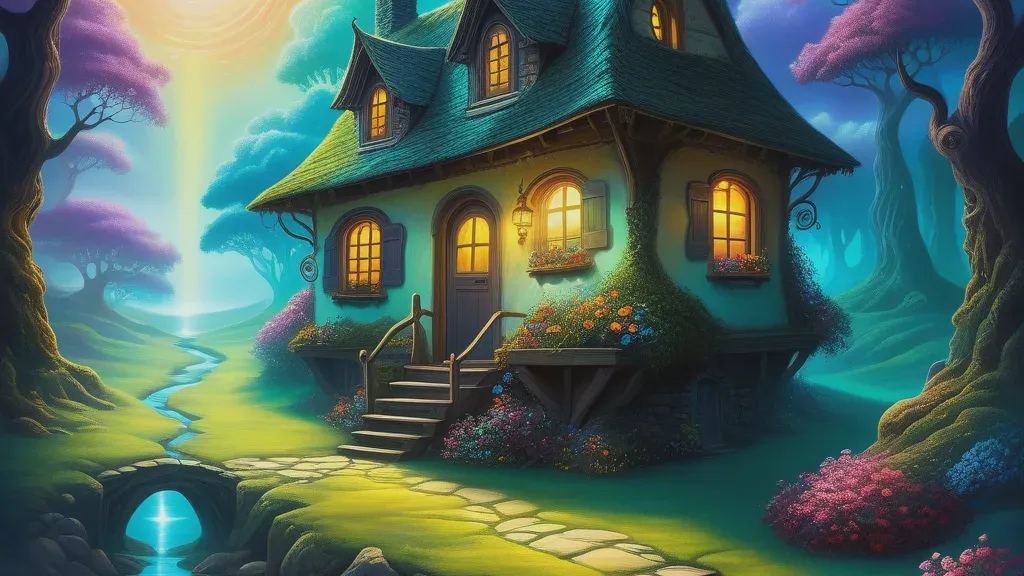
Forbidden Cottage
Jungian Archetypes
Meaning
Dreaming of a forbidden cottage signifies the longing for security and simplicity. This symbol often represents the tension between desire for comfort and fears of confinement, indicating a need to reconcile personal needs with external expectations.
Psychological Interpretation
Jungian theory may view the cottage as a manifestation of the Hero archetype, representing a safe haven. Cognitive psychology interprets it as a reflection of nostalgia and the search for belonging, while practical psychology encourages finding peace in one's environment.
Cultural & Historical Origins
In 'Hansel and Gretel,' the cottage embodies temptation and the duality of safety and danger. Similarly, in English folklore, cottages often symbolize the ideal home, illustrating the universal desire for comfort and connection to nature.
Contextual Variations
You find a small cottage tucked behind brambles with a “do not enter” feel. When you step onto the porch, warmth floods you, but you immediately feel you shouldn’t be there and retreat.
A forbidden cottage commonly represents longing for security, rest, and simplicity—needs for safety that feel “not allowed.” Psychologically, the retreat suggests internal rules about comfort, possibly learned from environments where taking it was punished or discouraged.
You cook inside the cottage, and the food smells like childhood, but you can’t bring anyone in. You feel both safe and lonely, as if comfort is possible only in secret.
Cooking and childhood scents point to nurturing and familiar emotional regulation. The inability to invite others can symbolize guarded vulnerability—believing you must handle comfort alone.
A wise old figure shows you a key for the cottage, but it’s warm and heavy, like it requires effort to hold. When you take it, you sense judgment from someone unseen, yet you keep walking forward.
The key indicates access to security, while warmth/heaviness suggests commitment. The unseen judgment highlights fear of being seen wanting comfort, and the choice to keep walking suggests growth toward self-permission.
Frequently Asked Questions
Why would I feel guilty for wanting a simple life in a dream?
What does it mean if the cottage feels cozy but I can’t stay?
Does the wise old figure mean I’m being guided?
Journaling Prompts
- What does “security and simplicity” mean for me specifically—sleep, money stability, emotional calm, or belonging?
- What rule makes comfort feel forbidden, and who might have taught it to me?
- If I stayed in the cottage for one hour without guilt, what would I notice in my body and thoughts?
Related Symbols
Dreamed about Forbidden Cottage?
Get a personalized AI interpretation that connects this symbol to your specific life circumstances.
Interpret My Dream