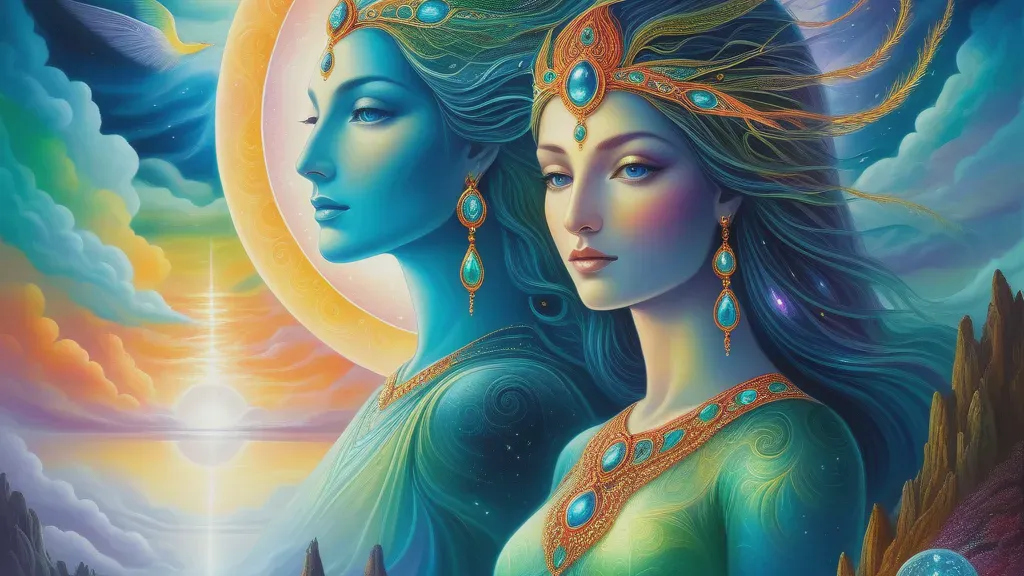
Duality
Jungian Archetypes
Meaning
Dreaming of duality — two opposing forces, mirrored figures, diverging paths, or worlds split in two — confronts the dreamer with the psyche's most fundamental structure: the tension between irreconcilable poles. Unlike simple choice dreams, duality dreams rarely offer resolution; they insist that both sides exist simultaneously, demanding a new kind of psychological holding.
Psychological Interpretation
The duality archetype maps directly onto Jung's concept of the Self as coincidentia oppositorum — the union of opposites borrowed from alchemical philosophy, where sulfur and mercury, king and queen, sun and moon must be wed before the philosopher's stone can be produced. When duality appears in dreams, the ego is being pressed to abandon its preference for one pole and instead develop the transcendent function: the capacity to hold tension without collapse until a genuinely new synthesis emerges from below.
Traditional Symbol Meaning
The concept of duality in dreams often reflects the internal conflicts and contrasting aspects of the self, resonating across various cultures and historical interpretations. In many Western traditions, duality is commonly associated with the idea of opposites, such as good and evil, light and darkness, or the conscious and unconscious mind. This dichotomy can be traced back to ancient philosophical debates, particularly in the works of thinkers like Plato and Aristotle, who explored the nature of reality and the human experience. In dream analysis, encountering symbols of duality may indicate a struggle between these opposing forces within oneself, suggesting the need for balance and integration. In Eastern philosophies, particularly within Hinduism and Buddhism, duality is often viewed through the lens of the concept of "maya," or illusion. Dreams that embody duality may represent the transient nature of reality, encouraging individuals to transcend the superficial distinctions between self and other, or material and spiritual. For instance, in Hindu tradition, the interplay of light and shadow in dreams can symbolize the journey toward enlightenment, where recognizing and embracing duality leads to a deeper understanding of the self and the universe. Similarly, in Taoism, the yin-yang symbol exemplifies the harmony of opposites, suggesting that dreams featuring duality may prompt individuals to seek equilibrium in their lives. Indigenous cultures also hold rich interpretations of duality in dreams. Many Native American tribes view dreams as sacred messages from the spirit world, where duality can signify the balance between the physical and spiritual realms. For instance, dreaming of a wolf and a deer might represent the hunter and the hunted, reflecting the dual nature of existence and the interconnection of all living beings. In these traditions, the appearance of duality in dreams often invites introspection and a call to honor both sides of one's nature, fostering a sense of unity and respect for the complexity of life. Historically, dream interpretation has evolved, yet the theme of duality remains a constant thread. Traditional wisdom suggests that when one dreams of duality, it may be a prompt to examine personal conflicts, unresolved issues, or the need for reconciliation between differing aspects of the self. The presence of dual symbols can serve as a guide to navigate life's challenges, encouraging individuals to embrace their multifaceted nature and seek harmony within. As dreamers explore these symbols, they may find insights that lead to personal growth and a deeper understanding of their place in the world, transcending cultural boundaries and connecting with universal human experiences.
Contemporary Psychological
In the realm of contemporary psychology, the symbol of "duality" in dreams often reflects the complex interplay between opposing forces within the psyche. Neuroscientific research suggests that our brains are wired to process and integrate contrasting experiences, emotions, and thoughts. Thus, dreaming of duality may signify an internal conflict or a struggle to reconcile different aspects of oneself, such as desires versus obligations, or fear versus courage. This symbol can manifest in various forms, such as light versus dark, good versus evil, or even two distinct characters representing conflicting traits. Such dreams serve as a cognitive rehearsal, allowing the brain to explore these tensions and seek balance. The deeper psychological significance of duality in dreams often points to themes of identity and self-acceptance. For instance, a dream featuring two opposing figures might highlight the dreamer’s struggle with self-judgment or societal expectations. This internal discord can lead to emotional distress, and the dream acts as a safe space for the brain to navigate these feelings. By visualizing duality, the subconscious mind engages in emotional processing, helping the dreamer to confront and integrate these conflicting elements. This process is vital for memory consolidation, as it allows the individual to make sense of their experiences and emotions, ultimately fostering personal growth. Dreaming about duality can indicate that the dreamer is currently grappling with significant choices or life transitions. It may suggest that they are feeling torn between different paths or identities, reflecting a broader search for meaning and coherence in their life. This symbol can also highlight the dreamer's need for self-reflection and acceptance of their multifaceted nature. Recognizing and embracing these dual aspects can lead to greater emotional resilience and a more integrated sense of self. It may also suggest that the dreamer is in a phase of transformation, where acknowledging and reconciling these opposing forces can facilitate healing and personal development. To gain practical insights from dreams featuring duality, individuals can engage in reflective practices such as journaling or meditation. Exploring the specific dualities present in the dream can help clarify the underlying emotions and conflicts at play. By consciously addressing these opposing forces in waking life, individuals can work towards achieving a more harmonious balance within themselves. This process not only aids in emotional processing but can also enhance overall well-being by fostering a deeper understanding of the self and the complexities of human experience.
Gestalt / Parts of Self
In the realm of Gestalt Psychology, the symbol of duality in dreams often represents the coexistence of opposing aspects within the self. This could manifest as contrasting emotions, desires, or identities that the dreamer is grappling with. For instance, a dream featuring duality might depict a character embodying both light and shadow, reflecting the dreamer's internal struggle between their conscious aspirations and repressed fears. Such dreams invite the dreamer to recognize that these opposing forces are not separate entities but rather integral parts of their whole self, urging them to embrace and integrate these aspects for greater self-awareness and personal growth. The deeper psychological significance of duality often revolves around themes of conflict and reconciliation. Dreaming of duality may indicate that the dreamer is facing a situation in their waking life where they feel torn between two choices, values, or identities. This symbol serves as a reminder that it is essential to acknowledge and own both sides of oneself, rather than suppressing one aspect in favor of the other. For instance, a dreamer might experience feelings of guilt for pursuing personal ambitions while neglecting family responsibilities, representing the duality of self-interest versus obligation. By recognizing these conflicting desires, the dreamer can begin to explore how to harmonize them, leading to a more balanced and authentic life. When duality appears in dreams, it can also signify the dreamer's current life situation, particularly in times of transition or uncertainty. This symbol may emerge during periods of self-discovery, where the individual is navigating changes in their identity or life circumstances. It encourages the dreamer to explore the various facets of their personality and to confront any disowned parts of themselves. By doing so, they can foster a deeper understanding of their motivations and behaviors, ultimately leading to a more integrated self-concept. The presence of duality in dreams can thus serve as a powerful catalyst for personal reflection and growth. To derive practical psychological insights from dreams featuring duality, individuals are encouraged to engage in self-reflection and journaling. Exploring the specific elements of duality present in the dream can help clarify what opposing forces exist within the dreamer's life. Questions such as "What do these dual aspects represent for me?" or "How can I integrate these conflicting parts?" can guide the dreamer toward greater self-acceptance. Furthermore, recognizing that duality is a natural part of the human experience can empower individuals to embrace their complexities, fostering resilience and a sense of wholeness in their journey of self-discovery.
Jungian / Archetypal
In Jungian psychology, the symbol of duality in dreams often represents the coexistence of opposing forces within the psyche, reflecting the intricate balance between the conscious and unconscious mind. This duality can manifest as archetypal figures, such as the anima and animus, or the hero and shadow, symbolizing the interplay between different aspects of the self. Dreams featuring duality invite the dreamer to explore these contrasting elements, urging them to acknowledge and integrate the various facets of their personality. This process is essential for individuation, the journey toward self-realization and wholeness. The deeper psychological significance of duality in dreams lies in its connection to the collective unconscious, where universal themes and archetypes reside. Common themes associated with duality include light and darkness, good and evil, or masculine and feminine energies. These oppositions serve as a reminder that our identities are often multifaceted and complex. By recognizing and embracing these contradictions, individuals can gain a more profound understanding of themselves and their motivations. Dreams that highlight duality may indicate a struggle or conflict within the dreamer, suggesting that they are grappling with their inner shadow or unacknowledged aspects of their personality. Dreaming about duality can also reflect the dreamer's current life situation, particularly if they are facing choices or dilemmas that require them to reconcile conflicting desires or values. This symbol may emerge during times of transition or uncertainty, urging the dreamer to confront the inherent tensions in their life. For instance, a dream featuring a dualistic scenario might suggest that the dreamer is torn between their responsibilities and personal desires, or between societal expectations and their authentic self. Such dreams serve as a call to balance these opposing forces, promoting a more harmonious existence. To derive practical psychological insights from dreams of duality, individuals can engage in reflective practices, such as journaling or dialogue with their inner selves. By exploring the contrasting elements represented in their dreams, they can identify areas of their life that may require integration or healing. This process can lead to greater self-awareness and personal growth. Embracing the duality within can empower individuals to navigate their inner conflicts more effectively, ultimately fostering a sense of unity and completeness in their lives.
Psychodynamic / Freudian
In the realm of psychodynamic psychology, the symbol of "duality" in dreams often reflects the complex interplay between opposing forces within the dreamer's psyche. This duality can manifest in various forms, such as light versus dark, good versus evil, or conscious versus unconscious desires. The manifest content of a dream featuring duality may present as two distinct characters, situations, or environments that symbolize these opposing aspects. However, the latent content—the underlying meaning—reveals deeper psychological conflicts or wishes that the dreamer may be grappling with, often related to their identity, relationships, or moral dilemmas. The presence of duality in dreams can signify a struggle between different facets of the self. For instance, a dreamer might find themselves torn between personal desires and societal expectations, leading to feelings of confusion or guilt. This internal conflict often highlights the defense mechanisms at play, such as repression or denial, where the dreamer may be avoiding confronting certain aspects of their personality or life situation. By exploring these dream symbols, individuals can gain insight into their unconscious motivations and the ways they navigate their emotional landscape, ultimately fostering greater self-awareness. Dreaming about duality may indicate that the dreamer is currently facing a significant life decision or is in a transitional phase. This could manifest as an inner battle between two choices, relationships, or paths in life. The dream may serve as a form of wish fulfillment, where the dreamer seeks resolution or clarity regarding their conflicting feelings. By acknowledging and examining these dualities, individuals can work towards integrating these opposing forces, leading to a more cohesive sense of self and a clearer understanding of their desires and fears. From a practical standpoint, recognizing the theme of duality in dreams encourages individuals to explore their inner conflicts and the various roles they play in their waking life. Engaging in self-reflection and journaling about these dreams can help illuminate the ways in which duality influences their thoughts and behaviors. By embracing both sides of their nature, dreamers can cultivate a more balanced approach to their lives, ultimately leading to personal growth and emotional healing. Understanding duality in dreams not only enhances self-awareness but also empowers individuals to navigate their complexities with greater ease and acceptance.
Cultural & Historical Origins
Zoroastrian cosmology built its entire theology on the cosmic duality of Ahura Mazda and Angra Mainyu — light and darkness as twin creative principles operating since before time. The Taoist Taijitu expresses the same structure not as combat but as dynamic complementarity: each pole contains the seed of its opposite, and the boundary between them is never fixed.
Contextual Variations
Two identical figures facing each other
A confrontation between the persona — the face the dreamer shows the world — and the shadow, the disowned aspects demanding recognition. The figures being identical is crucial: it signals that what appears to be "other" is actually unacknowledged self.
Standing at a fork in the road, unable to move
The paralysis is the point. The psyche is wrestling with genuinely irreconcilable values rather than a right-versus-wrong decision. The inability to choose signals that neither path is wrong — and that a third position, not visible from the fork, must be found.
A world visually split into two contrasting halves
Indicates the dreamer's psyche is in a state of radical polarization — perhaps between thinking and feeling functions, introversion and extroversion, or loyalty to two incompatible identities. The transcendent function is urgently needed to bridge what has split apart.
Frequently Asked Questions
Does a duality dream mean I need to make a choice between two options?
What does it mean when the two opposing figures in my dream are fighting?
Why do I keep dreaming of pairs, doubles, and twins?
Journaling Prompts
- What are the two opposing forces within me that this dream was staging — and which one have I been giving more permission to exist?
- Where in my life am I forcing an either/or choice when holding both contradictions might actually be more truthful?
- If I named the two sides of myself that are currently in conflict, what would I call them — and what does each one need from me that it isn't getting?
Related Symbols
Dreamed about Duality?
Get a personalized AI interpretation that connects this symbol to your specific life circumstances.
Interpret My Dream