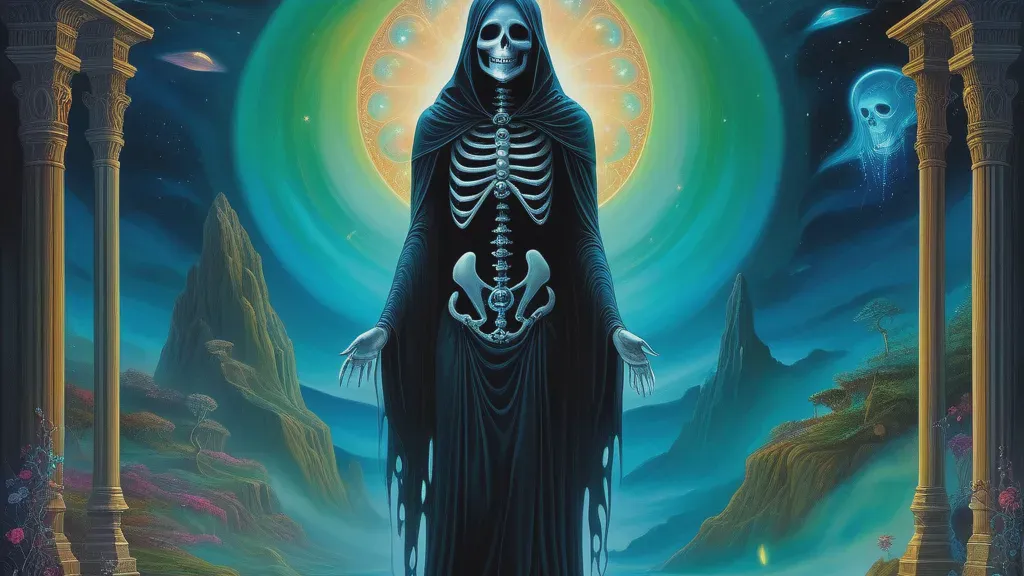
Death Personified
Jungian Archetypes
Meaning
Dreaming of death personified may indicate the dreamer's confrontation with their fears and the inevitability of change, pushing them to reflect on their life choices and relationships.
Psychological Interpretation
From a Jungian perspective, death personified represents the shadow and transformation. Cognitive psychology views it as an expression of existential anxiety, while practical psychology highlights the importance of acceptance for personal growth.
Traditional Symbol Meaning
The symbol of "Death Personified" in dreams often evokes strong emotions and a sense of foreboding, yet its interpretations can vary significantly across cultures and historical contexts. In many Western traditions, death is frequently associated with endings, loss, and fear, reflecting a societal tendency to view death as a negative and final event. However, in dream interpretations, the presence of death can also symbolize transformation and rebirth, suggesting that the dreamer may be undergoing significant changes in their waking life. This duality is echoed in the ancient Greek understanding, where death was not merely an end but a transition to another state of being, as illustrated by the myth of Persephone, who embodies both life and death through her seasonal journey. In Eastern cultures, particularly within Hinduism and Buddhism, death is viewed through a lens of cyclical existence and reincarnation. Dreaming of death personified in these contexts may signify the shedding of old identities or the release of karmic burdens, indicating that the dreamer is on a path toward enlightenment or spiritual renewal. Indigenous traditions often hold a more nuanced perspective, where death is seen as a part of the life continuum rather than an end. For many Indigenous peoples, dreams serve as a connection to the spirit world, and encountering death in dreams can symbolize guidance from ancestors or a call to honor the interconnectedness of life and death. Historically, dream interpretation has been a significant practice in various cultures, with figures like Sigmund Freud and Carl Jung emphasizing the psychological dimensions of such symbols. Freud viewed death in dreams as a manifestation of repressed desires or fears, while Jung saw it as a representation of the unconscious mind's attempt to integrate conflicting aspects of the self. Traditional wisdom across cultures often advises that dreaming of death personified invites introspection and reflection, encouraging individuals to confront their fears and embrace the inevitability of change. This understanding aligns with the broader human experience, where the dream of death may serve as a prompt to evaluate one's life choices and relationships. Cultural variations in the interpretation of death personified in dreams highlight the complexity of this symbol. In some African traditions, for example, dreaming of a deceased relative could be interpreted as a message or warning from the spirit world, emphasizing the importance of ancestral connections. Conversely, in certain Asian cultures, such dreams may be seen as auspicious, indicating that the dreamer is moving towards a new phase of life or receiving blessings. Ultimately, while the image of death can be unsettling, traditional interpretations across cultures reveal a rich tapestry of meanings that underscore transformation, renewal, and the cyclical nature of existence.
Jungian / Archetypal
In Jungian and Analytical Psychology, the symbol of "Death Personified" in dreams often represents a powerful archetype that embodies transformation and the cycle of life. Rather than a mere end, death in this context signifies a necessary transition, urging the dreamer to confront aspects of their psyche that may be stagnant or unacknowledged. This personification can be seen as a manifestation of the Shadow, which encompasses the repressed or unrecognized parts of ourselves. By confronting Death as a character in a dream, the individual is invited to explore their fears, desires, and unresolved conflicts, ultimately facilitating a deeper understanding of their inner self. The appearance of Death Personified can also evoke themes of renewal and rebirth. In the process of individuation, which Jung described as the integration of the conscious and unconscious aspects of the self, death symbolizes the shedding of outdated beliefs or identities that no longer serve the dreamer. This dream symbol encourages the individual to embrace change and to recognize that what may feel like an ending can also be a precursor to new beginnings. The dreamer may be at a crossroads in their life, facing decisions that require them to let go of the past to move forward, thus highlighting the transformative potential inherent in the dream. Dreaming of Death Personified may also indicate that the dreamer is grappling with existential questions or fears surrounding mortality, loss, or change. Such dreams can surface during times of significant life transitions, such as the end of a relationship, a career shift, or even a personal crisis. These dreams serve as a reminder to the individual that they must confront their own mortality and the impermanence of life. Engaging with this symbol can lead to profound insights about what is truly important to the dreamer and what they wish to preserve or change in their waking life. To derive practical insights from dreaming about Death Personified, individuals can reflect on their current life circumstances and consider what aspects of themselves may need to be released or transformed. Journaling about the emotions and narratives surrounding this dream can provide clarity and facilitate the process of individuation. Embracing the lessons of this archetype can empower the dreamer to face their fears, accept the inevitability of change, and ultimately foster a deeper connection with their authentic self. By acknowledging and integrating the insights offered by this powerful symbol, the dreamer can embark on a journey of personal growth and self-discovery.
Psychodynamic / Freudian
In psychodynamic psychology, the symbol of "Death Personified" in dreams often serves as a complex representation of the dreamer's inner conflicts and emotional states. On a manifest level, this symbol may evoke feelings of fear, loss, or anxiety related to mortality. However, when delving into the latent content, it becomes clear that death can signify transformation or the end of a particular phase in life rather than a literal interpretation of dying. This duality reflects the dreamer's subconscious desires for change or the resolution of unresolved issues, suggesting a struggle between the known and the unknown aspects of their psyche. The deeper psychological significance of "Death Personified" often relates to the concept of wish fulfillment. In many cases, the dreamer may be subconsciously yearning for an end to certain relationships, situations, or behaviors that no longer serve them. This dream symbol can act as a defense mechanism, allowing the individual to confront their fears and anxieties in a safe, symbolic manner. By personifying death, the dreamer can explore feelings of grief, loss, or liberation without having to face these emotions directly in their waking life. It can also indicate a need to let go of past traumas or outdated beliefs, ultimately paving the way for personal growth and renewal. When encountering "Death Personified" in dreams, the dreamer's inner world may reveal feelings of stagnation or a desire for significant life changes. This symbol might indicate that the dreamer is at a crossroads, grappling with the need to release old patterns or identities to embrace new opportunities. The presence of death can highlight the tension between clinging to the familiar and the fear of the unknown, suggesting that the dreamer is wrestling with their own mortality in a metaphorical sense. This inner conflict can manifest as anxiety or resistance to change, indicating that the dreamer may need to confront these feelings to move forward in their life. To gain practical psychological insights from dreaming of "Death Personified," individuals can reflect on what aspects of their lives they feel are stagnant or in need of transformation. Journaling about the emotions and thoughts that arise during such dreams can provide clarity on what needs to be released or accepted. Additionally, exploring the concept of death as a metaphor for change can encourage the dreamer to embrace new beginnings and view endings not as losses but as essential steps in their personal development. By understanding the symbolic nature of this dream, individuals can better navigate their emotional landscapes and foster a deeper connection with their true selves.
Contemporary Psychological
Dreaming of "Death Personified" is a powerful symbol that can evoke a range of emotions and interpretations, particularly through the lens of contemporary psychology. From a neuroscientific perspective, dreams serve as a platform for emotional processing and memory consolidation. When death appears in dreams, it often represents the end of a particular phase or aspect of the dreamer's life, suggesting a psychological transition or transformation. This symbol may not necessarily signify a literal fear of death, but rather the subconscious grappling with change, loss, or the need to let go of outdated beliefs or behaviors. The deeper psychological significance of "Death Personified" often relates to themes of anxiety, fear of the unknown, and the natural human tendency to avoid confronting uncomfortable truths. In dreams, death can embody unresolved conflicts or emotions that the dreamer is struggling to process. This representation can act as a catalyst for emotional processing, allowing the individual to confront what they may be avoiding in their waking life. The presence of death in a dream can also be linked to the concept of threat simulation, where the brain rehearses potential threats and prepares the individual for real-life challenges. Thus, the dream may be prompting the dreamer to address fears or anxieties that are manifesting in their everyday experiences. For the dreamer, encountering "Death Personified" may indicate a period of significant change or upheaval in their life, such as the end of a relationship, job, or a significant life stage. This symbol can serve as a mirror reflecting the dreamer's inner world, highlighting feelings of insecurity or uncertainty about the future. It may also suggest a need for introspection and self-reflection, urging the individual to evaluate what aspects of their life require closure or transformation. Recognizing this symbol in dreams can provide valuable insights into the dreamer's emotional state and highlight areas where healing or growth is needed. To derive practical psychological insights from this interpretation, individuals can benefit from journaling about their dreams and exploring the emotions associated with the imagery of death. Reflecting on what "Death Personified" represents in their life can help clarify the changes they are facing and encourage a proactive approach to navigating these transitions. Engaging in mindfulness practices or therapy can also support emotional processing, enabling the dreamer to confront and integrate the feelings stirred by such powerful symbols, ultimately fostering personal growth and resilience in the face of life's inevitable changes.
Gestalt / Parts of Self
In the context of Gestalt Psychology, the symbol of "Death Personified" in dreams can represent a crucial aspect of the self that is undergoing transformation or integration. Rather than being a literal indication of physical death, this symbol often embodies the process of letting go of outdated beliefs, relationships, or phases in life that no longer serve the dreamer. It acts as a projection of the dreamer's internal struggles with change, highlighting the parts of themselves that may be resisting the inevitable transitions that life presents. By personifying death, the dreamer is invited to confront their fears and anxieties about endings and the unknown, which are natural components of personal growth. The deeper psychological significance of encountering Death Personified in dreams often revolves around themes of renewal and rebirth. From a Gestalt perspective, this symbol can signify the need to acknowledge and integrate aspects of oneself that have been repressed or ignored. For instance, the dreamer may be grappling with feelings of loss or grief that require attention, or they may be at a crossroads where they need to make significant life changes. This dream can serve as a catalyst for self-reflection, prompting the dreamer to explore what parts of their identity are ready to be released and what new aspects are emerging in their life. Dreaming about Death Personified may indicate that the dreamer is in a transitional phase, possibly feeling overwhelmed by the changes occurring around them. It can suggest that the dreamer is grappling with feelings of mortality, whether that's related to aging, the end of a relationship, or the closing of a chapter in their life. This dream symbol encourages the dreamer to take ownership of their experiences, acknowledging the emotions tied to these transitions and understanding that they are integral to their personal development. By recognizing this aspect of themselves, they can begin to embrace the idea that endings often pave the way for new beginnings. To gain practical insights from this dream, readers are encouraged to engage in self-reflection and journaling. Consider what the symbol of Death Personified evokes emotionally and how it relates to current life circumstances. What aspects of your life feel stagnant or in need of closure? Are there parts of yourself that you are ready to let go of? By exploring these questions, dreamers can foster a deeper understanding of their inner world and cultivate a sense of empowerment as they navigate their personal journeys of transformation. Embracing the lessons of this dream can lead to a more integrated self, where the acceptance of change becomes a source of strength rather than fear.
Cultural & Historical Origins
In many cultures, such as in the Grim Reaper from Western folklore, death is anthropomorphized, symbolizing the inevitability of mortality. Similarly, in Mexican Día de los Muertos, death is celebrated as a part of life, promoting acceptance.
Contextual Variations
Death appears as a calm figure who speaks your name softly, not angrily. You ask questions—“When?” “Why?”—and Death answers by showing you a simple image of a decision you’ve been avoiding.
Death personified can symbolize the inevitability of change and the need to end avoidance. Psychologically, the calm tone suggests your psyche is offering confrontation without chaos—inviting you to face a life transition or internal “ending.”
Death follows you through familiar places, but it never touches you. The closer you get to your goal, the more Death’s presence feels like a reminder to stop postponing what matters.
A non-contact Death often represents a boundary on delay rather than literal harm. Psychologically, it can indicate that your inner system is timing your growth—once you act, the pressure eases.
Death offers you a choice: take a shortcut through a dark hallway or walk the long route with uncertainty. You choose the long route, and when you do, Death nods and disappears.
Choice imagery reflects agency within change. Psychologically, it suggests you’re learning to tolerate uncertainty while still moving forward—choosing values over fear of the unknown.
Frequently Asked Questions
Why does death appear as a character in my dream?
What does it mean if Death is calm or respectful rather than scary?
How should I interpret it if Death asks me questions?
Journaling Prompts
- What did Death look like, sound like, and feel like in the dream—and what emotion did it awaken in you?
- What specific ending or decision did the dream seem to highlight, and what have you been postponing?
- If Death offered you a single choice, what would you choose today, and what value would that choice protect?
Related Symbols
Dreamed about Death Personified?
Get a personalized AI interpretation that connects this symbol to your specific life circumstances.
Interpret My Dream