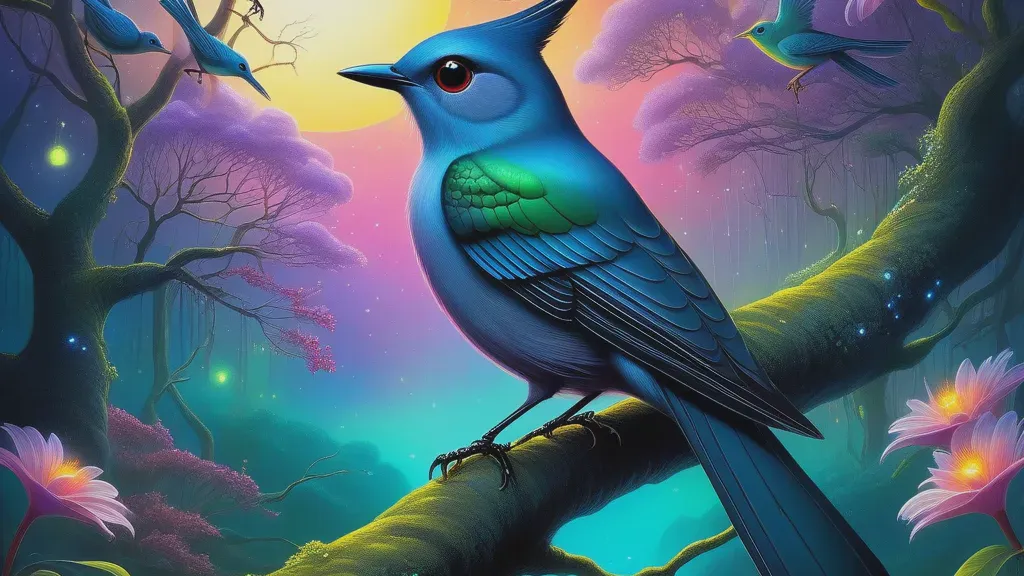
Catbird
Jungian Archetypes
Meaning
Dreaming of a catbird may reflect the desire for freedom of expression and the blending of identities, highlighting the psychological interplay between individuality and social roles.
Psychological Interpretation
From a Jungian perspective, catbirds symbolize the Trickster archetype, indicating playful creativity. Cognitive psychology views them as a representation of social adaptability, while practical psychology suggests they signify the need to communicate authentically.
Cultural & Historical Origins
In Native American folklore, the catbird is seen as a messenger between worlds, reflecting the importance of communication. In literature, it often symbolizes the complexity of identity, as seen in Thoreau's writings on nature and individuality.
Contextual Variations
A catbird sings in a voice that sounds like your own thoughts; you realize it’s mocking and comforting you at the same time.
A catbird’s blend of mimicry and self-expression can symbolize how your mind mixes identities and messages. Mocking-comforting suggests you’re negotiating self-judgment while still trying to express truth.
You follow a catbird that copies different sounds—phone notifications, laughter, then silence—and you can’t tell what’s real.
Mimicry and confusion point to unstable cues in your environment or in your inner narrative. Psychologically, it can reflect difficulty distinguishing your authentic needs from learned reactions.
The catbird lands on your shoulder, and for a moment you feel free to speak differently than usual; then it flies away as you hesitate.
Landing on your shoulder suggests identity permission—your psyche offering a voice. Flying away when you hesitate indicates that expression may require risk-taking; your system responds to your willingness.
Frequently Asked Questions
Why did the catbird feel like it was playing with identities?
What does it mean if I couldn’t tell which sounds were real?
Is the catbird about freedom of expression?
Journaling Prompts
- Where in your life are you blending voices—performing, adapting, or mimicking—and what would it mean to speak from a more consistent self?
- Which sound did the catbird mimic that felt most charged, and what does it represent to you?
- When the catbird left after your hesitation, what were you afraid would happen if you expressed yourself?
Related Symbols
Dreamed about Catbird?
Get a personalized AI interpretation that connects this symbol to your specific life circumstances.
Interpret My Dream