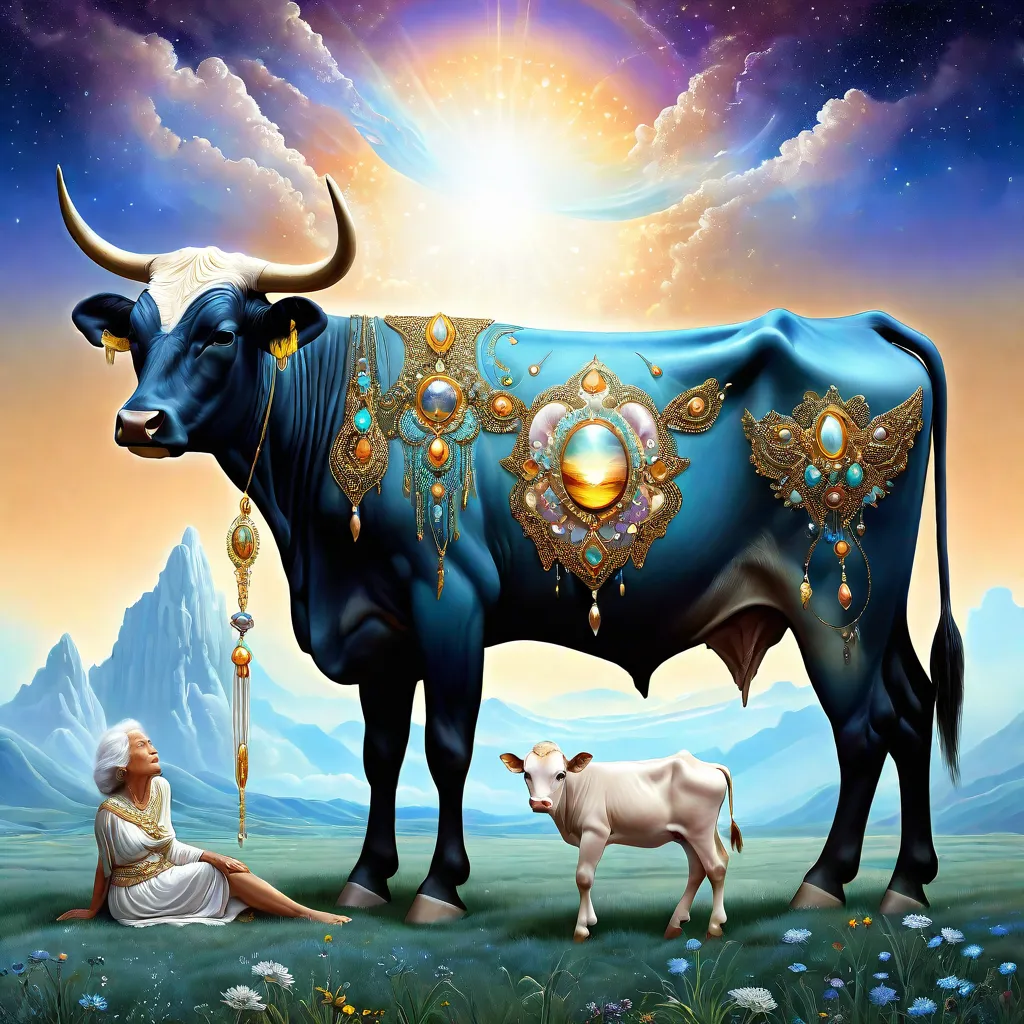
Transformed Calf
Jungian Archetypes
Meaning
The calf is the muscle that does its work without being watched: it fires with every step, holds the body upright when standing still, and provides the push that turns a step into a stride. A dream in which the calf visibly changes shape or texture puts a spotlight on this usually invisible labor — the dreamer's capacity to keep standing, keep pushing off, keep bearing daily weight. The transformation names a renegotiation already underway in how much load that unglamorous, constant effort is currently being asked to carry.
Psychological Interpretation
A calf that thickens, hardens, or reshapes itself mid-dream is rarely a comment on appearance; it is the psyche revising its model of how much weight the dreamer's ordinary, unglamorous effort can sustain. Because the calf works constantly and silently — standing, walking, absorbing every step's shock — it fits whatever labor in a life goes unnoticed until it fails: responsibilities carried without complaint, relationships propped up by one person's steady presence, a job done competently enough that no one asks what it costs. A calf that becomes stronger or more capable suggests that capacity is being upgraded, often just before waking life demands more of it. A calf that cramps, buckles, or refuses to hold weight is a more urgent signal: the current arrangement of who carries what has run past what the body — literal or figurative — can sustain, and something in it needs to be redistributed before it is forced to.
Traditional Symbol Meaning
Older dream manuals paid closer attention to the legs as a set than to the calf specifically, but where the calf was singled out, its condition in a dream was usually read as a comment on stamina rather than appearance. A calf described as strong, full, or well-formed was traditionally taken as a favorable sign — a coming period in which the dreamer's endurance would be equal to whatever was demanded of it. A withered, thin, or wounded calf carried the opposite reading: exhaustion setting in, or a stretch ahead in which the dreamer's capacity to keep going would be tested past what it could comfortably bear. Because the calf bears weight without being consciously directed — no one thinks about contracting it to remain standing — folk interpretation often linked its dream condition to matters the dreamer was carrying without full awareness: a family duty performed automatically, a financial burden absorbed quietly, a caretaking role assumed so early it no longer felt like a choice. A dream in which the calf changed shape was sometimes read, in this older register, as a sign that such an unconscious burden was about to become visible, for better or worse — that the dreamer would either finally be recognized for carrying it, or would finally be forced to notice how heavy it had become. Modern interpretation keeps this same intuition while dropping the fortune-telling frame. The calf still stands, in dream symbolism, for the part of a person's effort that runs on autopilot: the steady showing-up nobody applauds because it rarely fails. A transformation there is read less as an omen and more as information — the psyche flagging that the current terms of that steady, invisible labor are shifting, and asking the dreamer to look directly at load-bearing work that has, until now, been left to run itself.
Jungian / Archetypal
Jung associated the legs generally with the instinctual foundation on which the more differentiated functions of consciousness stand, and the calf, as the muscle that translates intention into forward motion, fits naturally into this register as an image of embodied, practical instinct rather than reflective thought. A dream that alters the calf is often working at exactly that instinctual layer, adjusting the body's capacity before the conscious mind has caught up to why the adjustment is needed. The Great Mother archetype appears here less as a nurturing figure than as the principle of holding: her domain includes whatever in the psyche bears weight patiently over time, the way a mother's body bears a child before either party has agency in the matter. A calf reshaping itself toward greater strength or stability can be read as this archetype asserting itself in the dreamer's relationship to endurance — a reminder that being held up, and holding others up, draws on the same underlying resource. The Wise Old Man's contribution is more strategic than physical: where the Great Mother governs the capacity to bear weight, this figure governs the judgment of how that capacity should be spent. A calf dream that resolves around finding a sustainable stance, rather than simply gaining strength, often marks the emergence of this discerning function — the dreamer moving from blind endurance toward a more deliberate sense of what is actually worth the effort of standing under.
Gestalt / Parts of Self
In Gestalt terms, a transformed calf is not a symptom to decode but a part of you making itself known — specifically, the part responsible for standing your ground and pushing yourself forward, functions you rarely think about because they normally just work. If the dream calf strains, cramps, or refuses to hold you up, that is a disowned protest surfacing in the only language this quiet, load-bearing part of you has: physical failure. Give it a voice directly. Speak as your own calf muscle and finish the sentence, I am tired of carrying. Notice what fills that blank without editing it for reasonableness. If instead the calf grows stronger or steadier, own that too, rather than crediting the dream to chance. Ask yourself what you have recently stopped apologizing for standing firm about, and where else in your waking life that same steadiness could show up without waiting for a crisis to require it. The polarity worth holding here is strain against ease — most dreamers live too far toward one end of it to notice the other is available.
Psychodynamic / Freudian
The calf rarely carries the dense symbolic overdetermination of the genitals or the face, which makes its appearance in a dream comparatively easy to read once the manifest content is taken literally: something about bearing weight or maintaining position has become psychically significant enough to surface in sleep. Where the dream adds strain, cramping, or visible alteration to the calf, the underlying material is often a burden the dreamer has structured their identity around carrying without complaint — frequently a role learned early, in a household where being useful and being loved were not clearly separable. The body, rather than the more heavily defended verbal mind, becomes the site where the cost of that arrangement can finally register. A calf that transforms into something more capable, without strain, tends to reflect a different dynamic: a defense loosening rather than a demand intensifying. If the dreamer has recently begun setting a boundary, delegating a duty, or resting without guilt, the ease with which the dream calf now holds weight can mirror that shift — proof, delivered in the body's own vocabulary, that carrying less does not mean standing less firmly.
Contemporary Psychological
Sleep researchers have long noted that physical sensations from the sleeping body — muscle tension, cramping, positional strain — regularly get woven into dream content rather than simply waking the sleeper, a phenomenon sometimes called dream incorporation. A calf that cramps or reshapes itself in a dream may in some cases be responding to something as mundane as the leg's actual position against the mattress that night, the mind narrating a real muscular signal into symbolic terms. Beyond incorporation, the image fits well with research on how the brain processes physical demand accumulated during the day. Prolonged standing, an unusually long walk, or a hard workout measurably affects how the body is represented in subsequent dream content, and calf-specific dreams cluster more often among people who spend their waking hours on their feet — a plausible case of the day's literal load reappearing, translated, at night. What is specific to a transformed calf, rather than a merely sore or aching one, is the sense of adaptation rather than injury — the muscle becoming different, not just tired. That distinction matters: dreams emphasizing change in a body part rather than damage to it more often coincide with a person actively adjusting to new physical or practical demands, such as a new exercise routine, a longer commute on foot, or a caretaking schedule that has recently required more standing and carrying than the body was previously asked to do.
Cultural & Historical Origins
Western art has treated a well-formed calf as a specific marker of vitality since antiquity. Renaissance sculpture made the case most famously: Michelangelo's David stands in contrapposto with a tautly modeled calf bearing nearly all his weight, the muscle doing the visible work of poise the rest of the body only performs. Homer's Iliad repeatedly praises Achilles as podas okys, swift-footed, an epithet that located heroic readiness in the legs before any weapon was raised — stamina, not size, marking a warrior's true capacity. Traditional Chinese medicine treats the calf as closer to physiology than myth, describing its contraction during walking as a secondary pump assisting blood's return to the heart, a function some practitioners still call the body's second heart. Ballet training treats the same muscle group as the site of years of invisible discipline, since the strength to hold a position en pointe is built almost entirely below the knee, out of the audience's view.
Contextual Variations
Your calf reshapes mid-sprint and you find a steady stride
This image usually appears when your body is adjusting to a demand you have already been meeting, just not yet efficiently. The moment you stop forcing speed and let the new shape carry you, the dream is showing you that easing your grip on effort, rather than gripping harder, is what steady endurance actually requires right now.
Standing becomes impossible until your calf shifts shape
An inability to stand until something changes beneath you points to a stance you have outgrown — a way of holding your ground that no longer matches what you are actually being asked to hold. The relief once the shape settles suggests the discomfort was necessary, not a malfunction: your old footing had to give way before a steadier one could take its place.
Your calf swells while you help someone up a stair
A calf that grows stronger specifically while supporting someone else's climb suggests your capacity expands under the right kind of use — care that is chosen rather than extracted. The dream is distinguishing between weight you carry because you were asked and weight you carry because refusing felt impossible; only one of those, it implies, is currently strengthening you.
A tight cramp in your calf stops you mid-step, then eases
A cramp that seizes and then releases mirrors a pattern of pushing well past a sustainable pace before finally, briefly, allowing rest. The dream's timing, right at the point of forward motion, suggests the warning is not about the destination but about the rhythm: something in how hard and how continuously you are pushing needs to change before the body forces the issue itself.
Frequently Asked Questions
Why did my calf muscle change shape in my dream?
Is a calf cramp in a dream a warning sign?
Does dreaming about my legs relate to feeling unsupported?
Why do dreams focus on a specific muscle instead of the whole body?
Journaling Prompts
- Name one responsibility you carry so automatically that you rarely notice the effort it takes. What would change if you let someone else see how much that responsibility actually costs you to maintain, even for a week?
- Recall the last time you pushed through physical or emotional strain instead of slowing down. What did you tell yourself to justify continuing, and did that reasoning hold up once the strain eased?
- Think about the difference between weight you carry because you chose it and weight you carry because refusing felt impossible. Which kind is currently heavier in your life, and what would it take to set just one piece of it down?
- Picture your own steadiness as something that has to be actively maintained rather than assumed. What currently keeps you standing without you having to think about it, and what would happen to that foundation if it were asked to bear more?
Related Symbols
Dreamed about Transformed Calf?
Get a personalized AI interpretation that connects this symbol to your specific life circumstances.
Interpret My Dream