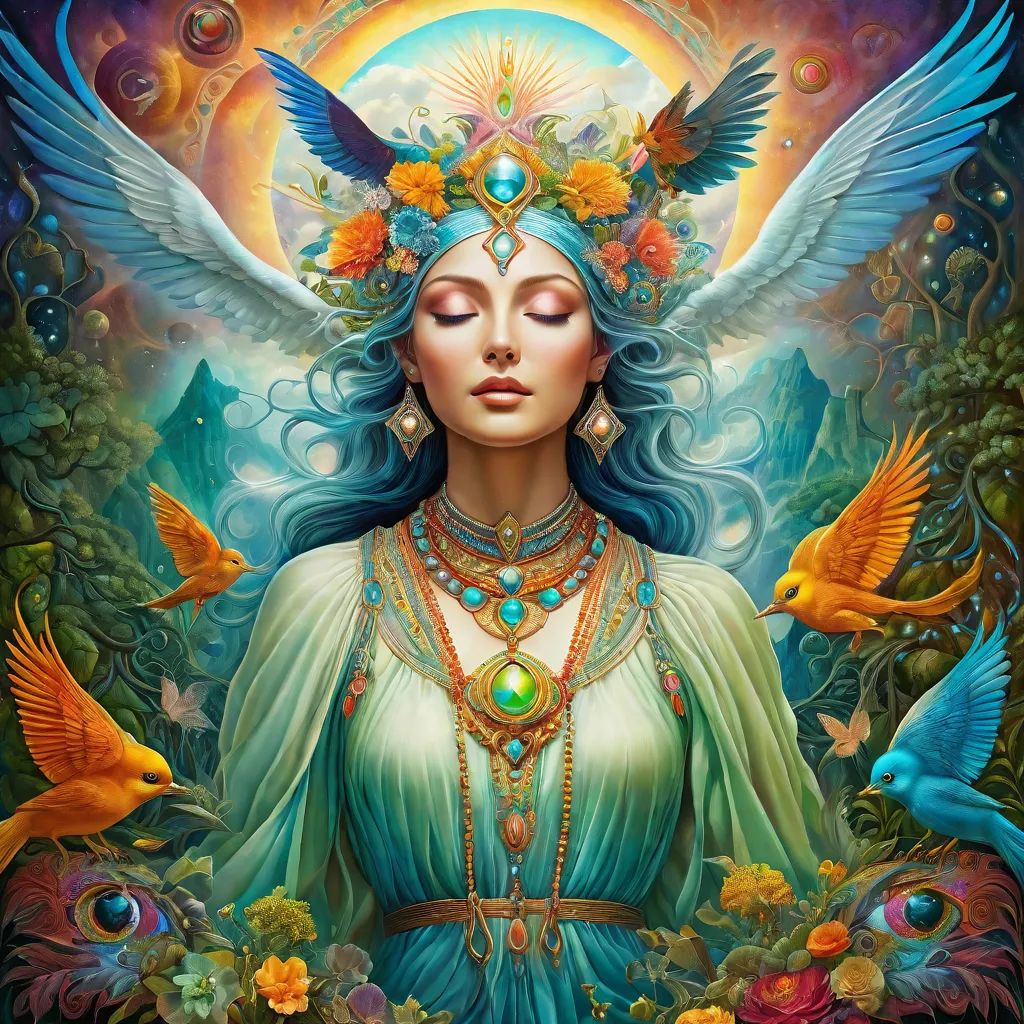
The Divine Trickster
Jungian Archetypes
Meaning
Dreaming of the divine trickster reflects the tension between order and chaos, embodying the psyche's need for playful creativity and spontaneity. This challenges rigid thinking and encourages adaptability in the face of uncertainty.
Psychological Interpretation
Jungian theory associates the trickster with the Anima, symbolizing transformation through disruption. Cognitive psychology sees this as a coping mechanism for stress. Practically, it invites the dreamer to embrace creativity and rethink conventional approaches.
Cultural & Historical Origins
In Native American traditions, Coyote embodies the divine trickster, teaching lessons through mischief. Similarly, in African folklore, Anansi the spider represents cunning and wisdom, illustrating how chaos can lead to profound insights and growth.
Contextual Variations
A bright, almost holy figure teaches you a lesson by changing the rules of a game mid-play. You try to follow perfectly, but the trickster smiles and rewards you when you stop controlling outcomes.
This symbolizes the tension between order (control, structure) and chaos (spontaneity). Psychologically, it suggests your psyche wants playful creativity—an invitation to trust process rather than outcomes.
You receive “divine” instructions in riddles, and every time you interpret them literally, something goes wrong. When you interpret them metaphorically, the world becomes responsive and you feel unexpectedly guided.
The dream points to how your mind processes guidance: strict interpretations may create friction. It can indicate growth in flexible thinking—learning to hold meaning without demanding certainty.
A mischievous presence appears during a solemn ritual, replacing the serious words with humorous ones. The crowd laughs, and you realize the laughter made the ritual feel more honest than before.
This reflects a need to integrate joy into your spiritual or moral framework. The “divine” aspect implies the playful disruption is not meaningless—it’s reshaping how you relate to order, meaning, and self-worth.
Frequently Asked Questions
Why did my dream feel spiritual even though it was playful?
What does it mean if I felt punished for trying to be perfect in the dream?
How should I interpret the riddles or rule changes?
Journaling Prompts
- Where am I trying to enforce order so tightly that it blocks creativity or genuine connection?
- What did the trickster reward—effort, curiosity, flexibility, or surrender—and how does that map to my life?
- If the “divine” part of the dream were an inner teacher, what lesson does it want me to practice this week?
Related Symbols
Dreamed about The Divine Trickster?
Get a personalized AI interpretation that connects this symbol to your specific life circumstances.
Interpret My Dream