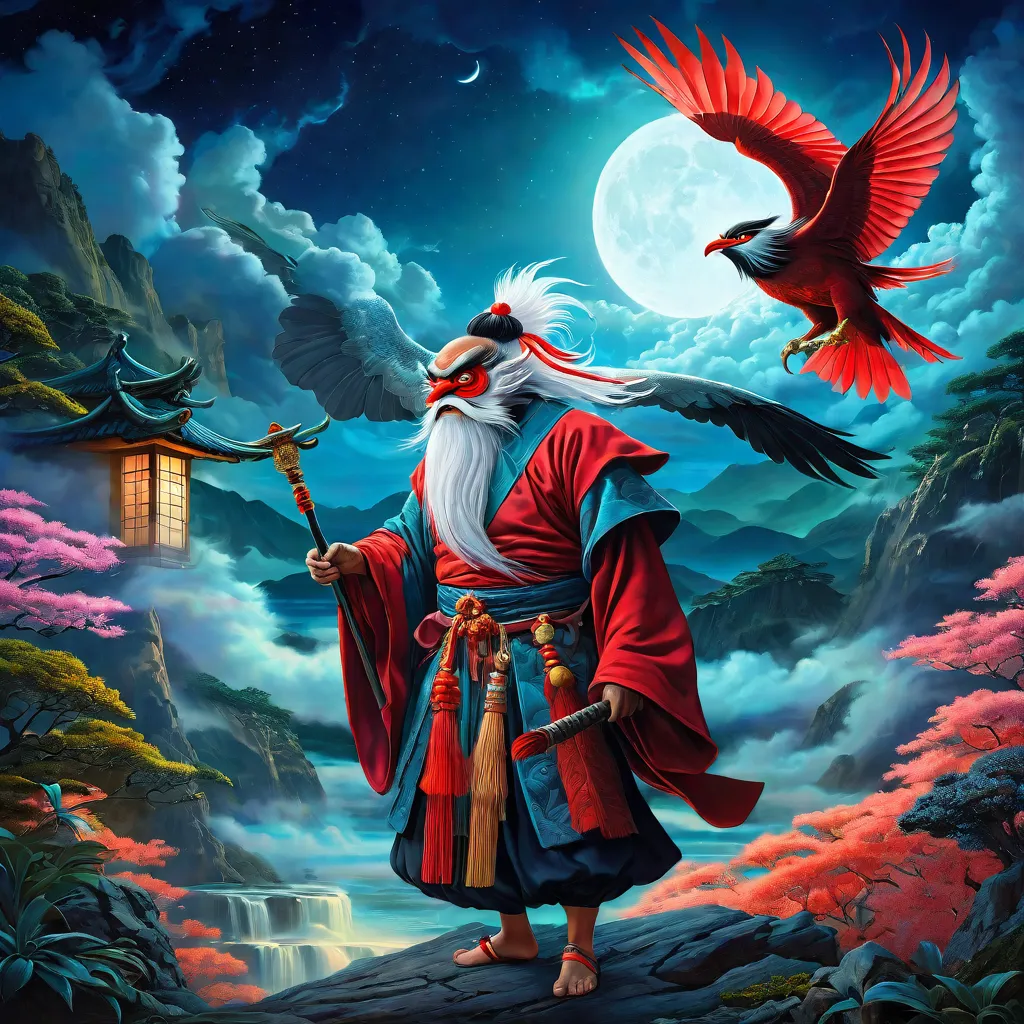
Tengu
Jungian Archetypes
Meaning
Tengu dreams may reflect the struggle between the self and societal expectations. Psychologically, this symbolizes the conflict between one's true nature and external pressures, highlighting the need for authentic self-expression.
Psychological Interpretation
From a Jungian view, Tengu embodies the trickster archetype, challenging the ego and societal norms. Cognitively, this may represent the subconscious grappling with identity, while practical psychology suggests a need for balance between conformity and individuality.
Cultural & Historical Origins
In Japanese folklore, Tengu are considered protectors and tricksters, often linked to the mountains. In Buddhist texts, they are seen as guardians of the Dharma, embodying both wisdom and mischief.
Contextual Variations
A red-faced tengu appears on a rooftop and mocks your posture; when you straighten, it laughs, then suddenly offers a feather that “corrects” your voice.
This dream often reflects conflict between your authentic self and social performance. Psychologically, the tengu’s correction can symbolize pressure to meet expectations, while the feather suggests a possibility: transforming imitation into a skill that serves you.
You try to speak in a meeting, but your words come out like a disguise; the tengu circles you, changing the tone until you sound acceptable but not like yourself.
The disguise effect points to self-monitoring—adjusting identity to fit a group. Psychologically, it indicates a negotiation between persona demands and personal truth, with anxiety about being “wrong” or judged.
A tengu child follows you, asking for rules; you realize the rules you follow are the ones you inherited, and you feel both comforted and trapped.
This highlights internalized authority—how societal expectations are carried like a protective framework. Psychologically, it can mark a phase where you’re ready to choose which rules support you and which ones limit you.
Frequently Asked Questions
Why did a tengu appear in my dream?
Does the tengu mean my self-expression is blocked?
How can I work with this dream instead of fearing it?
Journaling Prompts
- Where do I feel pressured to “perform” rather than be myself?
- What did the tengu correct—voice, posture, words—and what does that correspond to in my waking life?
- If I could keep only the helpful part of the tengu’s guidance, what would it be?
Related Symbols
Dreamed about Tengu?
Get a personalized AI interpretation that connects this symbol to your specific life circumstances.
Interpret My Dream