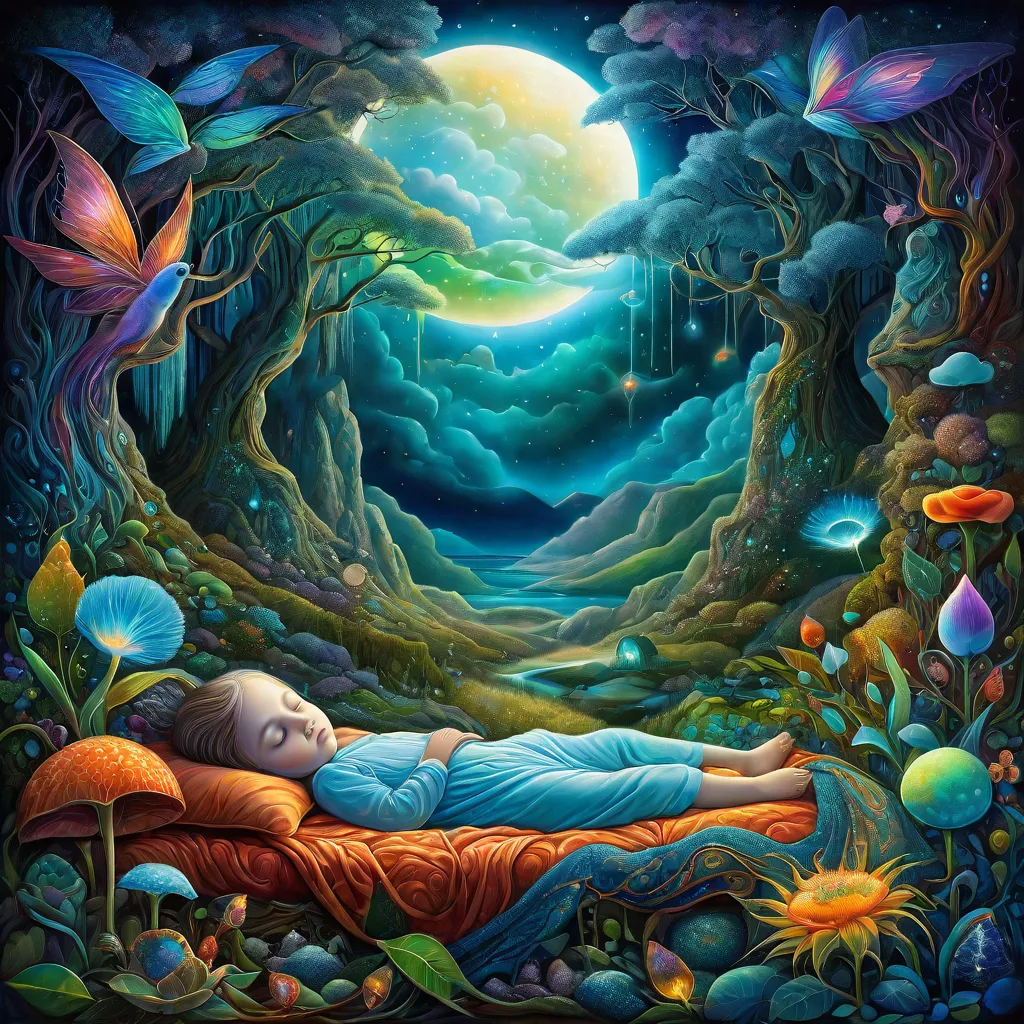
Sleep Terror
Jungian Archetypes
Meaning
Sleep terrors often stem from unresolved anxiety or trauma, causing the dreamer to experience intense fear during sleep. This mechanism reflects the mind's attempt to process distressing emotions while in a vulnerable state.
Psychological Interpretation
From a Jungian view, sleep terrors may reveal shadow aspects of the psyche, representing repressed fears. Cognitive psychology sees them as a result of heightened stress or sleep disorders, while practical psychology emphasizes coping strategies to manage anxiety.
Cultural & Historical Origins
In ancient Roman culture, the concept of 'Incubus' relates to sleep disturbances, while in Japanese folklore, 'Yurei' represent restless spirits causing night terrors. Both illustrate the link between fear and supernatural influences.
Contextual Variations
You’re trapped in your bedroom but the ceiling stretches upward like it’s chasing you; you can’t move, and a loud, nameless dread fills your chest.
Sleep terror often symbolizes panic that the waking mind can’t fully interpret yet. The paralysis and pursuit imagery point to feeling cornered by anxiety—your system is signaling threat even when you can’t locate a clear cause.
A childlike version of you stands at the foot of the bed, crying silently, while you try to comfort it but your hands pass through.
The childlike figure suggests vulnerability and unmet emotional needs. Hands passing through indicates a gap between your adult intention to help and your current ability to soothe yourself, highlighting where self-compassion is blocked.
You wake repeatedly in the dream to the same moment, and each time the fear is slightly different—then you realize you’re afraid of your own readiness.
Looping fear reflects anticipatory anxiety and pressure to “perform” calmness. It can point to inner conflict: a part that wants control and a part that feels unsafe, both active during sleep.
Frequently Asked Questions
Is sleep terror the same as a nightmare?
What should I do after having a sleep terror dream?
Could this be related to stress or anxiety in waking life?
Journaling Prompts
- What was the strongest sensation in the dream—paralysis, dread, panic, or urgency—and when does that sensation show up in your waking life?
- What did the childlike part of you need in the dream, and what do you usually do instead of meeting that need?
- When the fear changed each loop, what new detail appeared, and what might that detail represent psychologically?
Related Symbols
Dreamed about Sleep Terror?
Get a personalized AI interpretation that connects this symbol to your specific life circumstances.
Interpret My Dream