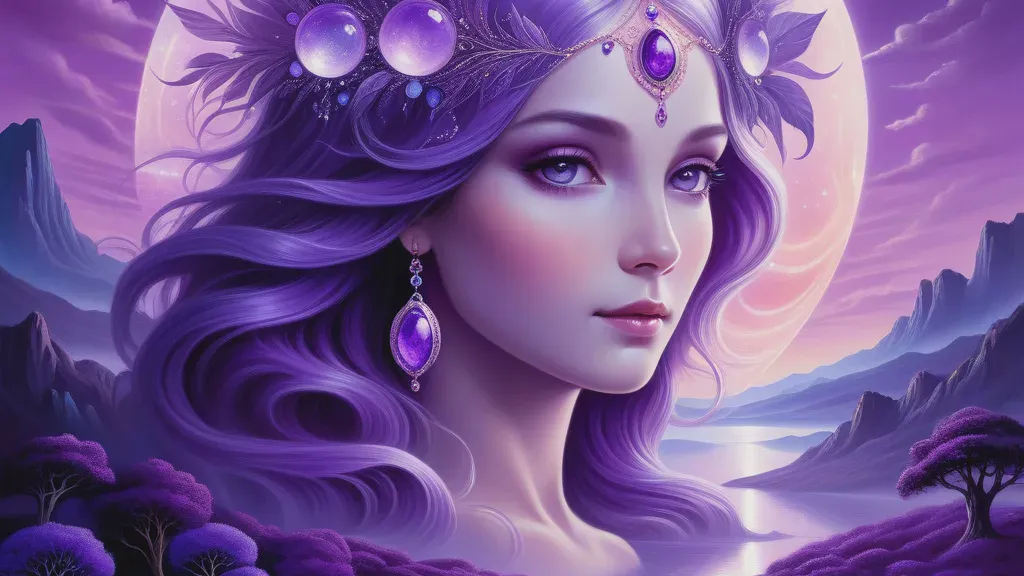
Purple Hour
Jungian Archetypes
Meaning
Dreaming of the purple hour can signify transitional phases or moments of reflection, tapping into the psychological mechanism of liminality where one stands between two states or realities.
Psychological Interpretation
Jungian theory may interpret the purple hour as a time of inner exploration and potential revelation. Cognitive psychology links it to contemplation and emotional processing, while practical psychology suggests it encourages mindfulness during transitions.
Cultural & Historical Origins
In literature, the purple hour is often depicted as a mystical time, such as in the works of Rainer Maria Rilke. In various cultural traditions, twilight is seen as a magical time, bridging the known and unknown, often associated with transformation.
Contextual Variations
You’re outside during the purple hour, twilight stretching into a dreamlike calm. You watch the sky shift colors while you feel both nostalgic and expectant, like something is ending and something else is about to begin.
Purple hour symbolizes liminality—being between phases with emotions that don’t fully belong to the past or future. Psychologically, it reflects transitional processing, where your mind integrates what’s changing without demanding immediate closure.
You meet someone you recognize but can’t place, and they speak in riddles under purple twilight. The conversation feels playful, like you’re being tested to notice what you already know.
Riddle-like interaction suggests ambiguity and intuitive learning—your psyche using trickster-like symbolism to bypass rigid logic. It may indicate you’re ready to trust subtle signals while you’re still in transition.
You try to photograph the sky, but every picture comes out blurred until the moment you stop trying. When you finally put the camera down, the purple hour becomes vivid and meaningful.
This can reflect the need to release control during uncertain periods. Psychologically, it shows that clarity arrives when you stop forcing certainty and allow perception to settle.
Frequently Asked Questions
What does the purple hour mean if I’m not going through a big change?
Why did the dream feel playful but also unsettling?
Does purple twilight suggest hope?
Journaling Prompts
- Where am I currently “in-between”—not finished with the old, not fully committed to the new?
- What part of me resists ambiguity, and how might I practice resting in the purple-hour feeling?
- What message is my intuition trying to deliver through riddles, symbols, or unusual moments?
Related Symbols
Dreamed about Purple Hour?
Get a personalized AI interpretation that connects this symbol to your specific life circumstances.
Interpret My Dream