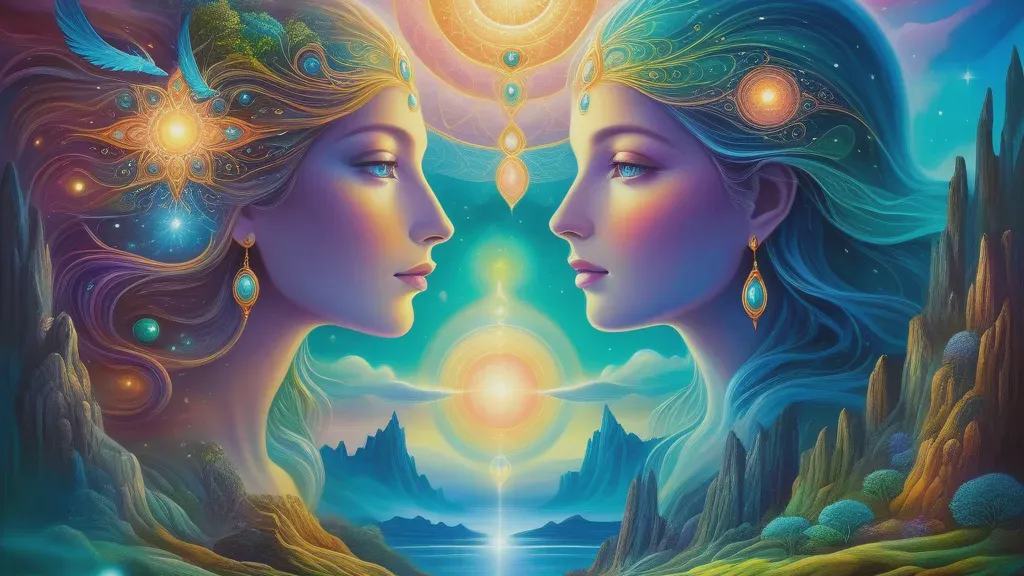
Parallel Self
Jungian Archetypes
Meaning
The parallel self in dreams represents the exploration of alternate identities or aspects of oneself, highlighting internal conflicts and the desire for self-discovery. This reflects the psychological process of integrating different facets of the self.
Psychological Interpretation
In Jungian terms, this symbolizes the Shadow and the potential for self-exploration. Cognitive psychology might view it as a coping mechanism for identity confusion, while practical psychology could see it as an invitation to embrace multiple roles in life.
Cultural & Historical Origins
Cultural references include the myth of Narcissus, who reflects on himself, and the concept of doppelgängers in folklore, showcasing the tension between self-perception and reality.
Contextual Variations
In the dream, you see another you standing across a room; they make different choices, and you feel a mix of envy and fear.
A parallel self represents alternate identity possibilities—who you might be under different circumstances. Envy and fear suggest internal conflict about whether those possibilities are “allowed,” safe, or realistic.
You and your parallel self trade places; when you switch, your body feels unfamiliar, like you’re living someone else’s life.
Trading places can symbolize role-switching in waking life—work mode, caretaker mode, or performer mode. The unfamiliar body indicates disconnection from your authentic preferences, as if you’ve been living on autopilot.
Your parallel self writes notes on a wall in a language you don’t fully understand, and you can’t stop reading them.
Unreadable notes point to suppressed or not-yet-integrated feelings. Psychologically, the dream may be showing that part of you is trying to communicate a need, but it’s been blocked by confusion or denial.
Frequently Asked Questions
Why would I dream of another version of myself?
Does the parallel self represent a past or future me?
What does it mean if I feel threatened by my parallel self?
Journaling Prompts
- What are the key differences between me and my parallel self—values, emotions, or boundaries?
- What choice or identity change am I currently considering, and which version of me feels most convincing?
- What would happen if I integrated one trait from my parallel self into my real life?
Related Symbols
Dreamed about Parallel Self?
Get a personalized AI interpretation that connects this symbol to your specific life circumstances.
Interpret My Dream